In this article
Key Takeaways
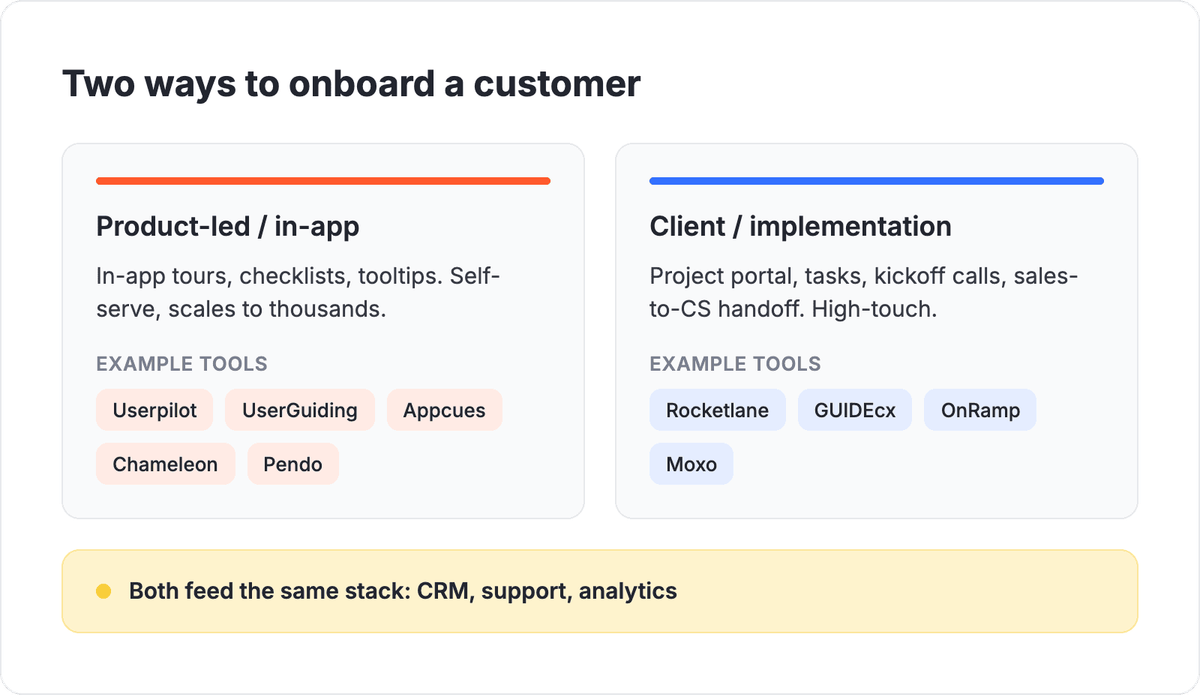
- For product-led, self-serve activation, Userpilot and UserGuiding lead on in-app flows, with Appcues, Chameleon, and Pendo close behind for mobile reach, deep customization, and analytics scale.
- For high-touch client and implementation onboarding, Rocketlane and GUIDEcx anchor the category, joined by OnRamp for dynamic action plans and Moxo for a branded client portal.
- If your team already runs Intercom, its tours and checklists cover onboarding inside the messenger you use every day, no new tool required.
- The tool you pick matters less than where its signals land: onboarding earns its keep only when signup, activation, and health events reach your CRM, support desk, and analytics instead of staying trapped in one app.
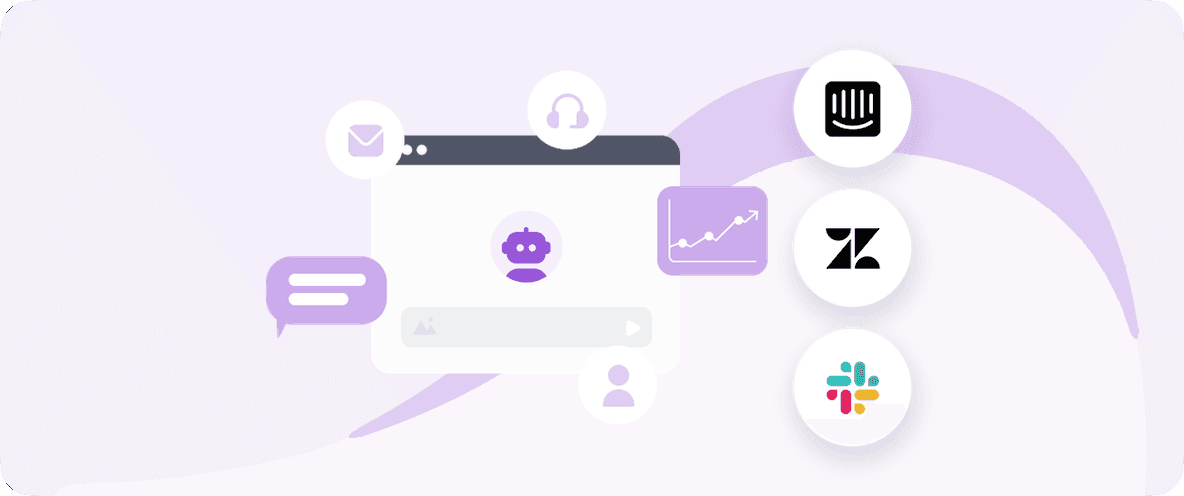
Most onboarding tools fail for the same reason: the moment a user finishes a checklist or a client signs off on a kickoff, that event dies inside the onboarding app instead of updating the CRM deal, alerting the customer success team, or feeding the health score. The picks below split cleanly into three jobs, and choosing the wrong job wastes more budget than choosing the wrong brand.

Let us build your automation or AI Agent
Tell us which process eats your time. Certified Albato engineers take it from there, A to Z.
The 10 best customer onboarding tools at a glance
Use this table as a bucket map. Each tool is grouped by the onboarding job it does best, whether it drives product-led or client onboarding, its one standout strength, and whether it has a native Albato connector.
| Tool | Best for | Onboarding model | Standout | Albato connector |
|---|---|---|---|---|
| Userpilot | Analytics-driven activation | Product-led / in-app | Flows built on top of product analytics | Via webhooks or API |
| Appcues | Mobile and web onboarding | Product-led / in-app | Early no-code pioneer, strong mobile | Via webhooks or API |
| UserGuiding | Fast, low-cost setup | Product-led / in-app | Interactive tours and checklists on a budget | Yes |
| Chameleon | Custom UI patterns | Product-led / in-app | Deep styling control over every element | Via webhooks or API |
| Pendo | PLG at scale | Product-led / in-app | Product analytics plus in-app guides in one | Via webhooks or API |
| Rocketlane | Client onboarding plus PSA | Client / implementation | Customer-facing portal tied to project tracking | Via webhooks or API |
| GUIDEcx | Implementation project management | Client / implementation | Structured onboarding plans with a client portal | Via webhooks or API |
| OnRamp | Dynamic action plans | Client / implementation | Plans that adapt to each customer's path | Via webhooks or API |
| Moxo | Branded client portal | Client / implementation | Secure workspace for documents and approvals | Via webhooks or API |
| Intercom | Onboarding inside the messenger | In an existing tool | Tours and checklists next to live chat | Yes |
How we picked these tools
We grouped these tools by the buyer's onboarding model, not by a single one-to-ten ranking, because "customer onboarding software" means two very different products depending on how you deliver onboarding. A self-serve SaaS company activating thousands of signups needs in-app tours and checklists; a B2B vendor running six-week implementations needs a client portal and a project plan. Each tool earned its place on four criteria: how well it fits one of those models, the depth of its activation or project tooling, its pricing relative to the value it delivers, and how easily its onboarding signals connect to the rest of your customer lifecycle stack. Pricing figures below are published starting rates that can change, so confirm each on the vendor's own page before you commit.
📊 Stat. A 2025 Gartner survey of 5,801 customers found that 74% of Gen Z start a service journey on a third-party source before reaching a company's own channel. New users now expect to find their footing without waiting on a human, which is exactly what good onboarding software delivers.
Best for product-led, self-serve activation
If users sign up and start using your product without a sales call, your onboarding lives inside the app itself. These tools add tours, checklists, tooltips, and modals over your existing interface, usually without engineering work, so a product or growth team can ship an activation flow in days. Userpilot and UserGuiding are the two strongest starting points, with Appcues, Chameleon, and Pendo each owning a specific angle.
Userpilot
Userpilot leads with analytics rather than pretty tooltips. It tracks feature usage and user segments first, then lets you build in-app flows that target the exact moment a user is likely to drop off. That order matters: instead of showing every new signup the same generic tour, you trigger a checklist only for accounts that have not hit a key action yet. For product teams that want onboarding decisions backed by usage data, that data-first approach is the draw.
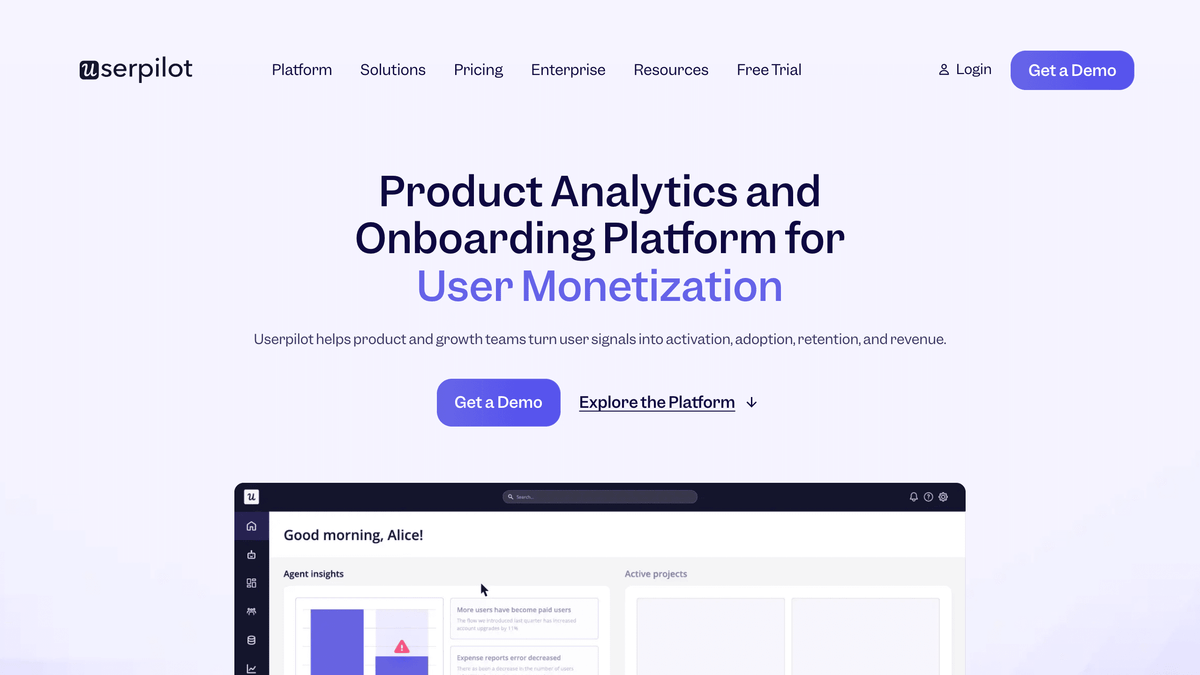
Flows, checklists, resource centers, and in-app surveys all build from a no-code editor, and the segmentation carries across every experience you create. It rewards teams that already think in terms of activation metrics and want their onboarding to move those numbers deliberately.
Userpilot does not have a native Albato connector today, but it exposes an API, so it is connectable via webhooks or API when you want a completed checklist or an activation event to reach your CRM or analytics.
Userpilot prices on tiered monthly plans that scale with monthly active users, so cost tracks your product's size rather than seat count. Best for product teams that want onboarding driven by analytics, not guesswork.
Appcues
Appcues helped invent no-code in-app onboarding, and its longest-standing strength is breadth of surface: web and native mobile onboarding from the same platform. If your product lives on iOS and Android as much as the browser, running one tool across all three keeps your flows consistent instead of rebuilding them per platform. That cross-platform reach is what keeps Appcues on shortlists years after the category filled up.
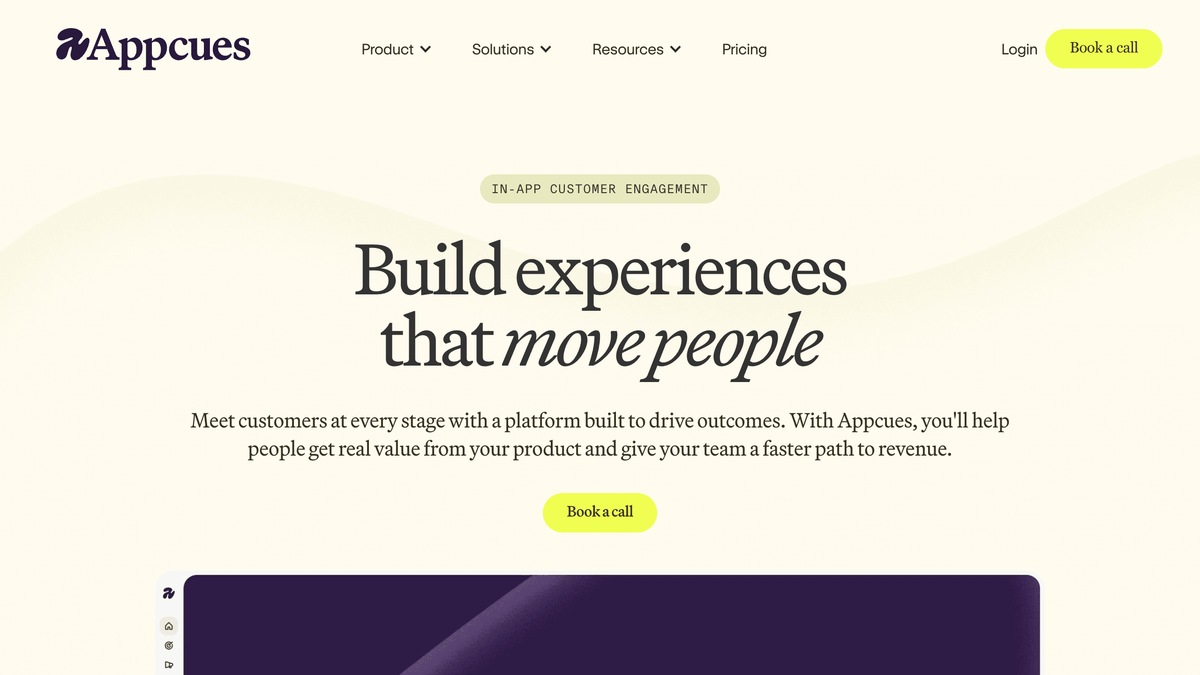
Beyond tours, Appcues covers launchpads, surveys, and event-based targeting, and it leans on a large template library that shortens the build. It is connectable via webhooks or API rather than a native Albato connector, so activation events can still flow into the rest of your stack.
💡 Tip. Onboarding is not a one-time tour. The highest-impact flows fire later, when a user returns after a gap or reaches a feature they have never opened. Build a short re-engagement checklist for dormant accounts, not just a welcome sequence, and you catch activation the first tour missed.
UserGuiding
UserGuiding wins on price and speed to launch. It delivers interactive guides, checklists, hotspots, and resource centers at an entry point well below the enterprise-tier players, which makes it the natural pick for a startup or a lean team that needs a working onboarding flow this week, not this quarter. You trade some of the deep analytics and customization of pricier tools for a setup a single person can finish in an afternoon.
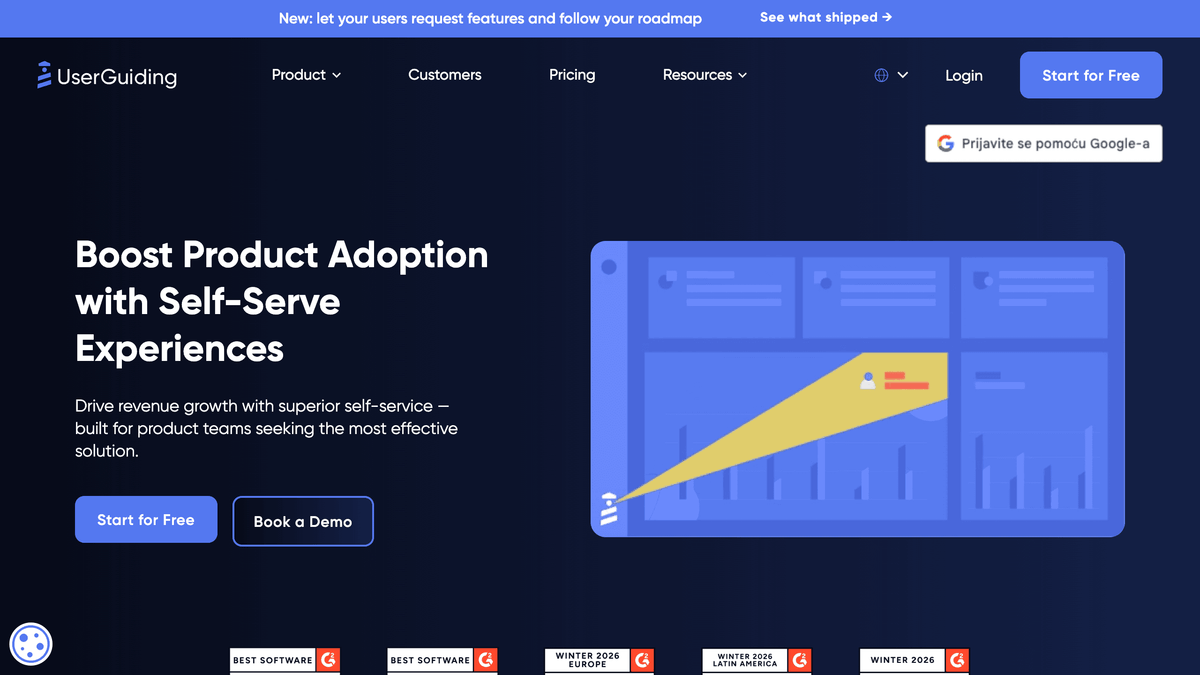
With Albato, you can connect UserGuiding to the rest of your stack, so a "checklist complete" or "survey shown" event can create a CRM contact, update a deal stage, or ping your team in Slack without any code.
UserGuiding runs on tiered plans priced by monthly active users, with the entry tier aimed squarely at small teams. Best for startups that want a real onboarding flow live fast and cheap.
Chameleon
Chameleon is the choice when your onboarding has to look and behave exactly like your product, down to the pixel. Its differentiator is styling control: teams can shape tooltips, modals, and microsurveys to match the native UI so closely that users never feel they left the app for a third-party overlay. Design-conscious product teams who reject the boxy default look of most onboarding widgets end up here.
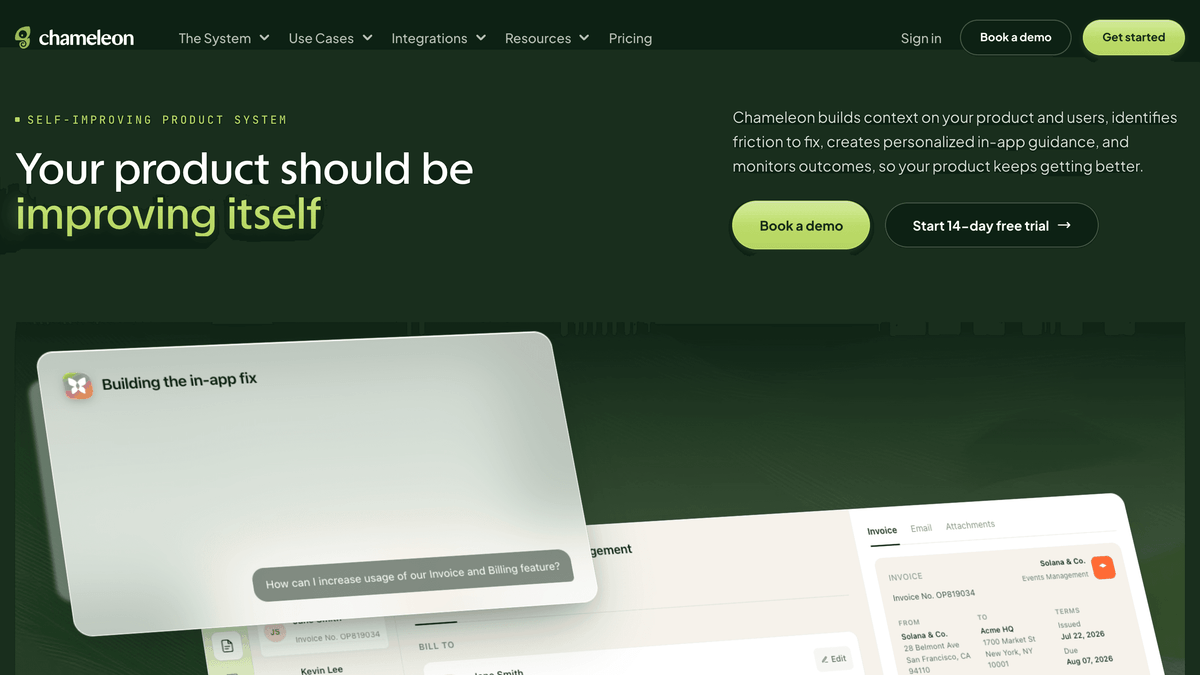
That customization extends to targeting and A/B testing on individual UI patterns, which suits teams running deliberate experiments on their activation moments. The trade-off is a steeper setup than a plug-and-play tool, so it fits teams with the design and product resources to use the control it offers.
Chameleon does not have a native Albato connector, but it is connectable via webhooks or API, so a completed onboarding experience can still trigger downstream actions in your CRM or support tools.
Chameleon prices on tiered plans that scale with monthly tracked users and the feature set you need. Best for product teams that treat onboarding UI as part of the product's craft.
Pendo
Pendo brings product analytics and in-app guides together, which is why larger PLG organizations lean on it. You get deep usage analytics, funnels, and retention data alongside the onboarding guides, so the same platform that tells you where users stall is the one you use to fix it. At scale, keeping analysis and intervention in one system beats stitching two tools together with exports.
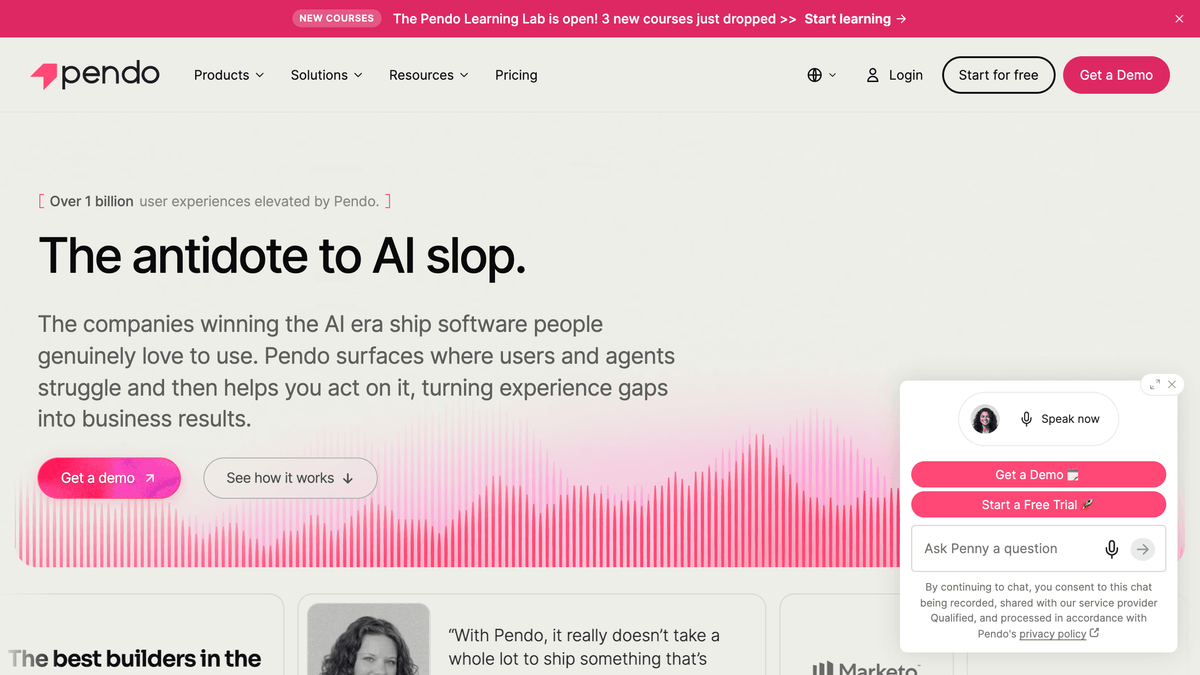
The breadth is real, and so is the weight: Pendo is a larger platform aimed at product organizations rather than a single growth marketer, and pricing and setup reflect that. Smaller teams often find it more than they need, while product-led companies at scale value having onboarding, analytics, and feedback under one roof.
Pendo does not offer a native Albato connector, but it is connectable via webhooks or API, so onboarding and product events can reach your CRM, support desk, or data warehouse.
Pendo prices on custom quotes that scale with monthly active users and modules, with a limited free tier for very small products. Best for product-led companies that want analytics and in-app guidance in one system.
Best for high-touch client and implementation onboarding
When onboarding means a real project, with kickoff calls, a task plan, and a handoff from sales to customer success, an in-app tour cannot do the job. These tools give both sides a shared view of the plan: what is done, what is blocked, and who owns the next step. Rocketlane and GUIDEcx are the category anchors, with OnRamp and Moxo covering adjacent needs.
Rocketlane
Rocketlane combines client onboarding with project and resource management, which sets it apart from tools that treat onboarding as a checklist. Its customer-facing portal gives clients a live view of the implementation, so they see progress, pending tasks, and documents in one branded space instead of chasing status over email. For services and B2B SaaS teams billing against onboarding time, the built-in project and resource tracking is the reason it wins deals against lighter portals.
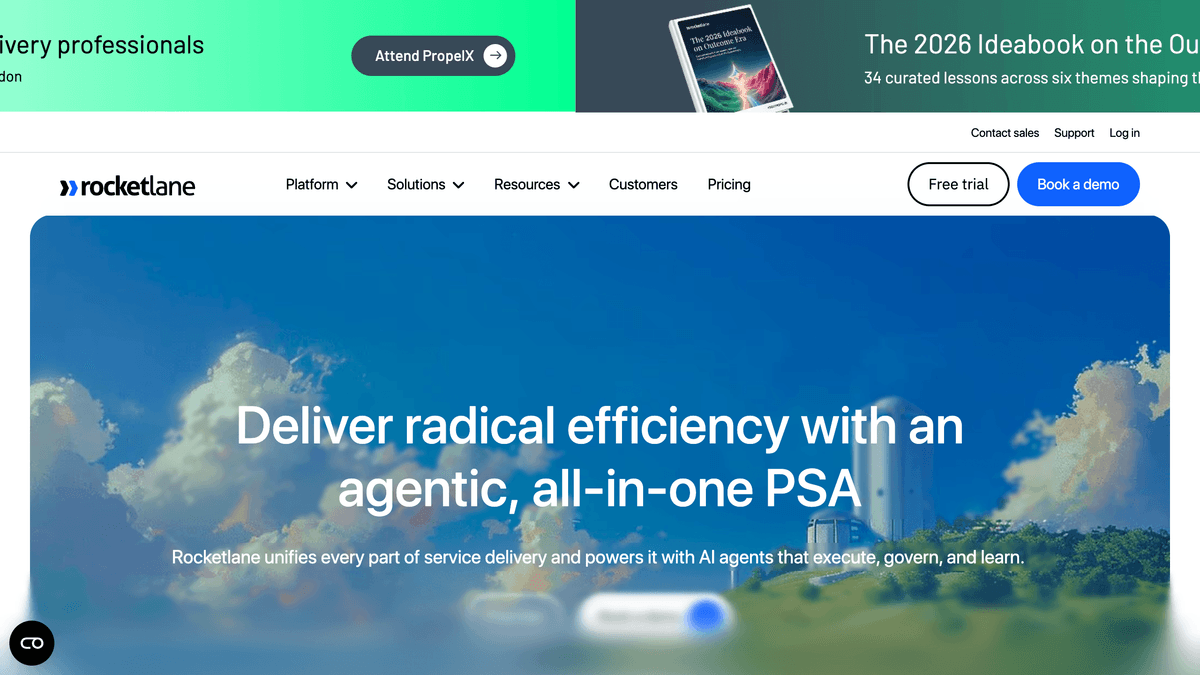
The platform folds in templated project plans, time tracking, and collaborative documents, so the onboarding team runs the project and the client watches it move without a separate PM tool. It suits organizations where onboarding is a delivered service with a timeline and a bill, not a self-serve flow.
Rocketlane is connectable via webhooks or API rather than a native Albato connector, so a completed onboarding milestone can update a CRM opportunity or notify customer success automatically.
Rocketlane prices per user on tiered plans, scaling with the project and portal features you enable. Best for teams that run onboarding as a billable, project-managed engagement.
GUIDEcx
GUIDEcx is built specifically for implementation and onboarding project management, and its strength is keeping every party moving in one plan. It coordinates internal teams, the customer, and any third-party partners against a structured onboarding template, with a client portal and email-based task updates so customers can contribute without logging in constantly. Teams whose onboarding stalls because a client forgets a step lean on GUIDEcx to keep the plan visible and the next action obvious.
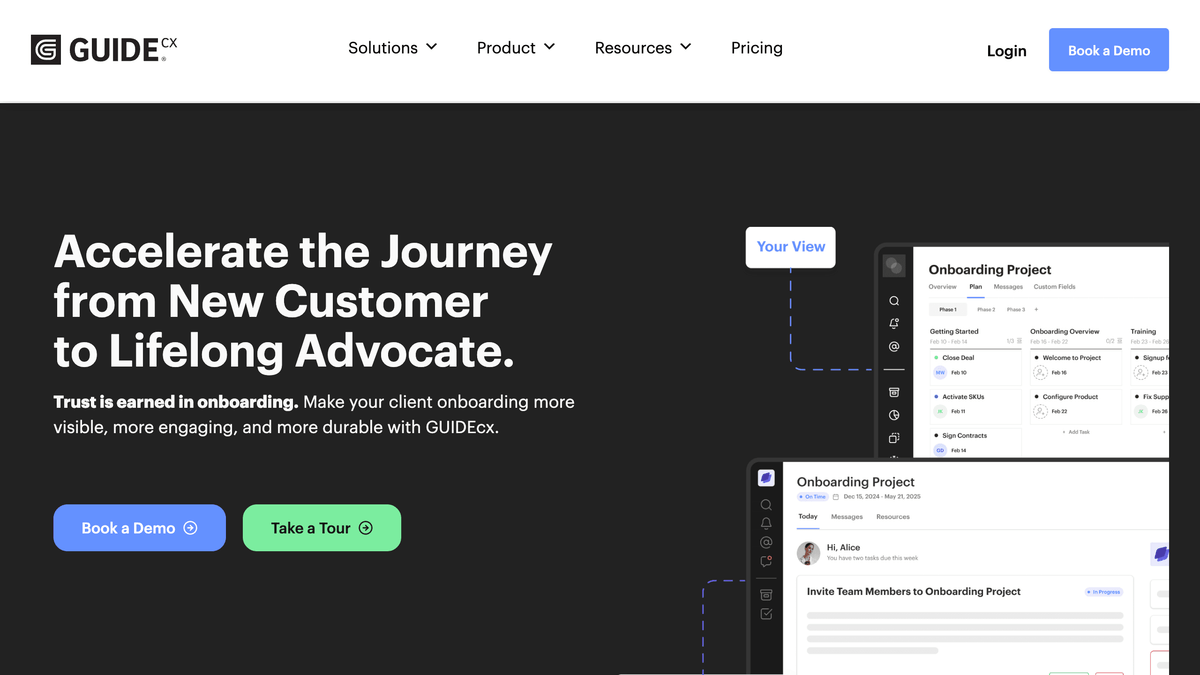
Reusable templates, milestone tracking, and time-to-value reporting round it out, so a repeatable onboarding process can scale without each project starting from a blank plan. GUIDEcx is connectable via webhooks or API, so onboarding progress can sync back into your CRM or trigger a handoff when a project closes.
⚠️ Important. The biggest onboarding delays rarely come from your team. They come from the customer missing a task they did not know they owned. A tool that assigns and reminds the client directly, rather than routing everything through your CS rep, removes the bottleneck most implementation plans get stuck on.
GUIDEcx prices on custom tiers that scale with users and projects. Best for teams that need a repeatable, client-visible implementation process.
OnRamp
OnRamp focuses on making client onboarding adapt to each customer rather than forcing everyone down the same static checklist. Its dynamic action plans branch based on what a customer needs, so a simple account and a complex enterprise rollout follow different paths inside the same tool. Onboarding teams tired of maintaining a dozen near-identical plan templates get one system that adjusts on its own.
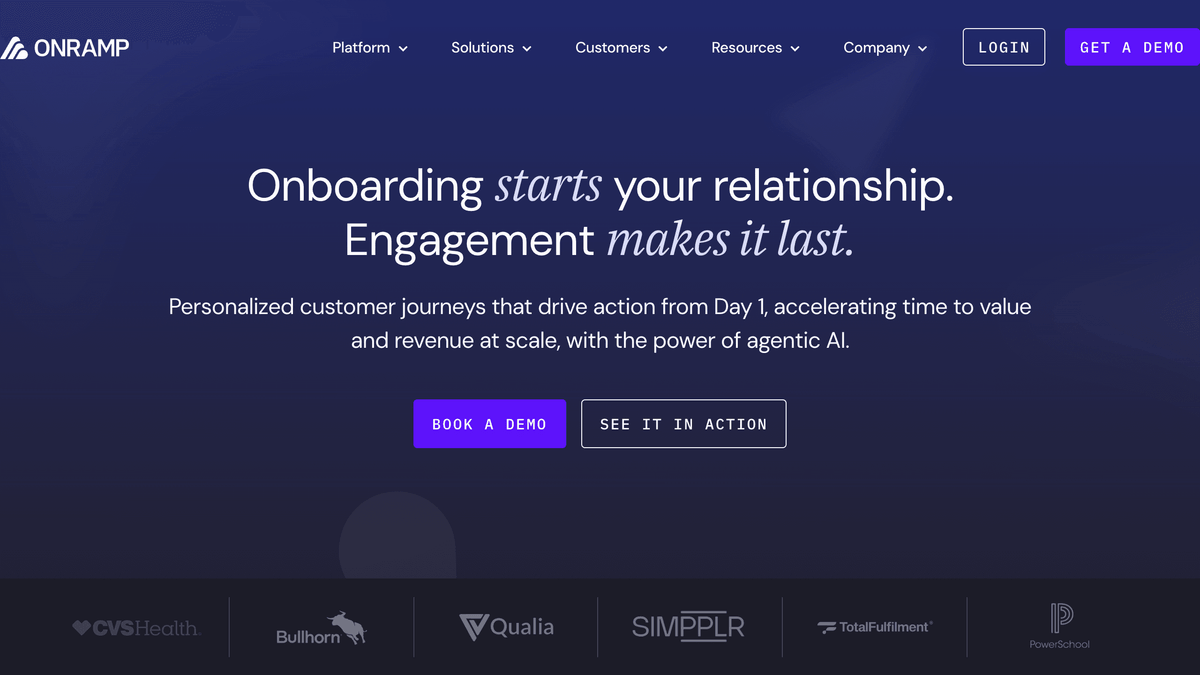
The platform pairs those action plans with a customer-facing experience and automation around reminders and handoffs, which cuts the manual chasing that eats a CS manager's week. It fits teams whose onboarding varies a lot by customer segment and who want that variation handled by the tool, not a spreadsheet.
OnRamp is connectable via webhooks or API, so an onboarding step or completion can flow into your CRM, support desk, or analytics.
OnRamp prices on custom quotes based on team size and usage. Best for teams whose onboarding paths differ sharply from one customer to the next.
Moxo
Moxo takes a different angle: a secure, branded client portal that holds the whole relationship, not just the onboarding phase. Documents, approvals, e-signatures, messaging, and tasks live in one client workspace, so onboarding flows straight into ongoing account management without moving the customer to a new tool later. For finance, professional services, and other document-heavy B2B teams, that single secure workspace is the selling point.
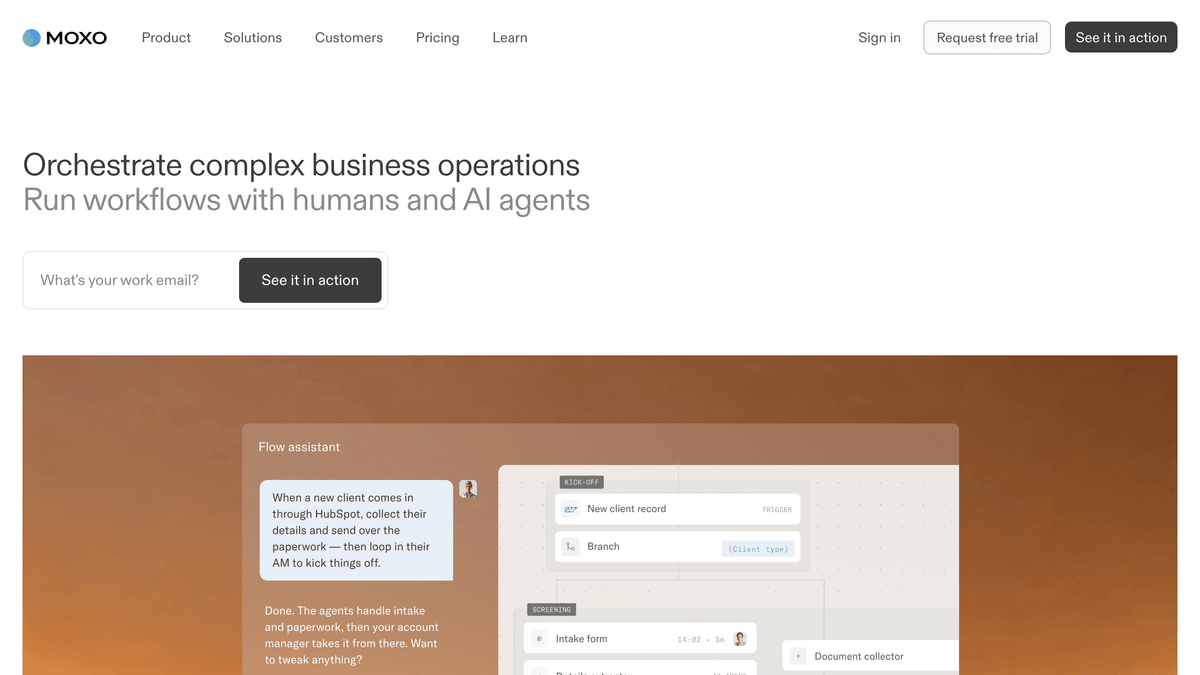
Because it centers on the portal rather than internal project tracking, Moxo is strongest where the client-facing experience and document exchange matter more than granular resource management. Teams that want clients working in a polished shared space, not an email thread, favor it.
Moxo is connectable via webhooks or API, so a signed document or completed onboarding task can create a record or notify a team in your other systems.
Moxo prices on tiered plans that scale with users and portal features. Best for document-heavy B2B teams that want onboarding and account management in one client portal.
Best for onboarding inside a tool you already run
Sometimes the smartest onboarding software is one you already pay for. If your support and messaging already run on Intercom, its built-in product tours and checklists let you onboard users without adding, learning, or funding a separate tool.
Intercom
Intercom delivers onboarding inside the messenger your team already uses for live chat and support. Product tours, checklists, and targeted messages fire in the same widget that handles conversations, so a new user gets guided in context and can ask a question the instant they get stuck, without switching surfaces. For teams already standardized on Intercom, that consolidation is the whole appeal: one tool for support, messaging, and onboarding instead of three.
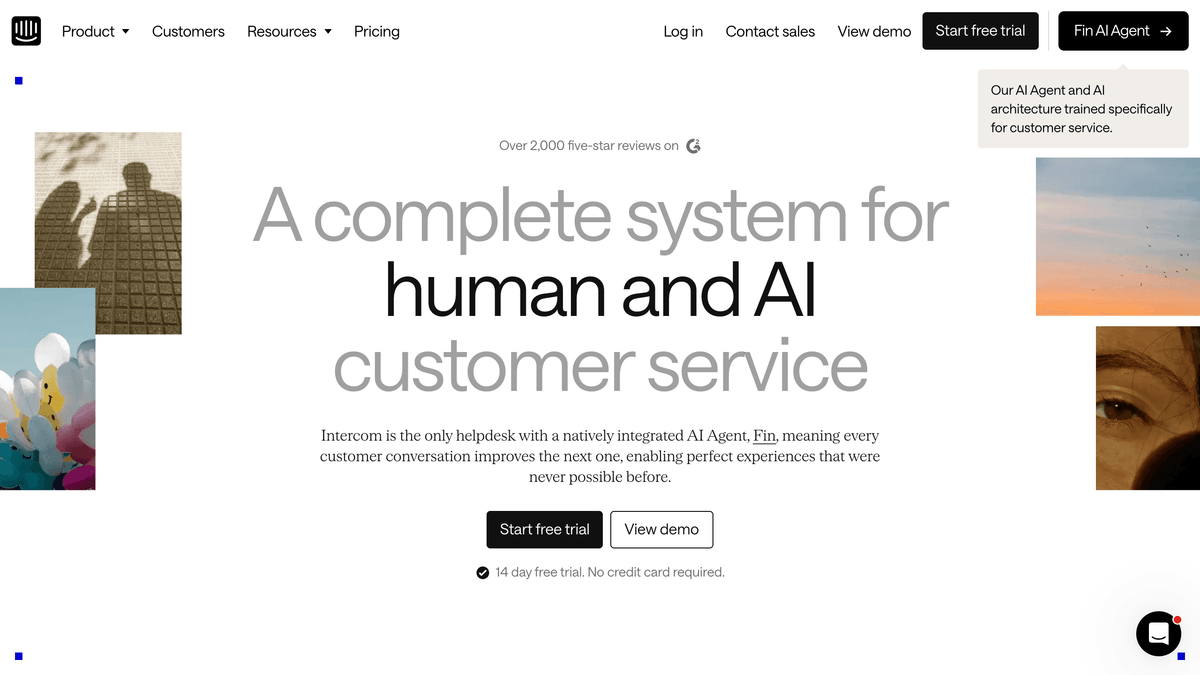
Because onboarding shares data with the rest of Intercom, you can target tours by user attributes and tie completion back to the reporting your support team already watches. The trade-off: it works best when Intercom is already your hub, so adopting it purely for onboarding is a heavier lift than a dedicated flow-builder.
Connect Intercom through Albato, so a completed onboarding tour or a new lead can sync into your CRM, notify a Slack channel, or kick off a follow-up sequence.
Intercom prices on seat-based plans with usage-based charges for its automation and AI features layered on top, so total cost depends on volume. Best for teams that already run support and messaging on Intercom and want onboarding in the same place.
Which onboarding tool fits your stack?
Start from how you deliver onboarding, and the shortlist narrows fast. If users self-serve with no sales call, pick a product-led tool: Userpilot for analytics-driven flows, UserGuiding for a fast and cheap start, Appcues for mobile reach, Chameleon for custom UI, or Pendo for analytics at scale. If onboarding is a hands-on project with kickoff calls and a plan, go high-touch: Rocketlane or GUIDEcx for structured implementation, OnRamp for paths that vary by customer, or Moxo for a branded client portal. If your team already lives in Intercom, its tours cover onboarding without a new tool.
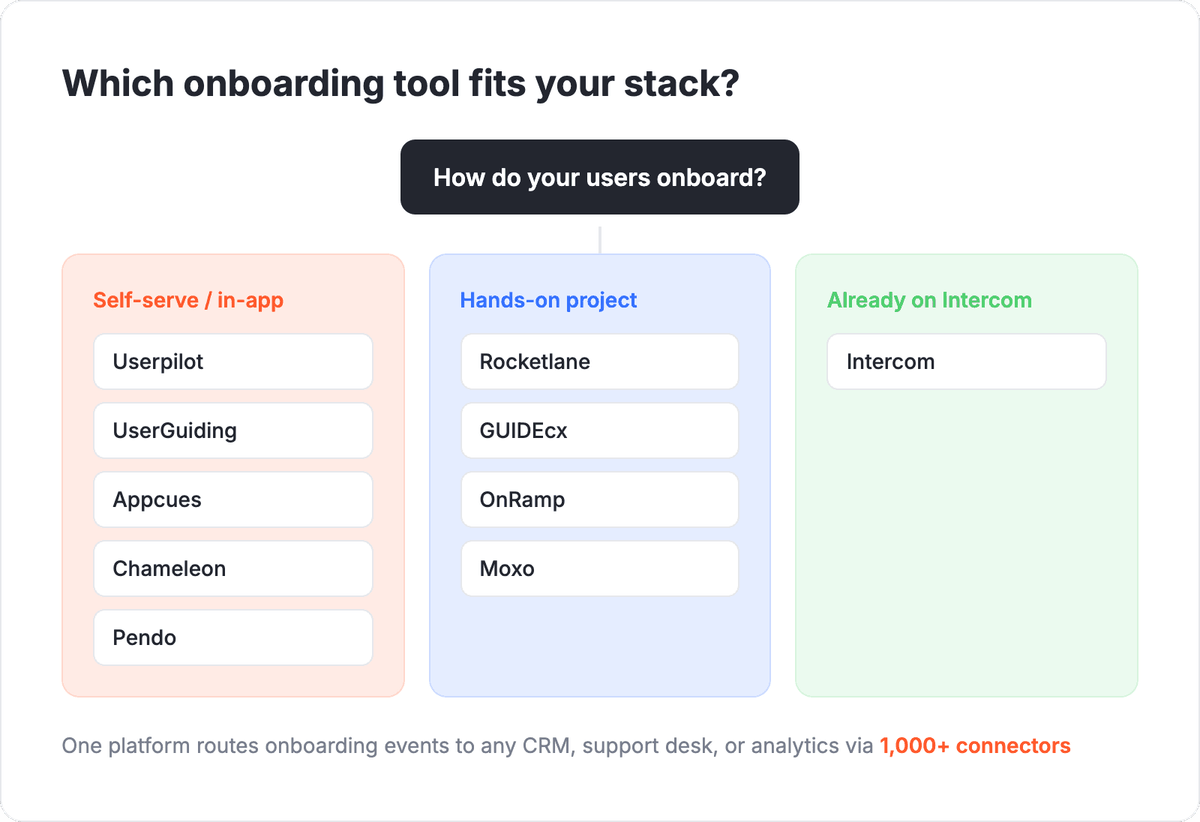
Whichever bucket you land in, the deciding factor is often integration depth, not the flow editor. An onboarding tool that cannot tell your CRM a trial user just activated, or open a support task when a client stalls, leaves the most valuable signals stranded. That gap is what the next section closes. You can also weigh onboarding against the reader-facing help your users hit first, which is where solid knowledge base software earns its place.
Connect your onboarding tool to your CRM, support, and analytics with Albato
An onboarding tool rarely does its job alone. The moment a user starts a trial, finishes a checklist, or a client stalls mid-implementation, that signal needs to reach the rest of your stack or it goes to waste. Albato is a no-code integration platform with 1,000+ connectors that moves those events between your tools automatically, so your onboarding data stops living on an island.
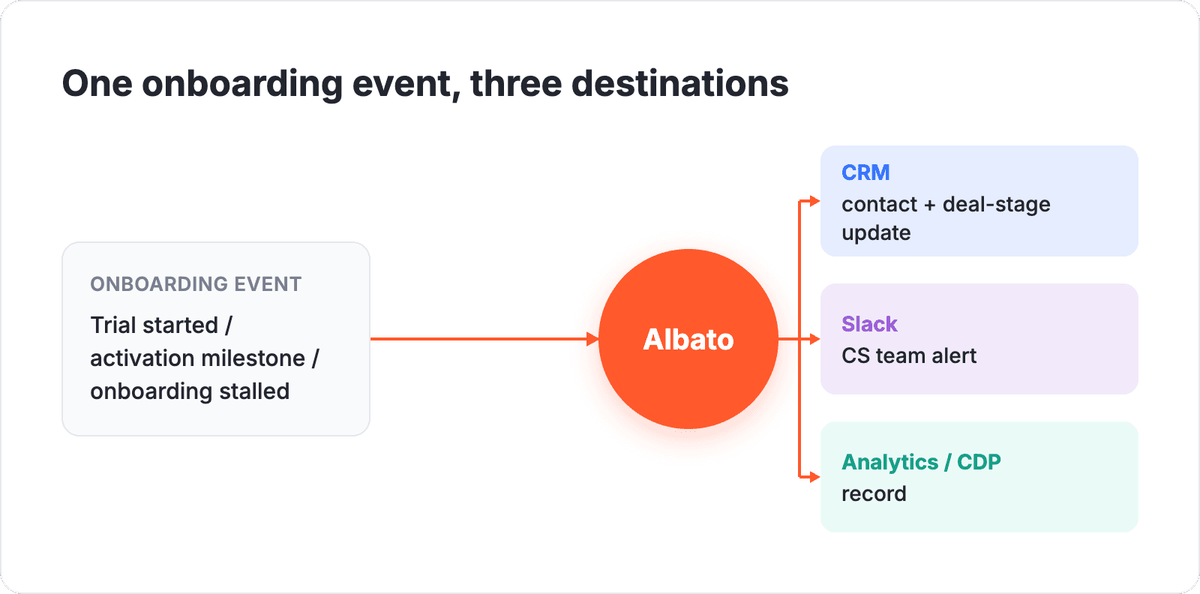
The diagram above shows the fan-out in one glance: a single onboarding event splits into three parallel updates. Here are four workflows onboarding teams set up most often.
A new signup or trial-start event creates or updates a CRM contact and kicks off the onboarding sequence, so no activated user sits outside your pipeline.
An activation milestone, like a completed checklist or a key first action, moves a CRM deal stage forward and notifies customer success in Slack, so the team celebrates and acts on the win in real time.
An onboarding that stalls, with no activation after a set number of days, opens a support or CS task automatically, so at-risk users get a human before they churn quietly.
Onboarding and health signals flow into an analytics record or a customer data platform, so activation data reaches the full customer view instead of one dashboard.
Among the tools on this list, UserGuiding and Intercom have native Albato connectors you can wire up directly. The rest, including Userpilot, Appcues, Chameleon, Pendo, and the client-onboarding portals, expose an API, so they are connectable via webhooks or API. Most onboarding stacks route into the same destinations either way: HubSpot, Salesforce, Slack, and Zendesk all have connectors. You can explore the full catalog and build your first workflow on the Albato platform. It pairs naturally with the live chat tools that field questions during onboarding and the helpdesk software that catches the tickets onboarding generates.
FAQ
These are the questions teams ask most when they compare onboarding tools and plan how the data will move.
What is customer onboarding software?
Customer onboarding software helps new users or clients reach their first real value with a product as fast as possible. It splits into two families: product-led tools that add in-app tours, checklists, and tooltips for self-serve users, and client onboarding tools that run high-touch implementations through a project portal. The best options also connect their activation and progress signals to your CRM, support desk, and analytics so onboarding informs the whole customer relationship.
What is the difference between product-led (in-app) and client (high-touch) onboarding tools?
Product-led tools onboard users inside the app itself, with tours and checklists that scale to thousands of self-serve signups without a human on each account. Client onboarding tools run onboarding as a managed project, coordinating tasks, documents, and a handoff from sales to customer success through a shared portal. Pick product-led when users sign up and start on their own, and client onboarding when each account needs kickoff calls and a plan.
What is the best free or low-cost customer onboarding software?
UserGuiding is the strongest value pick for product-led onboarding, with tiered plans aimed at startups and small teams. Pendo offers a limited free tier for very small products, and several tools run free trials so you can test a flow before paying. Free and low-cost plans usually cap monthly active users, seats, or features, so confirm the limits on the vendor page before you build on one.
Can I connect my onboarding tool to my CRM and support stack?
Yes. UserGuiding and Intercom have native Albato connectors, so you can sync onboarding events, contacts, and activation milestones across your stack without code. Tools without a native connector, such as Userpilot, Appcues, Chameleon, Pendo, and the client-onboarding portals, usually expose an API and are connectable via webhooks or API through Albato.
Do I need dedicated onboarding software if my product analytics or helpdesk already has tours?
Not always. If your analytics platform or helpdesk already includes tours and checklists that cover your activation needs, using them keeps onboarding and reporting in one place. Consider a dedicated tool when you need deeper flow customization, mobile onboarding, adaptive client action plans, or a branded implementation portal your current tools cannot produce.
Looking for more on building a connected onboarding and activation stack? These guides cover tools that pair well with your onboarding software.