In this article
Key Takeaways
- For full-stack autonomous outbound across email, phone, and LinkedIn, 11x (Alice) and Artisan (Ava) lead, with Ava backed by a 400M+ contact database. AiSDR wins on transparent pricing at $900/mo.
- Qualified (Piper) is the pick for inbound website pipeline on Salesforce, not cold outbound. Apollo.io and Reply.io suit teams that want prospecting, sequencing, and AI in one lower-cost subscription.
- Clay (the data layer) and Relevance AI (build-your-own agent) cover the two ends nobody else does: enrichment that feeds every tool, and custom agents for non-standard motions.
- Most of these tools book meetings but leave the CRM write-back to you. An AI agent step in Albato closes that gap for a fraction of the cost.
Sales reps now spend 60% of the workweek on non-selling work like admin, research, and data entry, according to Salesforce's 2026 State of Sales report, which is exactly the slice AI SDR tools target. The catch is that most of them stop at "meeting booked" and hand the CRM hygiene back to a human.
What an AI SDR tool actually does (and where it stops)
An AI SDR tool automates the top of the outbound motion: it finds prospects, researches each account, writes and sends personalized sequences across channels, classifies replies, and books qualified meetings into a rep's calendar. The best ones run this loop with little human input. The category splits into three types, and buying the wrong type is the most common mistake.
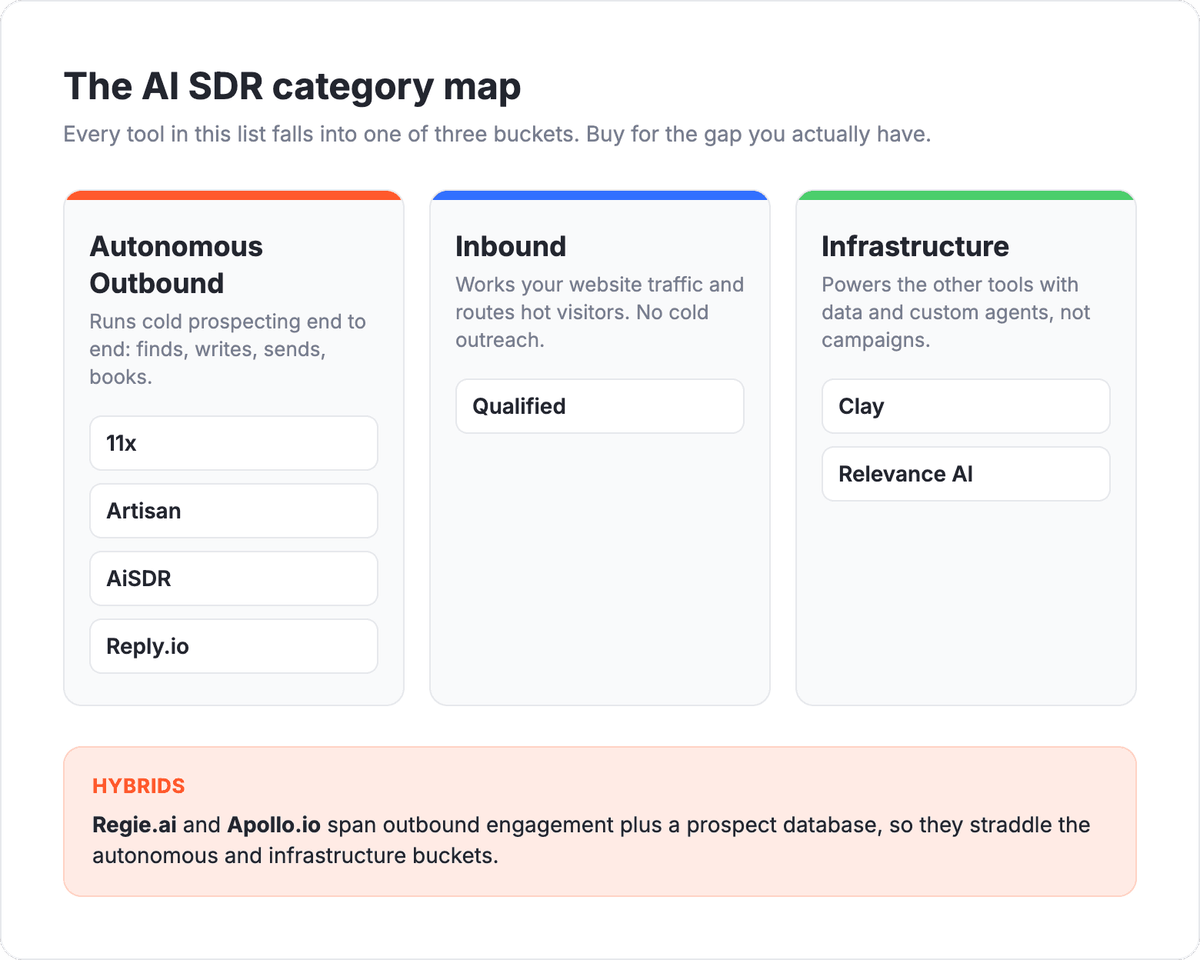
Autonomous outbound agents (11x, Artisan, AiSDR, Reply.io's Jason) replace the cold-prospecting grind end to end. Inbound agents (Qualified's Piper) work your website traffic and route hot visitors, with no cold outreach at all. Infrastructure tools (Clay for data, Relevance AI for custom agents) power the others rather than running campaigns themselves.
💡 Tip
Before you shortlist a vendor, decide whether your pipeline gap is outbound volume or inbound conversion. An outbound agent pointed at inbound traffic (or the reverse) underperforms badly, and you only find out after the annual contract is signed.
Here is where almost every tool on this list draws the same line: it handles outreach and qualification, then stops. Updating the CRM record, syncing the booked meeting to the right owner, firing a Slack alert, and triggering the handoff to an AE are left to you or to a separate automation. We come back to that gap near the end.
How we picked these tools
We selected tools that market themselves specifically as AI SDRs or AI BDRs (or, in Clay's case, are the data layer most of them run on) and that had an active, verifiable product and public reviews in 2026. Each entry is judged on four things: channels covered, whether a prospect database is built in, pricing transparency, and how cleanly it connects to a CRM. Pricing figures are the vendor's published rates or widely reported 2026 deal ranges where no public price exists.
AI SDR tools at a glance
| Tool | Best for | Channels | Built-in database | Entry price (2026) |
|---|---|---|---|---|
| 11x (Alice) | Full autonomous outbound at high volume | Email, phone, SMS, WhatsApp, LinkedIn | Yes | $3,750/mo (annual) |
| Artisan (Ava) | Replacing an outbound SDR seat | Email, LinkedIn | Yes (400M+) | Quote-only |
| AiSDR (Ami) | Transparent pricing, mid-market | Email, LinkedIn, SMS, calls | Yes (700M+) | $900/mo |
| Qualified (Piper) | Inbound website pipeline on Salesforce | Web chat, voice, video | No (uses your CRM) | ~$40K-68K/yr |
| Clay | Data enrichment that feeds every tool | Email (basic sequencer) | Waterfall across providers | $185/mo |
| Regie.ai | AI sales engagement for teams | Email, phone, LinkedIn | Yes (220M+) | $180/user/mo |
| Apollo.io | All-in-one on a budget | Email, phone, LinkedIn | Yes (275M+) | $49/user/mo |
| Reply.io (Jason) | Multichannel outbound plus AI add-on | Email, LinkedIn, calls, SMS, WhatsApp | Yes | $500/mo (AI add-on) |
| Relevance AI (Bosh) | Custom build-your-own agents | Configurable | No (bring your own) | $29/mo |
11x (Alice): the closest thing to a hands-off outbound rep
11x runs the most complete autonomous outbound motion of any tool here. Its agent, Alice, researches accounts, builds and enriches target lists, writes and personalizes emails, sequences LinkedIn touches, classifies replies, and books meetings, all across email, phone, SMS, WhatsApp, and LinkedIn. A separate inbound agent, Julian, answers inbound calls and qualifies live.
What sets 11x apart is that core infrastructure comes bundled: CRM sync, deliverability support, mailbox setup, and phone or chat infrastructure are included rather than sold as add-ons. It also prices on leads rather than sends, so volume caps feel less punishing.
The price is the gate. Alice starts at $3,750/mo on annual billing, with the Growth plan covering five users and 2,000 new prospects a month. Larger deployments reportedly run from $25,000 into six figures per year. This is a tool for teams with a real outbound budget and the volume to justify it.
Artisan (Ava): a full outbound seat with a 400M-contact database
Artisan positions Ava as a replacement for an entire outbound SDR function rather than an assistant. Its biggest asset is data: Ava draws on a B2B database of 270M+ contacts plus 130M+ local-business records, filtered by intent signals like funding rounds, executive hires, hiring surges, and tech-stack fit. Every plan includes Salesforce and HubSpot sync and a dedicated CSM for onboarding.
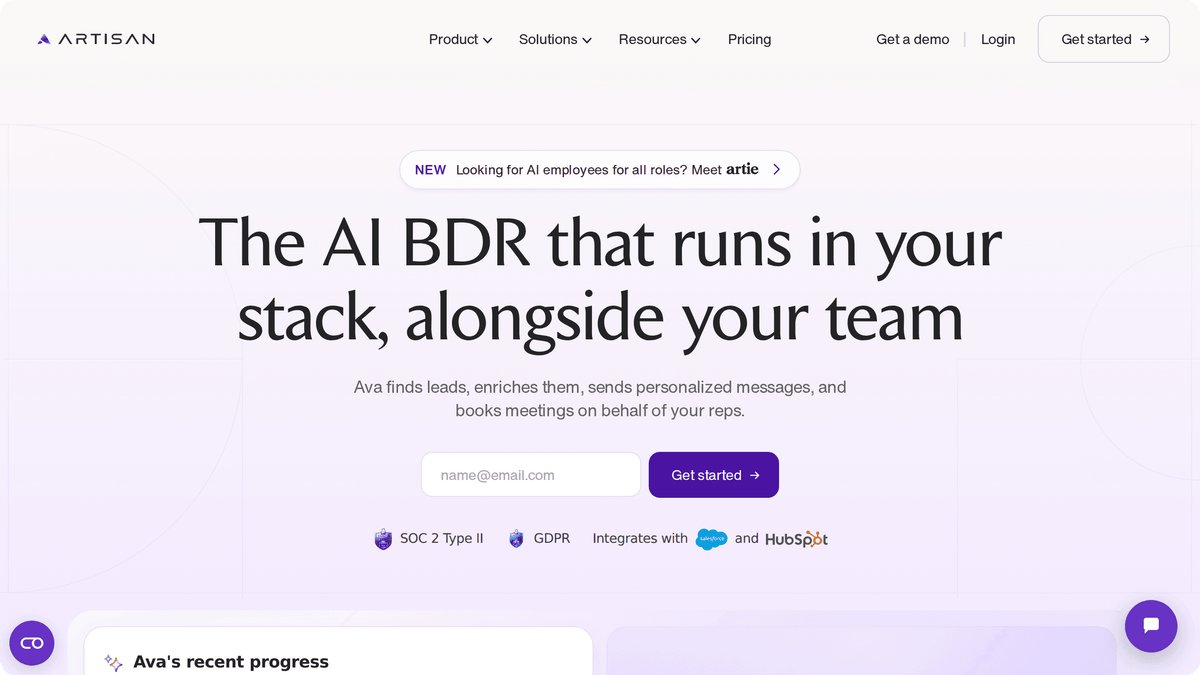
Pricing is the friction point. Artisan ran a self-serve plan from $250/mo earlier in 2026, then pulled it. The live plans (Team, Scale, Enterprise) are now quote-only with no free tier, and reported single-seat deals land roughly in the $1,500 to $3,000/mo range depending on lead volume.
⚠️ Important
A built-in contact database is convenient, but verify accuracy on your own ICP before committing. A 400M-record database that is 70% accurate in your niche costs you more in burned sends and domain reputation than a smaller, cleaner one.
AiSDR (Ami): the transparent-pricing pick
AiSDR, whose agent is now named Ami, is the easiest tool here to budget for because it publishes real prices. The Explore plan is $900/mo and includes 1,200 AI messages and 1,200 lead-search credits, with a cheaper $250 self-serve door added in mid-2026. It charges by message volume, not per seat, so every plan includes unlimited users.
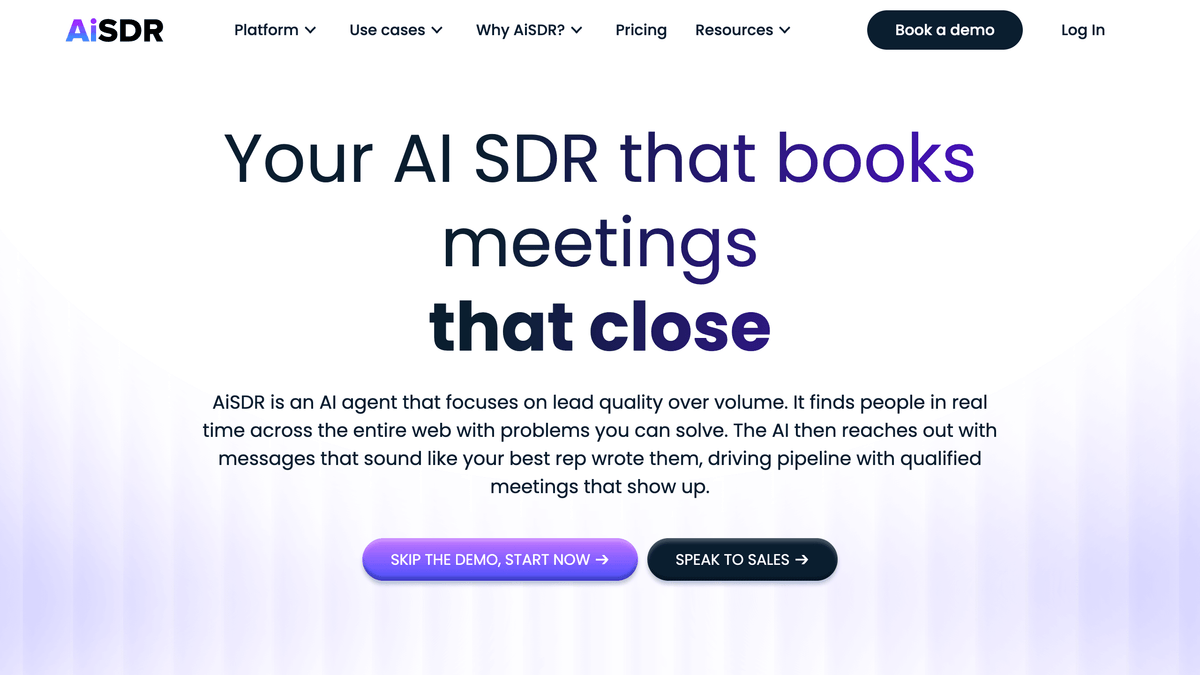
On capability it holds its own with the premium names: Ami coordinates email, LinkedIn, and SMS from one interface, adds calling through an Aircall integration, and prospects from a built-in database of 700M+ leads filtered by funding, tech stack, or hiring signals. It finds prospects, researches them, runs sequences, answers replies, and books meetings.
For a mid-market team that wants autonomous outbound without a quote-only negotiation, AiSDR is the straightest line from signup to sent sequences.
Qualified (Piper): inbound website pipeline, not cold outbound
Qualified is the outlier, and the one teams buy by mistake most often. Piper is an inbound AI SDR built natively on Salesforce: it engages website visitors through chat, voice, and video, qualifies them against your CRM data, and books meetings with hot buyers. It is genuinely strong at turning existing traffic into pipeline.
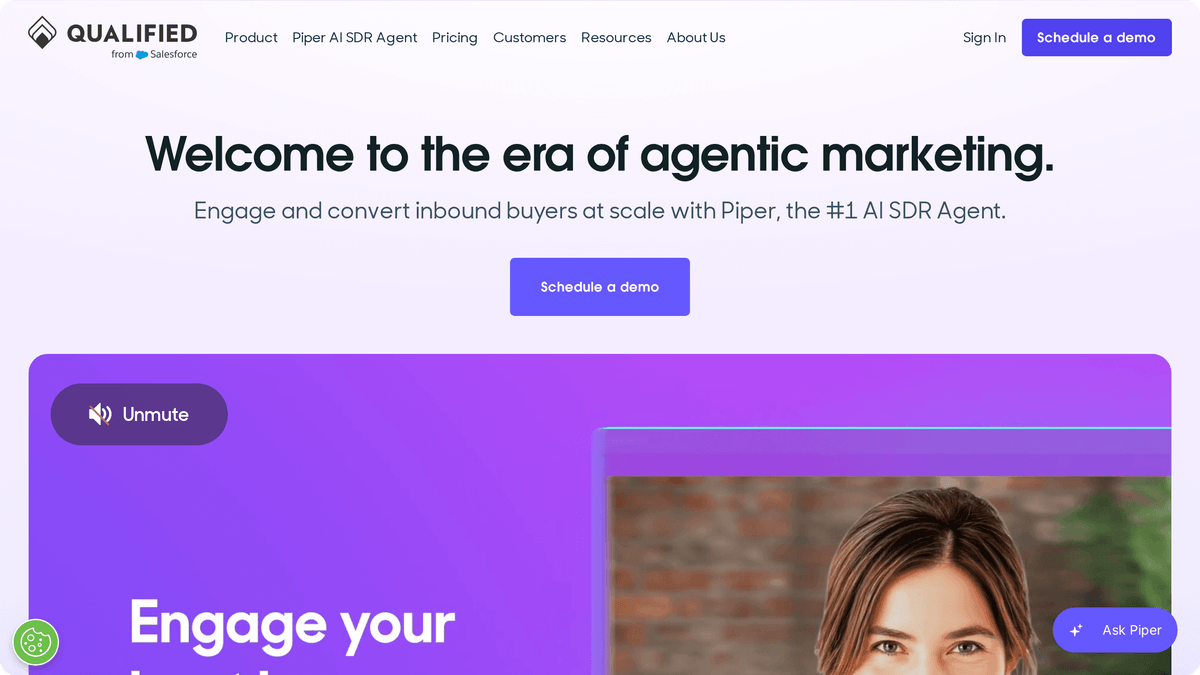
What it does not do matters just as much. Piper has no outbound sequences, no dialer, no LinkedIn automation, and no cold prospecting. If your gap is "we have traffic but it leaks," Piper fits. If your gap is "we need more at-bats," it is the wrong tool.
Cost is enterprise-grade. The platform lists around $68K/yr for 25 users, with most teams negotiating to $40K-$50K, and the required Salesforce stack can push total cost of ownership to $95K-$165K a year. Reserve it for larger orgs already standardized on Salesforce.
Clay: the data layer the others run on
Clay is not an AI SDR in the usual sense, and that is exactly why it belongs here. It is the enrichment engine most modern outbound stacks sit on top of. Its waterfall enrichment chains multiple data providers so a lookup that fails at one source retries at the next, and Claygent, its AI research agent, scrapes and structures custom data points no static database holds.
Pricing is usage-based and takes some math. Plans run from a free tier to Launch at $185/mo and Growth at $495/mo, with a dual-currency model that separates platform Actions from Data Credits. A fully enriched contact costs roughly $0.30 to $1.00 in data credits; a lookup that returns nothing costs nothing.
📊 Stat
A full enrichment with company data and technographics runs about 75 credits per lead, which on the Launch plan works out to roughly $3.75 per fully enriched lead. Budget enrichment separately from your sending tool, not as an afterthought.
Regie.ai: an agentic sales engagement platform
Regie.ai sits between a classic sales-engagement platform and a pure AI SDR. Its RegieOne product uses AI agents to orchestrate email, phone, and LinkedIn across a 220M+ contact database, with intent-based prioritization, mailbox rotation, parallel dialing up to nine lines, and pipeline attribution. The agents handle research, prioritization, and contact readiness inside the rep's daily workflow rather than replacing the rep outright.
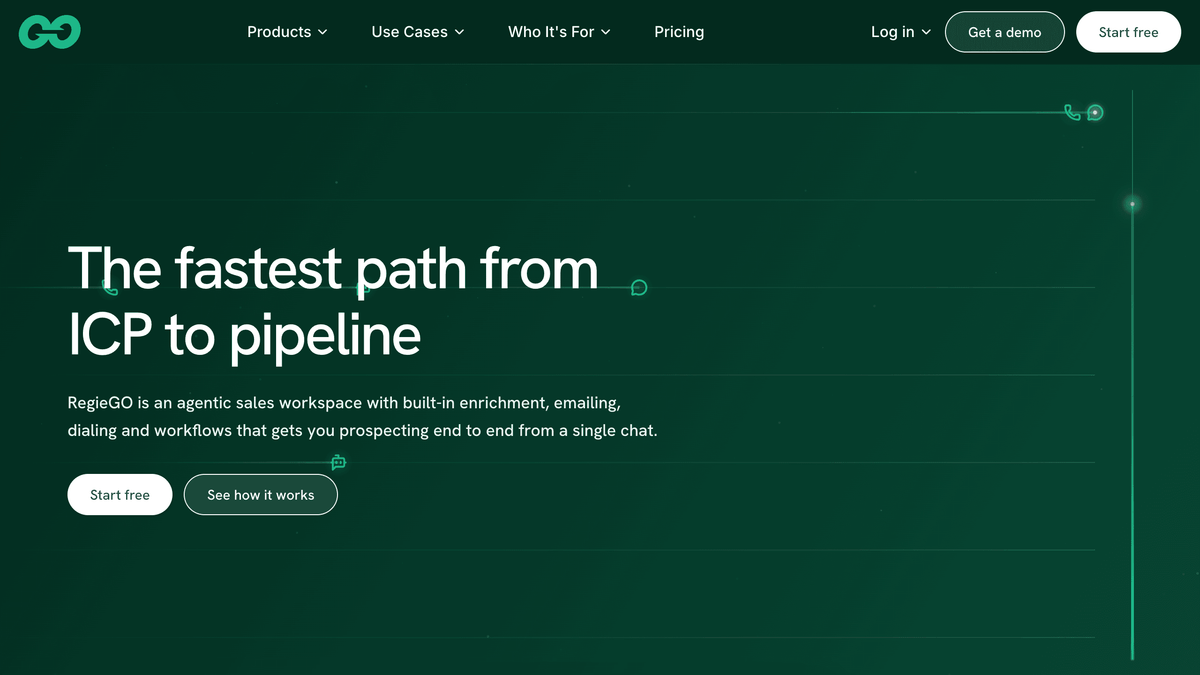
Pricing is per seat with real minimums. The engagement plan is $180/user/mo on an annual contract with a ten-seat floor, and a higher $499/user/mo plan with a five-seat minimum adds data credits, enrichment waterfalls, a parallel dialer, and ten warmed mailboxes. There is no self-serve free tier; evaluation runs through a sales-led demo.
This is a fit for teams that still want human reps in the loop but want agents to remove the research and prioritization drag.
Apollo.io: the all-in-one on a budget
Apollo.io is the value pick, bundling a 275M+ contact database, email sequencing, a built-in dialer, LinkedIn integration, and an AI assistant into one subscription. Smaller teams reach for it specifically to avoid buying a separate database, sequencer, and dialer. The AI assistant can build lists, draft sequences, and research accounts from a chat prompt.
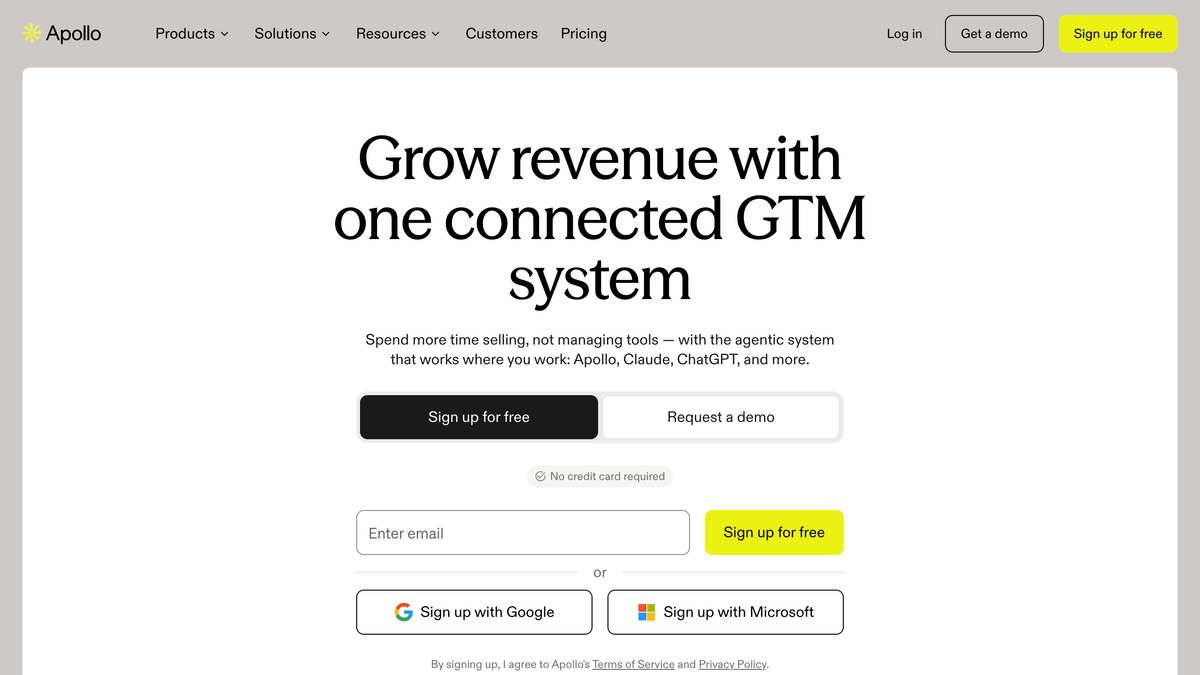
Pricing is the friendliest on this list: a free tier, then Basic at $49/user/mo, Professional at $79/user/mo, and Organization at $119/user/mo on annual billing. For the cost of a single premium AI SDR seat elsewhere, a small team can run Apollo across several reps.
The trade-off is autonomy. Apollo's AI assists the rep; it does not run the full outbound loop unattended the way Alice or Ava aim to. For teams that want a human driving with AI help, that is the point, not a flaw.
Reply.io (Jason): multichannel outbound with an AI SDR on top
Reply.io is a mature multichannel sequencing platform with an autonomous AI SDR, Jason, layered on top. Jason works in autopilot or copilot mode: it sources prospects, drafts and sends sequences, and books meetings across email, LinkedIn, calls, SMS, and WhatsApp. Teams that already run outbound in Reply.io can switch on the agent without migrating tools.
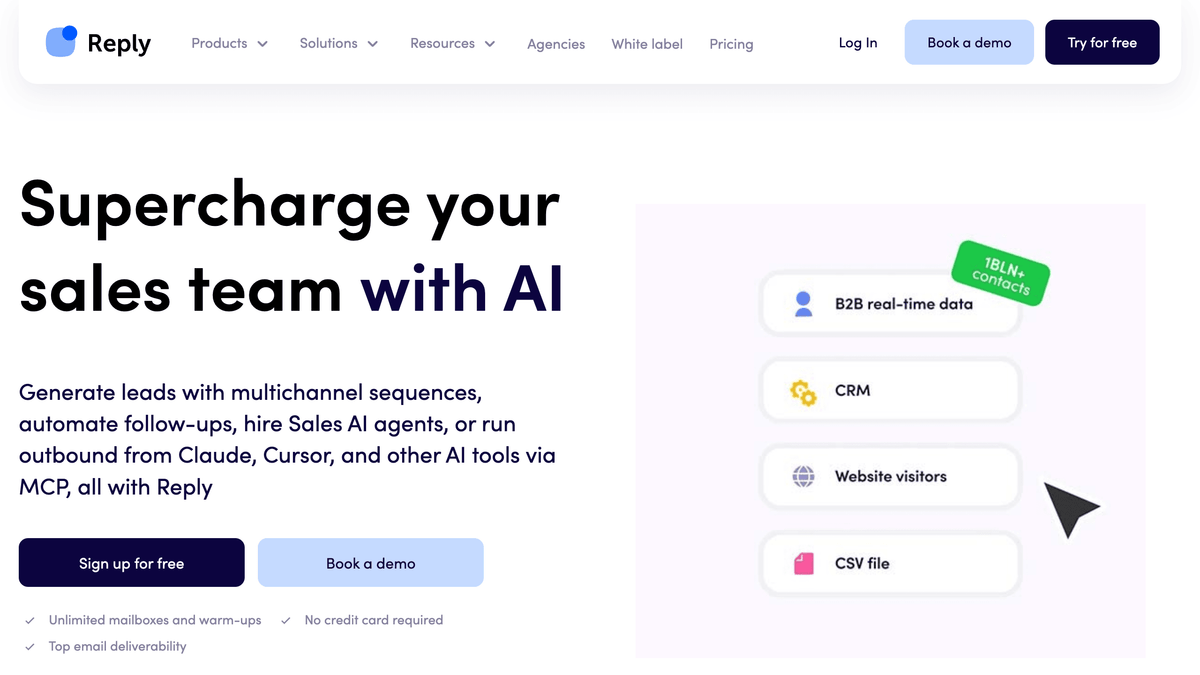
The pricing needs reading carefully because the AI is a premium add-on. The base platform starts at $49/user/mo for email and $89/user/mo for multichannel, with LinkedIn, calls, and SMS each adding cost. Jason AI starts at $500/mo on annual billing, with a Growth tier reported in the $1,500-$3,000/mo range. Stacked together, a 25-user multichannel team with Jason Growth can reach $86K-$103K a year, so model the full stack, not the headline $49.
Relevance AI (Bosh): build the agent your motion needs
Relevance AI is the DIY option. Rather than shipping a fixed SDR, it is a no-code platform for building an AI workforce, with a BDR template called Bosh as the starting point. If your outbound motion is non-standard (an unusual qualification flow, a niche data source, a multi-step research task no packaged tool handles) you build the agent to match instead of bending your process to a vendor's.
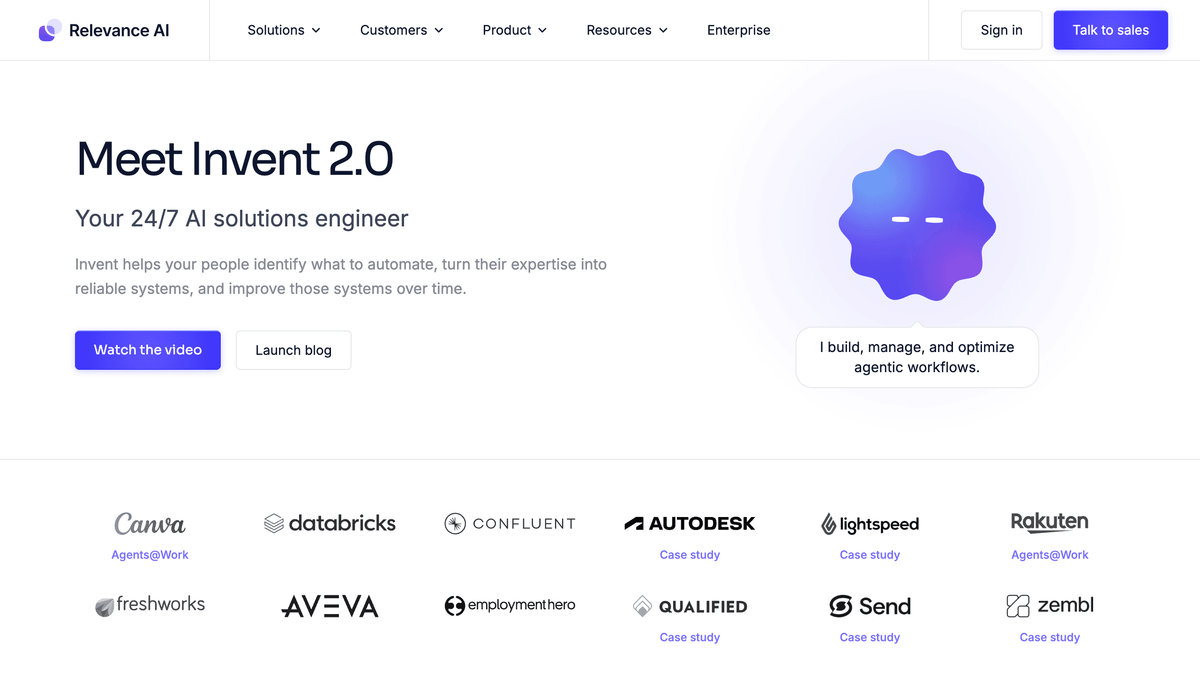
Pricing starts low and scales with usage: free, Pro at $29/mo, Team at $349/mo, then custom Enterprise. Since late 2025 it meters on two separate axes, Actions and Vendor Credits, which is transparent but makes cost forecasting harder than a flat seat price.
The cost here is time and expertise. You get flexibility no packaged SDR offers, but you also own the build, the maintenance, and the prompt engineering.
The gap every AI SDR leaves: the CRM write-back
Read the fine print on all nine tools and the same line appears: they get you to "meeting booked," then stop. Updating the CRM record with the full conversation, assigning the deal to the right AE, posting a Slack alert, and enriching the account for the handoff are left to you. That last mile is where booked meetings quietly rot into stale records.
This is where an AI agent built in Albato fits, and it costs a fraction of a dedicated SDR seat. Albato's AI Agent is a step you drop into any automation. You give it a model, instructions in plain language, and a set of tools (actions from your connected apps), and it decides what to do with each incoming event instead of you wiring fixed if-then branches. Around 5,000 actions across connected apps are available to it as tools, and it can fill required fields on its own with a per-field "Let the AI agent decide" option.
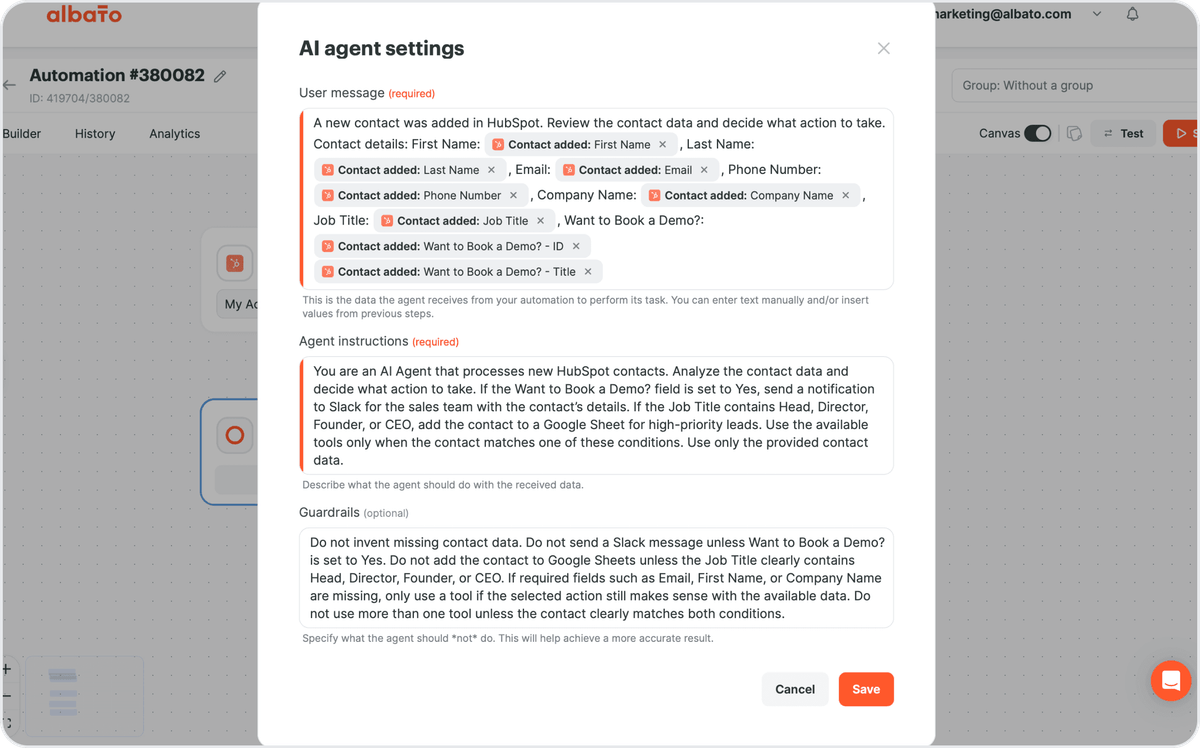
A concrete version of the write-back fix: a trigger fires when your AI SDR books a meeting or logs a reply, the Albato AI Agent reads the context, picks the right action, updates or creates the CRM record, routes the deal to the correct owner, and sends a Slack ping to the AE, all in one run. No fixed branches to maintain as your process changes. The model is Albato's own built-in proprietary model (not disclosed), and you can also plug in OpenAI, DeepSeek, or Gemini if you prefer to bring your own.
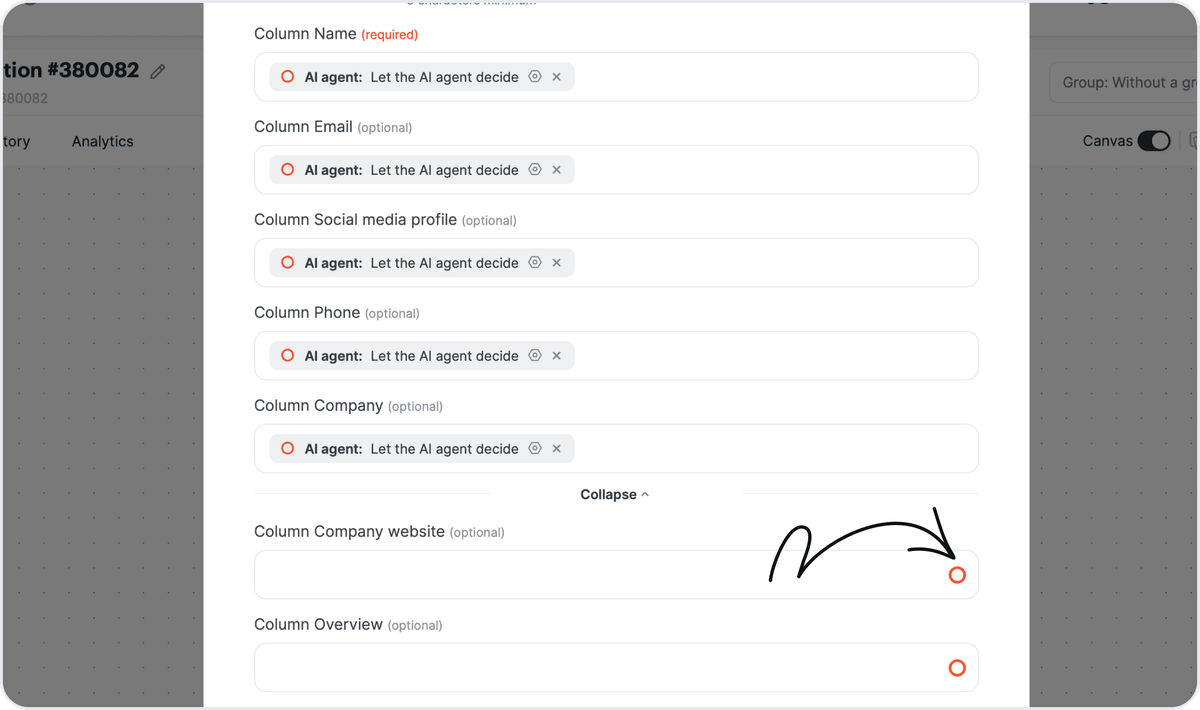
Billing is transaction-based: an agent run costs 3 transactions regardless of how many tools it uses, with the built-in Albato AI model adding 1 transaction per 2,000 tokens. For the cost of catching meetings before they go stale, that math is easy.
If you want the longer version of this setup, our guide on AI agents for sales walks through follow-up and deal updates step by step, and the lead qualification guide covers scoring and routing.
How to choose the right AI SDR tool
Match the tool to your gap, not to the longest feature list. If you need raw outbound volume and have the budget, start with 11x or Artisan; if budget is the constraint, AiSDR and Apollo.io get you most of the way for far less. If your problem is inbound traffic leaking, Qualified is the answer and nothing else on this list is.
Then check the plumbing before you sign. Confirm the tool writes back cleanly to your CRM, or plan to cover that last mile with an automation layer. The flashiest agent is worthless if the meetings it books never reach the AE who closes them.
🔧 How it works
Most of these tools expose a webhook or native CRM sync for "meeting booked" and "reply received" events. That event is the trigger you point an Albato AI Agent at, which is how you bolt reliable CRM write-back onto any tool on this list without waiting for the vendor to build it.
For teams layering AI into a wider stack, it is worth seeing which platforms let you assemble agents yourself. Our roundup of the best AI agent builders covers the no-code options, and the marketing ops guide shows the same enrich-segment-route pattern on the marketing side.
FAQ
What is the best AI SDR tool for outbound sales in 2026?
For full autonomous outbound, 11x (Alice) and Artisan (Ava) lead, with Ava backed by a 400M+ contact database and 11x covering the widest channel mix. If you want published, predictable pricing, AiSDR at $900/mo is the strongest mid-market pick. The best choice depends on whether your constraint is volume, budget, or CRM fit.
How much do AI SDR tools cost?
Entry prices in 2026 range widely. Apollo.io starts at $49/user/mo and Relevance AI at $29/mo, AiSDR is $900/mo, 11x starts at $3,750/mo, and enterprise platforms like Qualified run $40K-$68K a year before the CRM stack. Many premium tools are quote-only, so always model the full stack including data and add-ons.
Can an AI SDR replace a human SDR?
Not fully. Current AI SDR tools automate prospecting, research, outreach, and meeting booking, which frees human reps from the repetitive top of the funnel. They still fall short on complex qualification, relationship nuance, and the CRM and handoff work after a meeting is booked, which is why most teams pair them with automation and keep humans on closing.
Do AI SDR tools update my CRM automatically?
Some sync basic fields, but most stop at booking the meeting and leave the detailed write-back to you. This is the most common gap in AI SDR stacks. An AI agent step in Albato can read the booked-meeting event, update or create the CRM record, route the deal, and alert the AE in one run, closing that gap for a fraction of an SDR seat.
What is the difference between an AI SDR and an AI BDR tool?
In practice the terms are used interchangeably by vendors. SDR (sales development rep) and BDR (business development rep) both describe the top-of-funnel role that prospects, qualifies, and books meetings, so Artisan calls Ava an AI BDR while others call near-identical agents AI SDRs. Judge the tool on channels, data, and CRM fit rather than the label.