In this article
Key Takeaways
- Jasper wins for marketing teams that need brand voice and campaign volume, at $69 per seat per month. Copy.ai fits sales and go-to-market workflows from $29 per month, and Writesonic covers SEO content at scale from $79 per month.
- Grammarly is the pick when editing and clarity matter more than drafting, with a Pro plan at $12 per month on annual billing. ChatGPT stays the flexible generalist for teams that want one tool for everything.
- The tool writes the draft. The bottleneck is what happens after: getting that content into your CMS, CRM, or project tracker without copy and paste.
Marketing and sales are the two business functions where teams most often report using generative AI, across eight straight years of tracking, according to McKinsey's State of AI survey. The tools below are the ones doing that work day to day.
How we picked these tools
We ranked these five on four things: output quality for real business writing, pricing transparency, how well each tool holds a brand voice, and how easily its output moves into the rest of your stack. We used each tool for the kind of work its buyers actually do, so a marketing tool got tested on campaign copy and a proofreading tool got tested on edits, not the other way around.
We left out tools that only wrap a single model with a thin interface, and tools with no public pricing at all. Everything here has a plan you can see and buy without a sales call, except where noted.
Comparison table
| Tool | Best for | Starting price | Standout strength | Albato connector |
|---|---|---|---|---|
| Jasper | Marketing teams, campaigns | $69/seat/mo | Brand voice memory | Via ChatGPT/OpenAI |
| Copy.ai | Sales and GTM workflows | $29/mo | Go-to-market templates | Via ChatGPT/OpenAI |
| Writesonic | SEO content at scale | $79/mo (annual) | Article-length SEO drafts | Via ChatGPT/OpenAI |
| Grammarly | Editing and clarity | $12/mo (annual) | Real-time correction | Via ChatGPT/OpenAI |
| ChatGPT | Flexible general writing | $20/mo (Plus) | Broadest use range | Native (OpenAI) |
Jasper: built for marketing teams that ship campaigns
Jasper is the tool to reach for when a marketing team needs consistent output across a lot of channels at once. Its strongest feature is brand voice: you feed it your existing content, and it learns the tone so a blog intro and a paid social caption sound like they came from the same brand. That matters when three people are drafting under one voice.
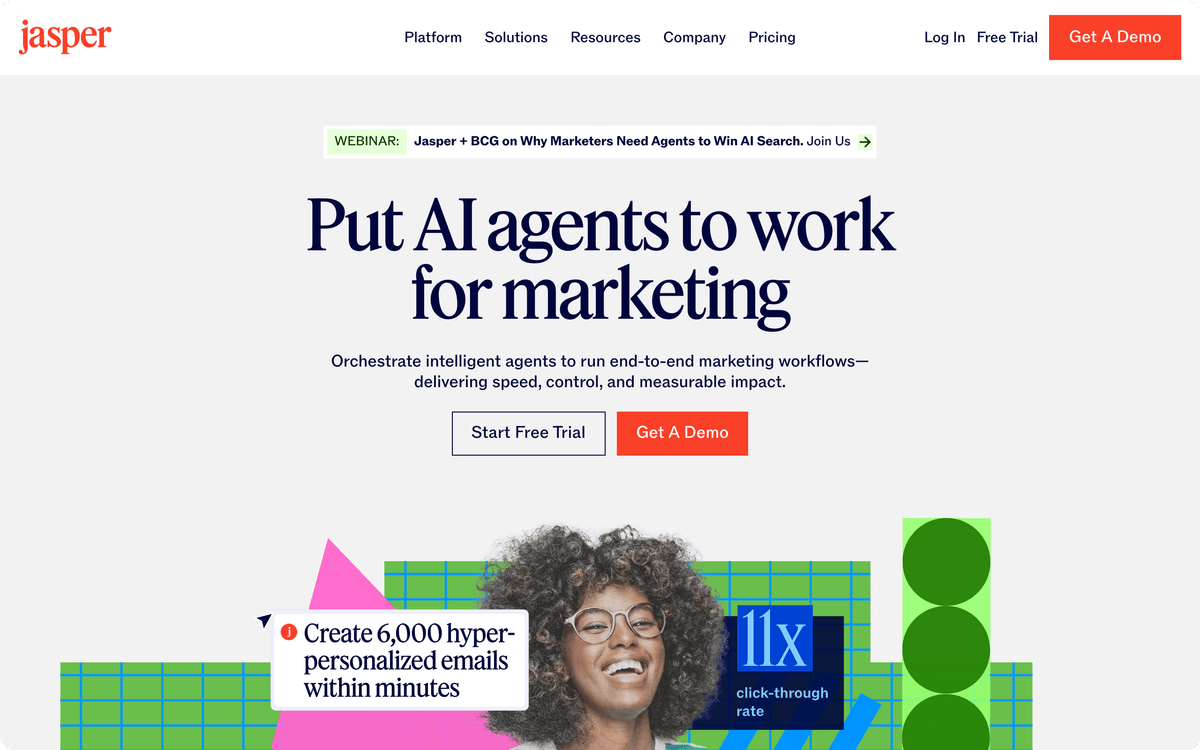
The Pro plan runs $69 per seat per month, or $59 on annual billing, per Jasper's pricing page, and each Pro seat is priced individually so the cost scales with team size. There is a seven-day trial but no permanent free tier, so Jasper is a commitment aimed at teams rather than solo writers testing the water.
💡 Tip. If you are the only writer, Jasper's per-seat model is overkill. It pays off once two or more people draft against the same brand guide and need the outputs to match.
Where Jasper earns its price is campaign scale: landing page copy, ad variants, and email sequences generated against one brief. The gap most teams hit is afterward. A finished draft still has to land in your CMS or your CRM's email builder, and that handoff is usually manual.
Copy.ai: sales and go-to-market writing
Copy.ai leans toward revenue teams rather than blog factories. Its templates skew to sales enablement and go-to-market work: outbound sequences, prospecting messages, and account research summaries, which makes it a natural fit for an ops team that lives in the pipeline.
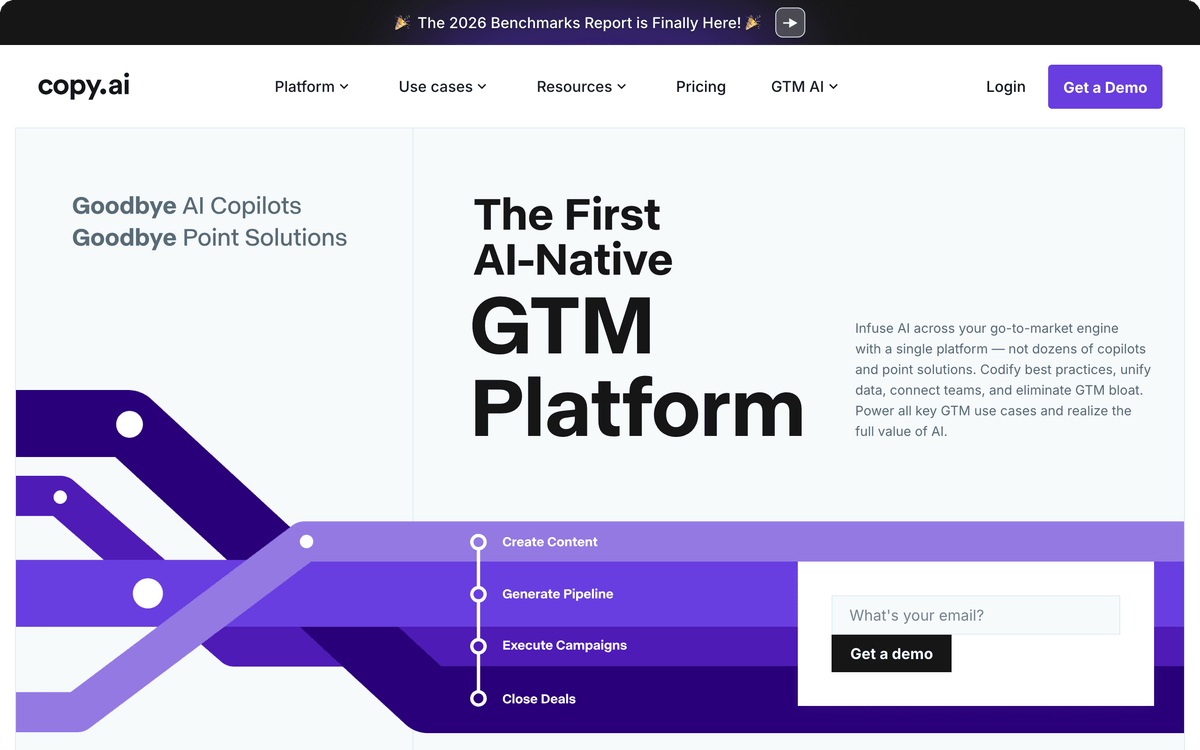
The Chat plan starts at $29 per month with five seats, per Copy.ai's pricing, which is the most generous entry seat count in this list. Above that, the Growth and higher tiers jump sharply to $1,000 per month and up, so Copy.ai is cheap to start and expensive to scale into its workflow features.
📊 Stat. Marketing and sales are the business functions where organizations most often report generative AI use, holding that spot across eight years of McKinsey's AI research. Copy.ai sits squarely in that use case.
The output is solid for short-form, personalized outreach. Longer strategic documents are not its strength. For a sales team, the real value shows up when generated messages flow straight into the CRM rather than getting pasted in one contact at a time.
Writesonic: SEO content at volume
Writesonic is aimed at teams producing search-driven content in bulk. It generates article-length drafts built around a target keyword, with SEO structure baked in, which is why content teams chasing organic traffic gravitate to it over a general chatbot.
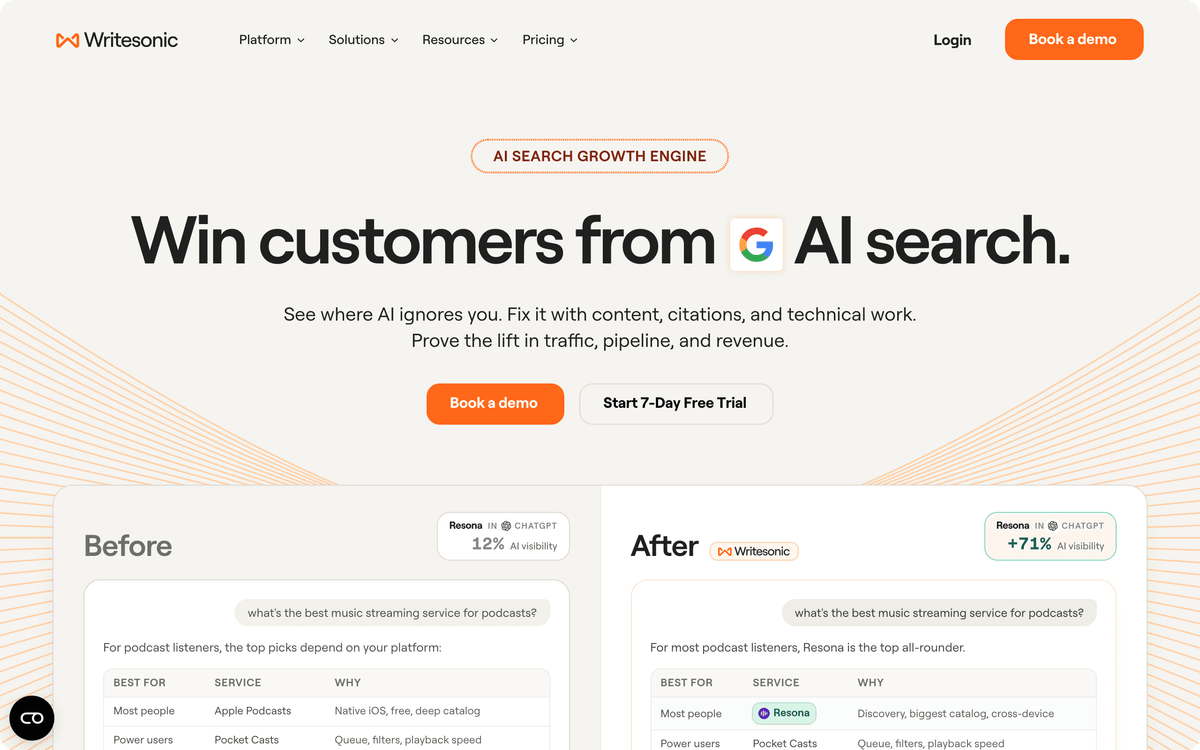
Pricing starts at $79 per month on the Starter plan with annual billing, rising to $199 and $399 for Basic and Growth, per Writesonic's pricing page. There is a free trial with no card required, but no permanent free plan. That puts Writesonic above the solo-writer tools and squarely in the team-budget range.
The tradeoff is familiar for volume SEO tools: drafts are a strong starting point but need a human editor before they rank and read well. Where teams lose time is the last mile, moving a finished piece into the CMS with the right formatting, tags, and metadata.
Grammarly: the editor, not the writer
Grammarly is the odd one out here, and that is the point. It does not draft for you so much as fix what you have written: grammar, clarity, tone, and consistency in real time as you type. For teams where the writing already exists and the problem is polish, it is the most useful tool on this list.
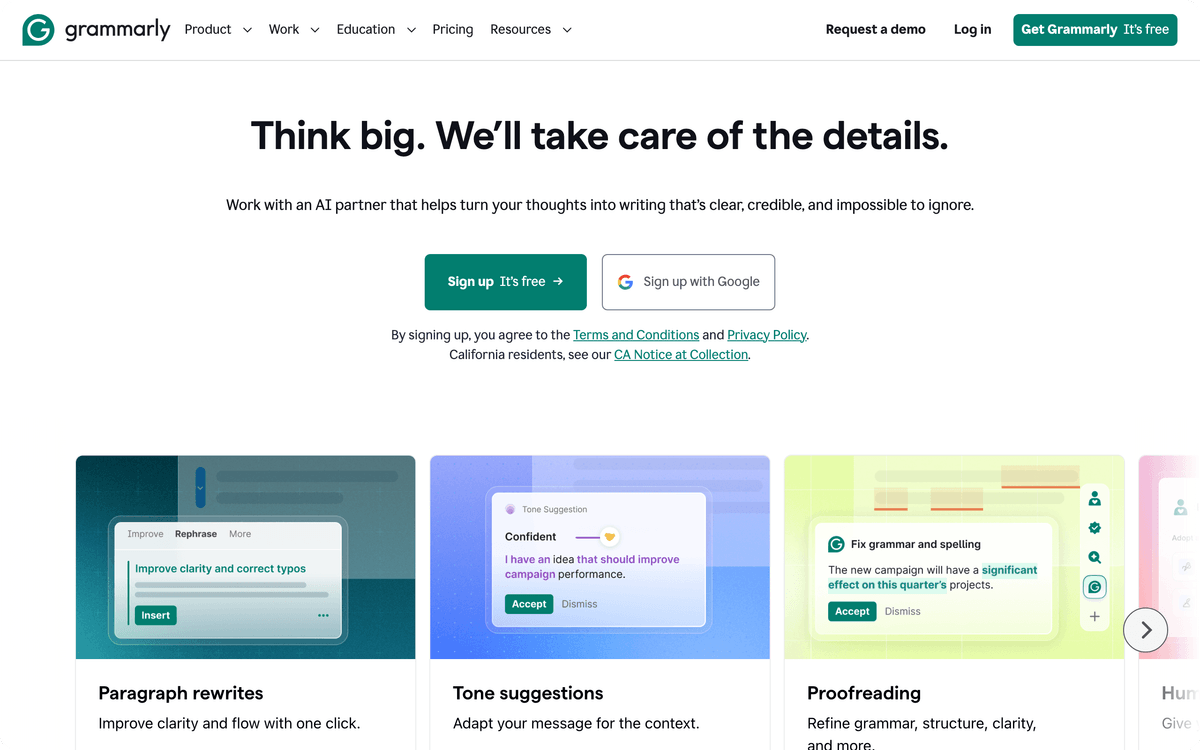
The Pro plan is $12 per month on annual billing, or $30 billed monthly, per Grammarly's plans page, with a free tier that covers basic corrections. Enterprise pricing is custom. That $12 annual rate makes it the cheapest paid option here by a wide margin.
🔧 How it works. Grammarly runs as a browser extension and desktop app, so it corrects text inside the tools you already use, from your email client to your CMS editor, rather than living in a separate window.
Pair Grammarly with a drafting tool and you cover both halves of the job. It will not generate a campaign from scratch, and it should not be your only AI writing tool if you need net-new content.
ChatGPT: the flexible generalist
ChatGPT remains the default for teams that want one tool that does a bit of everything. It drafts, edits, brainstorms, summarizes, and rewrites, and it handles formats the specialist tools do not bother with. If your writing needs are varied and unpredictable, the flexibility is worth more than any single specialized feature.
ChatGPT Plus is $20 per month for one user, which undercuts most of the team tools here on a per-person basis. The tradeoff is that it does not hold a brand voice across a team the way Jasper does, and it has no built-in SEO scaffolding like Writesonic. It is a generalist, and it is good at being one.
For a small team or a solo operator, ChatGPT plus Grammarly covers most writing needs at a low combined cost. For a marketing org running many campaigns, the specialized tools start to earn their higher price.
The part nobody talks about: getting the content where it needs to go
Every tool above produces text. None of them put that text where your business actually uses it. A finished blog post has to reach your CMS. A batch of outbound emails has to reach your CRM. A product description has to reach your store. That handoff is where teams quietly lose hours to copy and paste, and it is the one problem an AI writing tool does not solve.
This is where an integration layer fits in. Albato connects 1,000+ apps with no code, so the output from your writing tool can route automatically into the rest of your stack. ChatGPT (OpenAI) is a native Albato connector with triggers and actions, which means you can generate text in a workflow and send it onward without touching a keyboard.
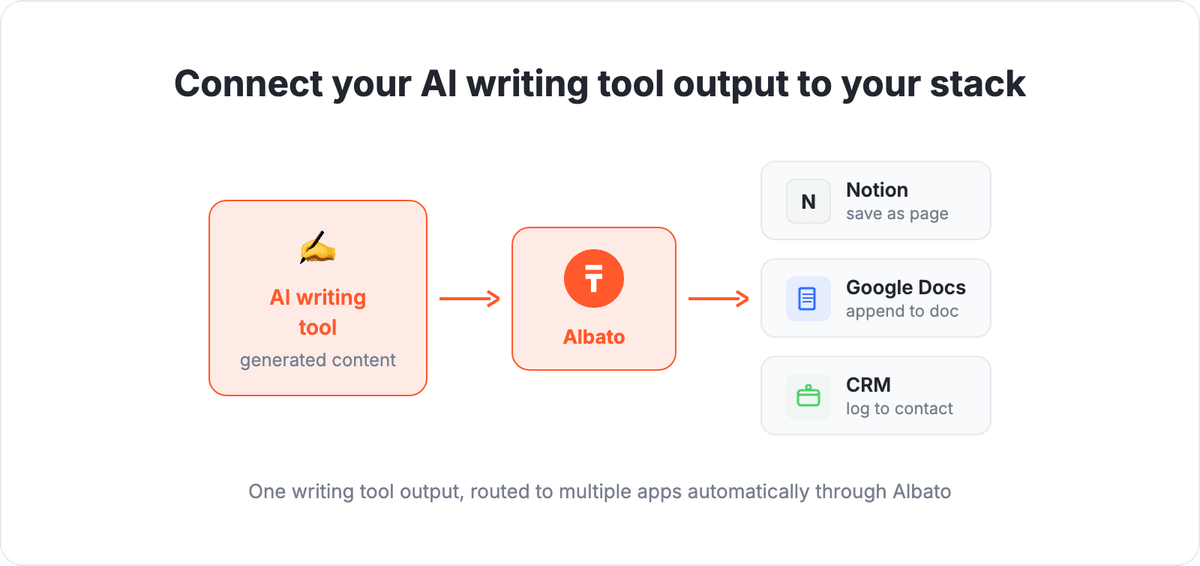
A few examples of what that looks like in practice. A new AI-generated draft can be pushed straight into Notion, which offers 6 triggers and 13 actions on Albato, so your content calendar updates itself. A generated document can be created in Google Docs from a template the moment a workflow fires. Outbound copy can move from your writing step into your CRM, ready to send. The writing tool does the words. Albato does the plumbing.
⚠️ Important. An integration layer does not replace your writing tool. It removes the manual handoff between the tool that writes and the systems that use the output. Those are two different jobs.
If you want to see how the AI models behind these tools actually differ, our breakdown of top gen AI models compares them head to head, and our Grok, ChatGPT, Gemini, and Claude comparison goes deeper on the chatbots specifically.
Which AI writing tool should you choose?
Match the tool to the job, not to the hype. If you run marketing campaigns across channels and need one brand voice, Jasper is worth its price. If you are a sales or go-to-market team writing outreach, Copy.ai fits your workflow and starts cheap. If you publish SEO content in volume, Writesonic gives you article-length structure out of the box.
If your writing already exists and you need it cleaner, Grammarly is the cheapest high-value pick on this list. And if your needs shift week to week, ChatGPT's flexibility beats any single specialized feature. Whichever you pick, the draft is only step one. What you do with the output is where the time actually goes.
FAQ
What is the best AI writing tool in 2026?
There is no single best tool, because they solve different problems. Jasper leads for marketing campaigns and brand voice, Copy.ai for sales and go-to-market writing, Writesonic for SEO content at scale, Grammarly for editing, and ChatGPT for flexible general writing. Match the tool to your main job.
Are AI writing tools worth paying for?
For teams producing content regularly, yes. Paid plans add brand voice memory, higher output limits, and team seats that free tiers cap hard. A solo writer with occasional needs can often get by on ChatGPT Plus at $20 per month plus Grammarly's free tier.
Can I connect an AI writing tool to my CMS or CRM?
Yes, through an integration layer. Most AI writing tools produce text but do not push it into other apps. A no-code platform like Albato connects ChatGPT (OpenAI) and 1,000+ other apps, so generated content can route into Notion, Google Docs, your CMS, or your CRM automatically instead of by hand.
Is Grammarly an AI writing tool?
Grammarly is an AI editing tool rather than a drafting tool. It corrects grammar, clarity, and tone in text you have already written, in real time. It does not generate net-new content from a brief the way Jasper or Writesonic do, so most teams pair it with a drafting tool.
Pick your writing tool for the drafting, then close the loop on the output. Albato routes what you generate into the apps your team already runs, no code and no copy and paste.
Keep going with these related reads on choosing AI models and building an outreach stack.