In this article
The modern SaaS customer doesn't just want your product, they want it connected to everything else they use. CRMs, marketing tools, billing systems, support desks, analytics platforms. The expectation is clear: your app should work natively with the rest of their stack.
For most SaaS companies, building and maintaining all those integrations in-house isn't realistic. That's where embedded iPaaS comes in. It's the infrastructure layer that lets you offer hundreds of native integrations inside your product without diverting your engineering team from core development.
This guide covers how embedded iPaaS works, how it compares to alternatives, what the leading platforms offer, and what to expect on pricing. Platforms like Albato Embedded, a white-label embedded iPaaS with 1,000+ pre-built connectors, can get you live in 2–4 weeks without pulling engineering resources from core product work.
TL;DR. Key takeaways:
- Embedded iPaaS is integration infrastructure that SaaS companies embed directly in their product, letting customers configure integrations without leaving the host app
- It differs from traditional iPaaS (like Zapier or Make) by running inside your product, white-labeled under your brand
- Compared to unified APIs, embedded iPaaS covers multiple app categories and includes a ready-made, white-labeled end-user UI
- Leading platforms include Albato Embedded, Workato, Tray.ai, Paragon, and Prismatic, pricing ranges from ~$36K/yr (Albato) to $50K+/yr and up for enterprise platforms
- Most companies go live in 2–4 weeks, compared to months per connector when building in-house
- Embedded iPaaS doubles as the integration layer for AI agents: through protocols like MCP (Model Context Protocol), an agent can access 1,000+ app connectors via a single managed endpoint
What does embedded iPaaS mean?
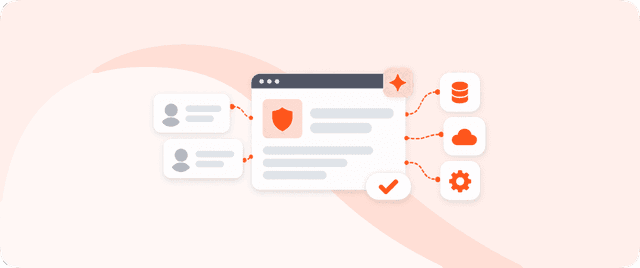
Embedded iPaaS (also called a white-label integration platform) stands for embedded Integration Platform as a Service. It's a cloud-based integration infrastructure that SaaS companies embed directly into their products, allowing their end users to configure, activate, and manage integrations without leaving the host application.
iPaaS is a category of cloud platforms designed to connect different software applications, syncing data, automating workflows, and handling the technical complexity of APIs, authentication, and data transformation.
Embedded means the iPaaS is not a standalone product your customers interact with separately. Instead, it lives inside your application. Your users see your branding, your UI, your domain. They don't know (or need to know) that a third-party platform powers the integrations behind the scenes.
If traditional iPaaS is a tool your team uses to connect internal systems, embedded iPaaS is a tool your customers use to connect their systems through your product.
Here's a practical example. Imagine you run a project management SaaS. Your customers want to connect it with Slack, Google Calendar, HubSpot, and Jira. With embedded iPaaS, you can offer all four integrations (and hundreds more) inside your app. Your customer opens an "Integrations" tab, picks the app they want to connect, authorizes it, maps a few fields, and activates the workflow. The entire experience happens within your product, no external tools, no separate accounts, no context switching.
For a deeper comparison of how embedded iPaaS stacks up against building integrations yourself or using a unified API, see our guide on in-house vs unified API vs embedded iPaaS.
How embedded iPaaS works
The architecture of an embedded iPaaS has three layers: the backend infrastructure (managed by the iPaaS provider), the embeddable frontend (customized to your brand), and the API layer that connects the two to your application.

Here's how data flows through the system:
1. Your product connects to the iPaaS via API. When your application loads the integrations page, it calls the iPaaS provider's API to fetch available connectors, active workflows, and configuration options. This happens server-to-server, your users never interact with the provider directly.
2. Users configure integrations in your UI. The iPaaS provider supplies embeddable components, iframes, JavaScript widgets, or React SDKs, that you drop into your application. These components render inside your app with your branding. Users select which third-party app to connect, authenticate their account (via OAuth, handled by the iPaaS), map data fields, set triggers, and activate the integration.
3. Data moves through the provider's infrastructure. Once an integration is live, the iPaaS handles everything: listening for trigger events (via webhooks or polling), transforming data between formats, executing actions in the target app, retrying on failure, and logging every step. Your infrastructure handles none of this, it's fully offloaded.
4. Your app receives status updates. The iPaaS sends your application real-time status data: integration health, error alerts, task counts, and usage metrics. You can surface this information to your users or use it internally for monitoring.
What makes this different from just "using an API"? When you build integrations in-house, you're responsible for every layer: OAuth flows, rate limiting, error handling, data transformation, webhook management, and ongoing API maintenance. An embedded iPaaS handles all of that. Your engineering team's only job is to embed the frontend components and connect to the provider's API, typically a matter of days to a couple of weeks, not months.
Embedded iPaaS and AI agents
AI agents are becoming a new class of integration consumer. Unlike human users who click through UIs, an agent decides which tools to call, authenticates on behalf of the user, and executes multi-step workflows autonomously. The problem: giving an agent reliable access to dozens of external apps means managing dozens of separate API connections, each with its own auth flow, rate limits, data schema, and maintenance burden. For a growing SaaS team without a dedicated integrations squad, that overhead is prohibitive.
Embedded iPaaS solves this by acting as a managed integration layer between the agent and the outside world. Instead of building and maintaining individual connectors, the agent talks to a single platform endpoint that routes requests to 1,000+ apps. Authentication, credential storage, data transformation, error handling, and retry logic are all handled by the iPaaS infrastructure, the same infrastructure that already powers your customer-facing integrations.

Embedded iPaaS as the AI agent integration layer
An AI agent needs more than raw API access. It needs managed authentication (per-user credential isolation so one tenant's tokens are never exposed to another), consistent data formats across apps, automatic retries on failure, and real-time logging. Embedded iPaaS provides all of that through a single interface. For SaaS companies already using embedded iPaaS for customer-facing integrations, extending the same connector library to AI agents requires no additional infrastructure.
The technical bridge is MCP (Model Context Protocol), an open standard that lets AI models discover and call external tools in a structured way. When an embedded iPaaS exposes its connector library through an MCP server, any MCP-compatible agent (built on Claude, GPT, or open-source models) can query available actions, send requests, and receive results, all routed through the iPaaS's managed infrastructure with built-in multi-tenancy and SOC 2 compliance.
This matters especially for small and mid-market SaaS teams (50 to 1,000 employees) building AI-powered features. Rather than staffing an integrations team to build and maintain agent-to-app connections one by one, embedded iPaaS gives you a ready-made connector catalog that serves both your human users and your AI agents through a single platform. For a deeper dive, see our guide on how to add AI agent integrations to your SaaS product and our technical breakdown of why your AI agent needs one MCP server, not fifty.
Serving both still raises the same practical question of which integrations to ship first. We put the answer in a separate prioritization guide, from picking the first ones to launch and monetization.
A practical guide: how to prioritize, build the business case, launch in two weeks, and monetize.
DownloadEmbedded iPaaS vs traditional iPaaS
If you're already familiar with iPaaS platforms like Zapier, Make, or Workato's standard product, you might wonder how embedded iPaaS is different. The distinction is fundamental: who the end user is.
| Traditional iPaaS | Embedded iPaaS | |
|---|---|---|
| Primary user | Your internal team or your customer (in their own account) | Your customer, inside your product |
| Branding | The iPaaS provider's brand | Your brand (white-labeled) |
| User experience | Separate app, separate login, separate interface | Native to your product, no context switching |
| Who manages it | Each user manages their own workflows | You control the integration catalog; users configure within guardrails |
| Use case | Internal automation, personal productivity | Customer-facing integrations as a product feature |
| Monetization | Not applicable (it's a cost center) | Can be monetized as a premium feature or upsell |
| Data isolation | Per-user accounts | Multi-tenant: each of your customers is isolated |
When traditional iPaaS makes sense: If your goal is to automate internal workflows, connecting your own CRM to your own billing system, for example, a traditional iPaaS is the right tool. It's also sufficient if you want to point customers to Zapier and let them manage their own workflows externally.
When embedded iPaaS makes sense: If integrations are (or should be) a core feature of your product, something your customers expect to find inside your app, then embedded iPaaS is the right architecture. It keeps users engaged in your product, gives you control over the experience, and lets you build an integrations marketplace without the engineering overhead.
The shift from traditional to embedded iPaaS typically happens when a SaaS company realizes that sending users to an external automation tool is creating friction, causing churn, or limiting their ability to compete.
Embedded iPaaS vs unified API
Embedded iPaaS and unified APIs solve related but different problems. Both help SaaS companies offer integrations without building everything from scratch, but they differ in scope, flexibility, and user experience.
Unified API provides a single, standardized API endpoint to access multiple apps within one category. For example, a unified CRM API lets you connect to HubSpot, Salesforce, and Pipedrive through one integration rather than three. The provider normalizes the data schema so you work with a consistent format regardless of the underlying app.
Embedded iPaaS provides a complete integration platform, connector library, workflow builder, embeddable UI, white-labeling, and end-user configuration, that covers multiple categories and supports complex automation logic.
| Unified API | Embedded iPaaS | |
|---|---|---|
| Scope | One category at a time (e.g., all CRMs, all HRIS) | Cross-category (CRMs, marketing, billing, support, etc.) |
| Workflow logic | Minimal, mostly data sync | Full automation: triggers, conditions, multi-step workflows |
| End-user UI | None (developer builds the frontend) | Embeddable, white-labeled UI included |
| Data sync | Often polling/CRON-based | Real-time webhooks + polling |
| Setup effort | Moderate (your devs build the UX) | Low (embed pre-built components) |
| Connector depth | Standardized to lowest common denominator | Full API depth per connector |
| Best for | Engineering teams wanting a clean API layer for one category | SaaS companies needing a full integrations marketplace |
When to choose unified API: You only need integrations within a single software category, your engineering team wants to build a fully custom frontend, and you're comfortable with the limitations of standardized data models.
When to choose embedded iPaaS: You need integrations across multiple categories, you want an end-user-facing integration experience, and you'd rather embed a ready-made solution than build one from scratch.
Many SaaS companies start with a unified API for their most critical category (e.g., CRM integrations) and later adopt an embedded iPaaS when they need to scale across categories. The two aren't mutually exclusive, but for most companies looking to offer a comprehensive integrations marketplace, embedded iPaaS is the more complete solution.
Top embedded iPaaS platforms compared
The embedded iPaaS market has matured significantly. Here's how the leading platforms compare across the criteria that matter most for SaaS teams evaluating their options.
Albato Embedded
Best for: from mid-market SaaS companies to large enterprises that need to go live fast with a large connector library.
Albato Embedded offers 1,000+ pre-built connectors, full white-labeling (UI, domain, branding, OAuth pages, email notifications), and a no-code/low-code workflow builder. Pricing is flexible, you choose between a per-connector or per-user model, both with a fixed monthly platform fee and no overage surprises. Most customers go live within 2–4 weeks. The platform includes built-in multi-tenancy, real-time webhook support, monitoring dashboards, SOC 2 Type 1 & 2 compliance.
Workato Embedded
Best for: Large enterprises with complex automation needs and substantial budgets.
Workato offers a powerful automation engine with 1,200+ connectors and deep recipe logic. The embedded product supports white-labeling, but customization depth varies depending on the deployment model (Managed Service, White Label, or Fully Embedded). Pricing is custom and enterprise-tier, expect long sales cycles and annual contracts starting at $50,000+/year, scaling significantly with usage and configuration. Implementation typically takes weeks to months. Read our detailed Workato comparison.
Tray.ai (formerly Tray.io)
Best for: Mid-market to enterprise companies with technical teams.
Tray offers a visual workflow builder and a flexible embedded product with 700+ connectors. White-labeling covers UI customization, but out-of-the-box end-user authentication flows redirect to an external Tray URL, which limits the native feel. Pricing is custom-quoted with no public pricing page, mid-market deployments typically run into the five figures annually. Deployment timelines are weeks to months.
Paragon
Best for: Developer-first teams that want maximum control over the integration UX.
Paragon focuses specifically on embedded integrations with a developer-friendly SDK and a visual workflow builder. The connector library covers 130+ pre-built connectors, with an SDK for building custom connectors for any API. White-labeling is SDK-based, giving engineering teams significant control. Pricing is not publicly listed, contact their sales team for a quote. See our Paragon vs Prismatic comparison.
Prismatic
Best for: B2B SaaS companies that need both low-code and code-native development options.
Prismatic is purpose-built for embedded integrations with a low-code designer, TypeScript-based custom component development, a white-label marketplace, and solid multi-tenancy. Pre-built connectors cover common enterprise apps, with a strong focus on custom connector development via their component SDK. Pricing is not publicly listed, Prismatic offers three tiers (Scale, Enterprise, Custom), all requiring a sales conversation. Our Prismatic vs n8n comparison covers the trade-offs.
Other platforms worth evaluating
The market also includes Cyclr (budget-friendly, 600+ connectors, strong white-labeling), Pandium (code-first approach, 200+ connectors), and Ampersand (developer-focused, deep CRM/ERP integration depth). Each serves a specific niche, Cyclr for cost-conscious teams, Pandium for engineering-heavy orgs, and Ampersand for AI-native and RevOps use cases.
Comparison table
| Feature | Albato | Workato | Tray.ai | Paragon | Prismatic |
|---|---|---|---|---|---|
| Connectors | 1,000+ | 1,200+ | 700+ | 130+ (+ custom SDK) | Pre-built + custom SDK |
| White-labeling | Full (UI, domain, OAuth, emails) | Partial to full (varies by model) | Partial (external auth URLs) | Full (SDK-based) | Full (UI, marketplace) |
| Pricing model | Per-connector or per-user + platform fee | Custom enterprise | Custom enterprise | Custom (contact sales) | Custom (contact sales) |
| No-code builder | Yes | Yes | Yes | Limited (code-first focus) | Yes (low-code + code-native) |
| Deployment speed | 2–4 weeks | Weeks–months | Weeks–months | 1–4 weeks | 2–4 weeks |
| Multi-tenancy | Built-in | Built-in | Built-in | Built-in | Built-in |
| Real-time sync | Webhooks + polling | Webhooks + polling | Webhooks + polling | Webhooks + polling | Webhooks + polling |
| Security | SOC 2 Type 1 & 2, GDPR | SOC 2, HIPAA, GDPR | SOC 2, GDPR | SOC 2, GDPR | SOC 2 |
For deeper dives, see our comparisons: Workato vs Tray.io vs Albato, Paragon vs Prismatic vs Albato, Workato vs MuleSoft vs Albato, and Workato vs Cyclr vs Albato.
Embedded iPaaS pricing: what to expect
Pricing is often the deciding factor, and the least transparent part of evaluating embedded iPaaS platforms. Here's what to know.
Common pricing models
Per-connector or per-user plans. You pay a fixed monthly platform fee plus costs based on either the number of active connectors or active end users. This model gives you predictable budgeting with flexibility to choose what aligns with your business. Used by Albato.
Custom enterprise pricing. No public pricing page, you request a quote, negotiate, and sign an annual contract. Common with Workato and Tray.ai. Based on publicly available third-party procurement data, mid-market to enterprise contracts typically start well into the five figures annually and scale from there.
Usage-based pricing. You pay per task, API call, or data volume. Can be cost-efficient at low volumes but unpredictable at scale. Some platforms use this as a secondary metric on top of a base fee.

Pricing benchmarks (2026)
| Platform | Public pricing | Estimated annual range | Pricing model |
|---|---|---|---|
| Albato Embedded | From $3,000/mo | $36,000–$60,000/yr (Enterprise custom) | Per-connector or per-user + platform fee |
| Prismatic | Not published (contact sales) | Not disclosed | Tiered plans (Scale, Enterprise, Custom) |
| Paragon | Not published (contact sales) | Not disclosed | Platform fee + usage |
| Tray.ai | Not published (contact sales) | Mid-five figures+ | Custom enterprise |
| Workato Embedded | Not published (contact sales) | $50,000+/yr | Custom enterprise |
Note: Albato pricing is based on their public pricing page. Workato's estimated floor is based on publicly reported contract benchmarks; actual costs vary by usage, configuration, and negotiation. Tray.ai, Prismatic, and Paragon do not disclose pricing publicly.
How to evaluate total cost
The sticker price is only part of the equation. When comparing platforms, factor in:
Implementation cost. How many engineering hours does it take to go live? A platform that costs more per month but deploys in two weeks is often cheaper than one with a lower sticker price that takes three months of developer time.
Maintenance overhead. Does the platform handle connector updates, error resolution, and API changes? Or does your team still need to intervene? Albato and Workato handle maintenance end-to-end; some other platforms require more hands-on management.
Scaling cost. What happens when you go from 10 integrations to 100? From 100 customers using integrations to 10,000? Per-connector pricing can become expensive fast. Flat platform fees with usage-based scaling are more predictable.
Opportunity cost. Every month your team spends building integrations in-house is a month they're not building core product features. Each in-house connector requires weeks of engineering time to build and ongoing maintenance to keep current as external APIs change, and that overhead compounds quickly when you need dozens of connectors. For a detailed cost comparison, see our guide on in-house vs unified API vs embedded iPaaS.
Frequently asked questions
What is embedded iPaaS?
Embedded iPaaS (integration platform as a service) is a cloud-based integration solution that SaaS companies embed directly into their products, allowing end users to configure and manage integrations without leaving the host application. It's also referred to as a white-label integration platform.
How is embedded iPaaS different from traditional iPaaS?
Traditional iPaaS (like Zapier or Make) is a standalone tool users access separately. Embedded iPaaS is white-labeled and built into your product, your customers interact with it as a native feature of your app, not as a third-party service.
Who needs embedded iPaaS?
Any SaaS company that wants to offer native integrations to its customers without building and maintaining them in-house. It's especially relevant for growth-stage B2B SaaS (50 to 1,000 employees) where customers expect connections with their existing tool stack but the team can't justify a full integrations engineering hire.
How long does it take to implement embedded iPaaS?
Most platforms can go live in 2–4 weeks, depending on how deeply you customize the UI and how many integrations you enable at launch. This compares to weeks or months per connector for in-house development.
Can embedded iPaaS connect AI agents to external tools?
Yes. Through protocols like MCP (Model Context Protocol), an embedded iPaaS can expose its full connector library to AI agents. The agent sends requests to a single managed endpoint, and the iPaaS handles authentication, data transformation, and routing to 1,000+ third-party apps. Multi-tenancy ensures each user's credentials stay isolated. This lets SaaS teams power both customer-facing integrations and AI agent workflows from one platform.
Can I monetize integrations with embedded iPaaS?
Yes. Many SaaS companies offer integrations as a premium feature, bundled into higher-tier plans or sold as add-ons. Embedded iPaaS platforms provide usage tracking and tenant management to support monetization models.
Summing up
Embedded iPaaS solves a specific problem: how to offer a large catalog of native, branded integrations inside your SaaS product without building and maintaining them yourself. It's faster than in-house development, more complete than a unified API, and more product-friendly than pointing customers to an external automation tool.
If your customers are asking for integrations, or leaving because you don't have them, embedded iPaaS is the most practical path to closing that gap.
Albato Embedded gives you 1,000+ connectors, full white-labeling, and a deployment timeline measured in weeks. If integration coverage is a gap your product needs to close, it's a practical place to start.
Read more: