In this article
ChatDash is a white-label platform built for MSPs, VoIP providers, BPOs, agencies, and businesses delivering AI voice services. As AI-powered conversations scale and customers handle hundreds of calls every day, post-call tasks quickly become a bottleneck.
The manual handoff after each conversation is where time leaks. Teams spend valuable hours writing summaries, capturing notes, updating records, scheduling follow-ups, and transferring information between tools. That work repeats across every call and adds up to hours each week.
To remove that friction, ChatDash partnered with Albato Embedded to build workflows that improve this process by bringing automation directly into its product. Together, ChatDash and Albato have launched automations for:
-
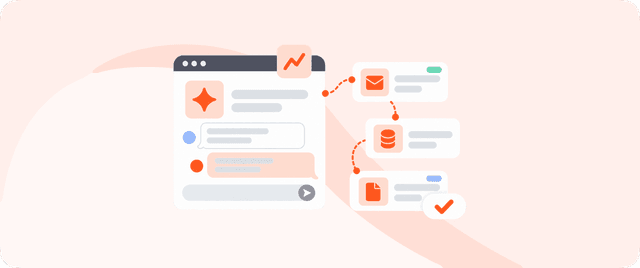
Post-call summary emails. When a call ends, ChatDash generates an AI summary, and Albato triggers a workflow that automatically sends that summary to the relevant contact or team. No copy and paste, no separate tool, no second login.
-
Appointment booking and calendar automation. A major use case for ChatDash's agency customers. Workflows check calendar availability, create or update appointments, and convert available time slots across time zones, all triggered directly from the call.
ChatDash runs multi-agent AI workflows where several agents may need to react to the same event at once. Albato worked closely with ChatDash to support this architecture through a multi-agent event subscription model, so every agent receives the events it needs without conflict.
To simplify the customer experience, Albato and ChatDash also collaborated on a new webhook architecture that automatically adapts to changing data structures. This reduces setup complexity for agencies and end users, so automation runs reliably without manual configuration for every account.
Making these workflows possible required a purpose-built connector. Albato developed a private ChatDash connector and delivered it on the agreed timeline. That connector is what makes ChatDash's automation feel native rather than bolted on.
What makes this partnership distinct is the B2B2C model. ChatDash embeds Albato through an iframe with single sign-on, so users move into automation without a separate account. Agency-level users get the full solution builder to create automation templates (Solutions) and assign them directly to their own end users. End users see a simpler standard view. This layered access means agencies can package and distribute ready-made workflows to their clients, turning automation into part of the service they sell.
 Albato's embedded integration builder running inside ChatDash's UI. To be added before publishing
The post-call summary email is the entry point for agencies, and the broader connector catalogue is there for the integrations each one needs next.
Looking ahead, ChatDash and Albato share the same direction: automation that non-technical users build in plain language. The goal is workflow creation that feels like describing what you want rather than wiring up steps.
For ChatDash's audience of agencies and service providers, that lowers the bar to getting value from integrations. The post-call summary workflow is one concrete example today. The roadmap points toward more of those workflows being assembled through natural language as the AI agent capabilities mature.
Albato Embedded lets SaaS companies add a native integration layer to their product, with 1,000+ connectors, a no-code visual builder, custom connector development, and full white-label support so users only ever see your brand. Visit the Albato Embedded page or book a demo to see how it works for your platform.