In this article
Key Takeaways
- CallRail is the best all-around pick for marketing attribution, starting at $50/mo with dynamic number insertion and visitor-level tracking.
- WhatConverts (from $30/mo) wins for agencies that report on calls, forms, and chats together, while Invoca owns the enterprise and regulated-industry end with custom AI call intelligence.
- Call tracking only pays off when the data lands in your CRM and ad platforms. None of these tools has a native Albato connector, but Albato routes their call data into HubSpot, Google Sheets, and ad tools through webhooks or Twilio.
Marketers lose attribution the moment a lead picks up the phone instead of filling out a form, and phone leads still close at a higher rate than web leads in most high-ticket B2B and local service categories. Call tracking closes that blind spot by tying each inbound call back to the campaign, keyword, or ad that drove it.
Best Call Tracking Software at a Glance
The best call tracking tool depends on who you are. CallRail fits most marketing teams and agencies that want attribution without a long sales cycle. CallTrackingMetrics suits contact centers and multi-location brands that need routing plus reporting. WhatConverts is built for agencies that quote on qualified leads, not raw calls. Invoca is the enterprise choice when AI call analysis and compliance matter more than price. Ringba and Phonexa serve performance marketers running pay-per-call and lead-generation funnels, and Twilio is the DIY route for teams with a developer.
This ranking weighs attribution depth, pricing clarity, and one factor most roundups skip: how cleanly each tool moves call data into the systems where you actually act on it.
| Tool | Best for | Starting price | AI call analysis | Albato connector |
|---|---|---|---|---|
| CallRail | Marketing attribution, most teams | $50/mo | Yes | No (webhook/Twilio) |
| CallTrackingMetrics | Contact centers, multi-location | $79/mo | Yes | No (webhook/Twilio) |
| WhatConverts | Agencies, lead qualification | $30/mo | Add-on | No (webhook/Twilio) |
| Invoca | Enterprise, regulated industries | Custom (enterprise) | Yes | No (webhook) |
| Ringba | Pay-per-call, performance marketing | $147/mo + usage | Add-on | No (webhook/Twilio) |
| Phonexa | All-in-one marketing suite | $250/mo + setup | Yes | No (webhook) |
| Twilio | Developers, custom builds | Pay-as-you-go | Via API | Yes (4 triggers, 6 actions) |
Treat the table as a shortlist rather than a ranking to copy. The right pick turns on your role, your call volume, and where the data has to end up, and the sections below unpack the tradeoff behind each row.
🔧 How it works. Phone calls convert differently than clicks because the buying intent is already high. A caller who dials a number from a search ad is usually further down the funnel than someone skimming a landing page, which is why losing call attribution distorts your whole channel ROI picture.
How We Ranked These Tools
We ranked call tracking software on four things that decide whether the tool earns its monthly fee. First, attribution depth: does it support dynamic number insertion (DNI) and visitor-level tracking so you can tie a call to a keyword, not just a campaign? Second, pricing clarity and total cost, including per-minute usage fees that inflate the sticker price. Third, lead-quality features like call scoring, transcription, and form or chat tracking in the same dashboard. Fourth, and the part most comparisons ignore: how well the tool exports call data to your CRM, spreadsheets, and ad platforms.
That last criterion matters because a call event that never reaches your CRM is a dead end. You can see the call in the call tracking dashboard, but your sales team, your lead-scoring model, and your ad platforms never find out it happened.
💡 Tip. Before you compare feature lists, write down the three systems a call event must reach: your CRM, your ad platform, and whatever your team watches daily (Slack, a shared sheet, a dashboard). The right tool is the one that gets a call into all three with the least duct tape.
The 7 Best Call Tracking Software for Marketing
CallRail: the default pick for marketing attribution
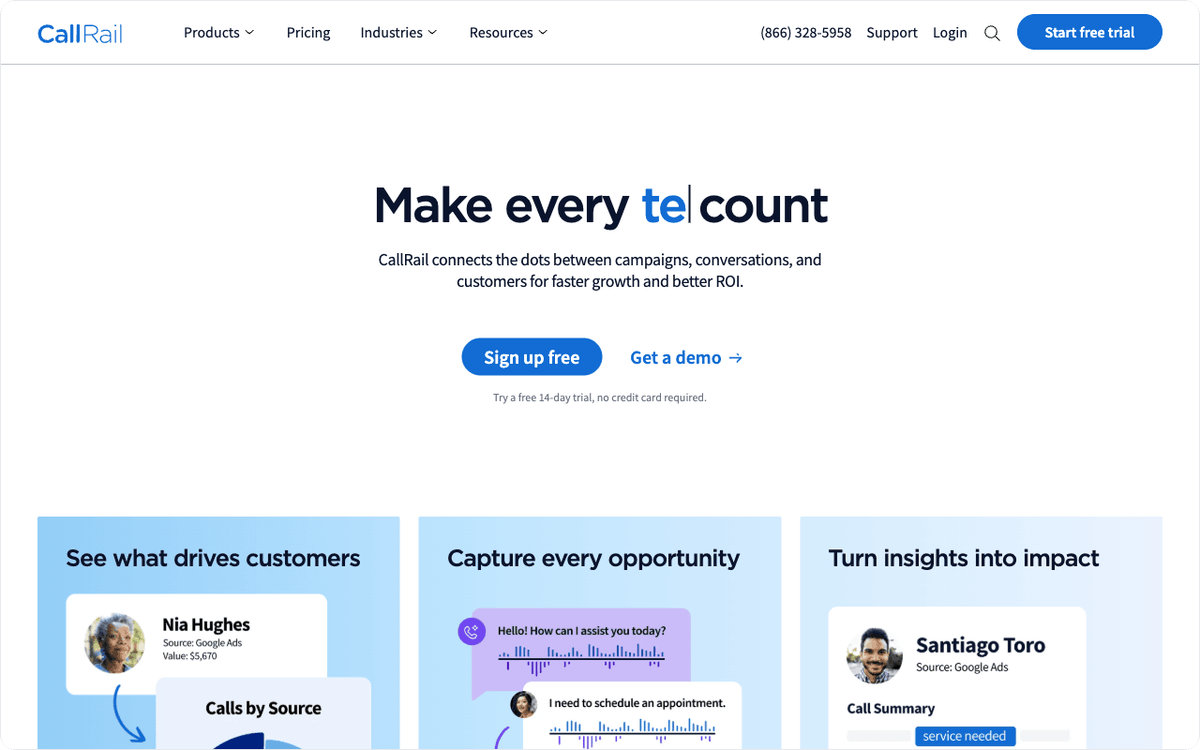
CallRail is the tool most marketing teams should try first. It pairs dynamic number insertion with visitor-level tracking, so you can follow a caller from the exact keyword or ad through to the conversation, then score and transcribe the call with built-in AI. Its Lead Tracking plan starts at $50/mo and includes five tracking numbers and 250 minutes, which covers a small-to-mid business or a single agency client without a custom contract.
Where CallRail earns its spot is the balance: it is powerful enough for serious attribution work but does not require a sales call or an annual commitment to get started. The main watch-out is usage. The base minutes and numbers run out fast once you add clients or scale ad spend, and overages add up.
CallRail pushes call data to marketing and CRM platforms, but it has no native Albato connector. To route a CallRail call into a tool Albato supports, you send the call event to an Albato webhook, then map it onward.
CallRail is best for marketing teams and agencies that want strong attribution and transcription without enterprise pricing.
CallTrackingMetrics: built for contact centers and multi-location brands
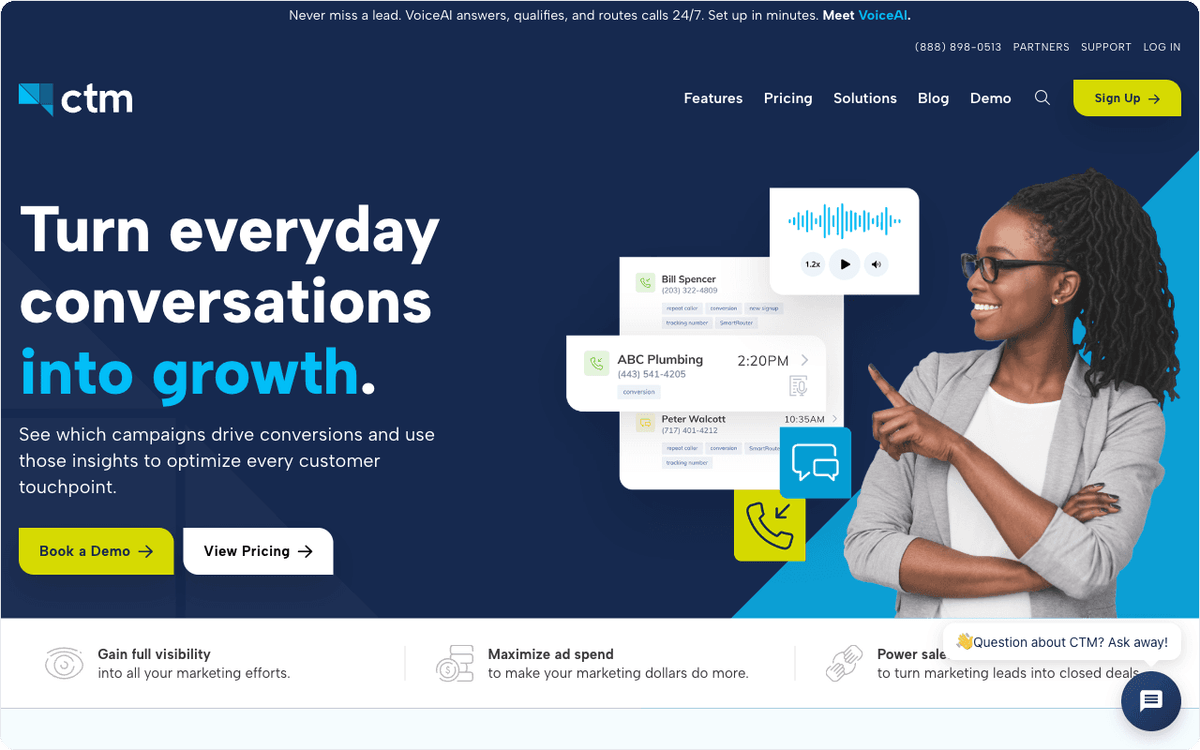
CallTrackingMetrics (CTM) goes further than pure attribution by bundling call routing, queue management, and agent monitoring into the same platform. That makes it a fit for contact centers and multi-location businesses where the marketing team and the phone team share one system. Marketing Lite starts at $79/mo, and higher tiers add softphone, sales features, and deeper automation.
The trade-off is complexity. CTM has more moving parts than a marketer-only tool, so smaller teams often pay for routing and agent features they never touch. If you only need attribution, CallRail or WhatConverts will feel lighter.
Like CallRail, CTM has no native Albato connector, so its call and form data reaches Albato through a webhook trigger. From there you can fan it out to a CRM, a spreadsheet, or a notification channel.
CallTrackingMetrics is best for contact centers and brands running phones across several locations that want marketing attribution and call handling in one place.
WhatConverts: the agency pick for lead quality
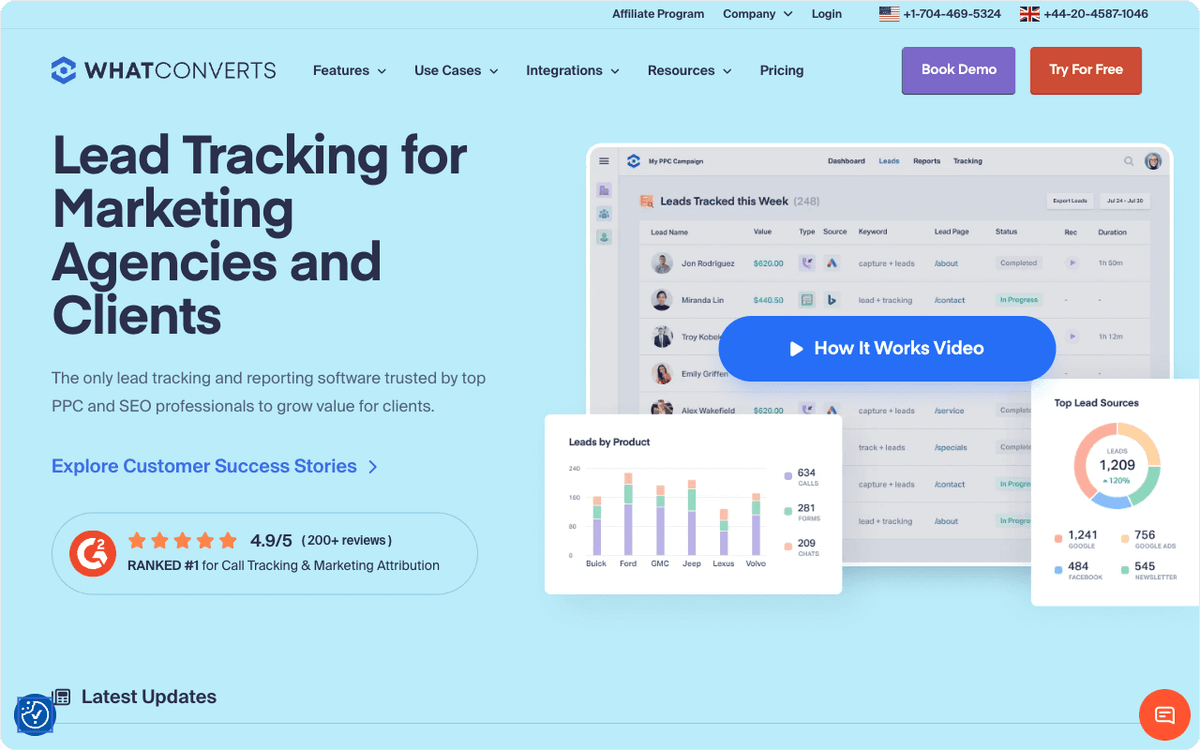
WhatConverts answers a question most call trackers skip: was the call actually a lead? It captures calls, forms, chats, and e-commerce events in one report and lets you mark each one as a qualified lead, so agencies can show clients revenue-ready conversions instead of raw call counts. Pricing starts at $30/mo, the lowest entry point in this list, with per-minute usage on top.
The lead-centric model is the whole point for agencies, but it also means WhatConverts leans more on reporting than on live call handling. If you need in-call routing or agent monitoring, this is not the tool.
⚠️ Important. The sticker price on usage-based tools like WhatConverts and Ringba is not the real cost. Local and toll-free minutes bill separately, so a $30/mo plan can land well above that once call volume climbs. Model your expected minutes before you commit.
Factor that usage math into every quote below, because the entry price rarely tells the whole story.
WhatConverts has no native Albato connector. You can still push its qualified-lead events into your stack by sending them to an Albato webhook and mapping them to CRM records.
WhatConverts is best for agencies and lead-gen teams that report on qualified leads across calls, forms, and chat.
Invoca: enterprise AI call intelligence
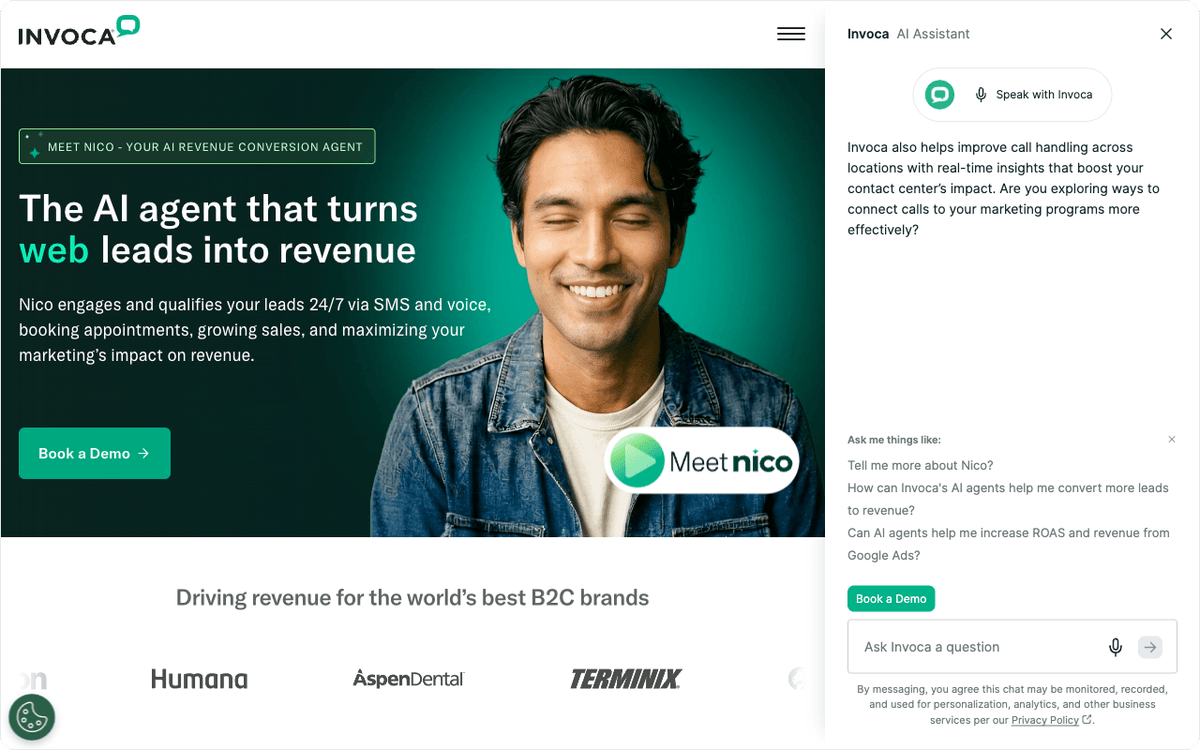
Invoca sits at the top of the market for large enterprises and regulated industries. Its strength is AI call analysis trained on your own outcomes, plus compliance features for sectors like healthcare, finance, and insurance where call handling is audited. Invoca does not publish list pricing. Contracts are custom and typically run into five or six figures a year, with annual commitments the norm.
That price buys depth most teams will never use. For a mid-market marketer, Invoca is overkill. For a national brand that routes thousands of high-value calls and needs defensible compliance, it is often the only tool that qualifies.
Invoca integrates with major CRMs and ad platforms natively, and it has no Albato connector. If you need to send Invoca events somewhere it does not reach out of the box, a webhook into Albato bridges the gap.
Invoca is best for enterprises and regulated industries that need custom AI call modeling and strict compliance.
Ringba: pay-per-call and performance marketing
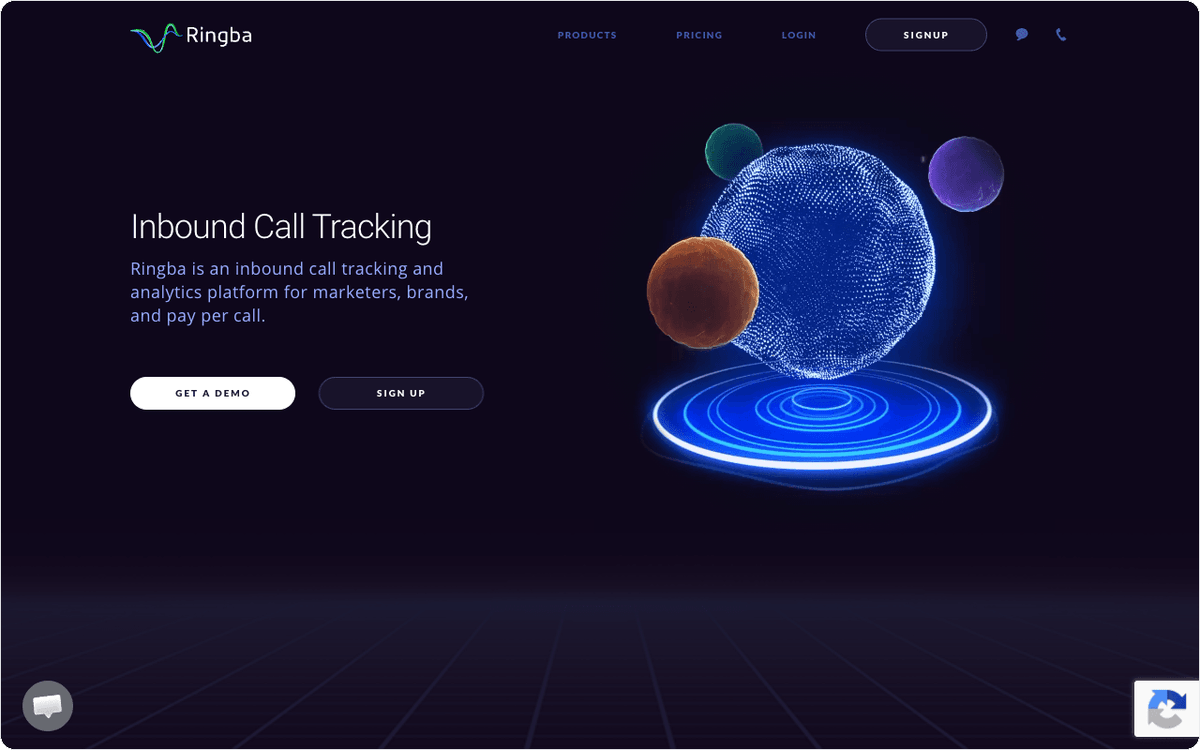
Ringba is built for pay-per-call and affiliate marketers who buy and sell calls as inventory. Its real-time routing, bidding, and ping-tree features are designed for performance funnels, not generic lead gen. Plans start at $147/mo for Business, with per-minute usage layered on top and no long-term contract.
If you run pay-per-call campaigns, Ringba's routing logic is hard to beat. If you are a brand marketer who just wants to know which ad drove a call, the pay-per-call machinery is more than you need and the entry price is higher than CallRail or WhatConverts.
Ringba has no native Albato connector, so call events route through a webhook when you need them in a CRM or spreadsheet.
Ringba is best for pay-per-call networks and performance marketers who treat calls as tradable inventory.
Phonexa: an all-in-one marketing suite
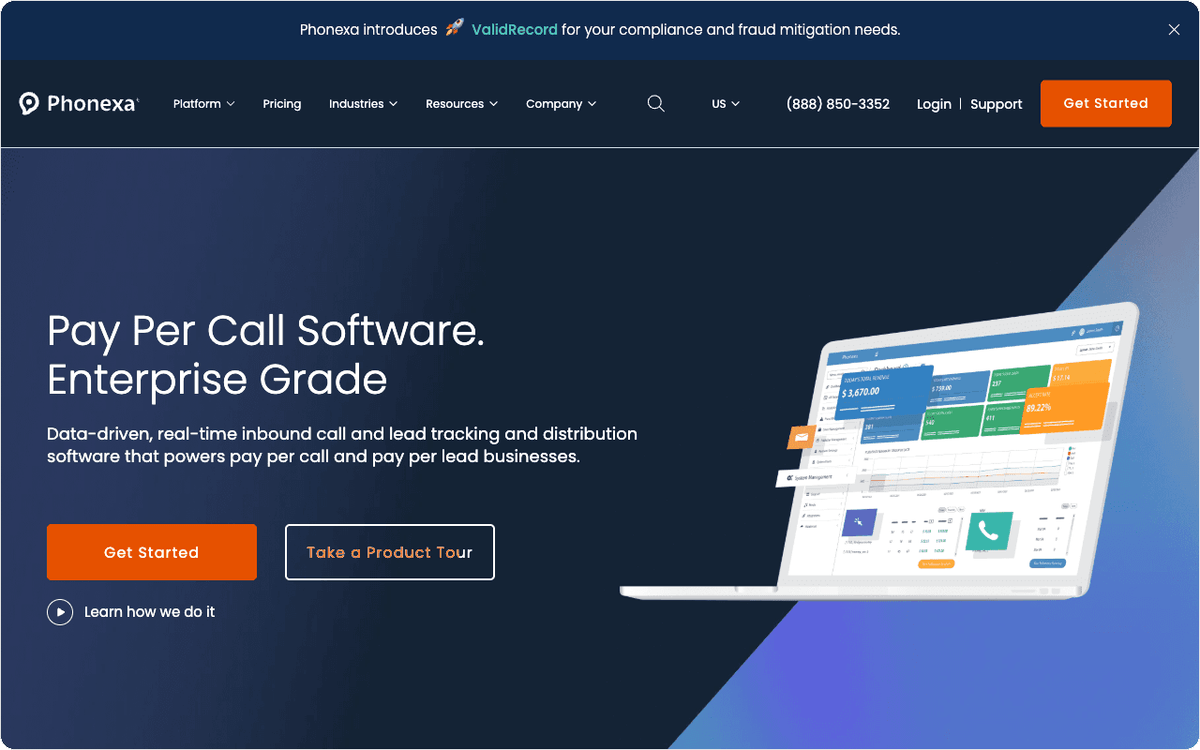
Phonexa bundles call tracking into a broader suite that also covers lead distribution, email and SMS marketing, click tracking, and behavior analytics. The pitch is consolidation: run several marketing functions in one platform instead of stitching point tools together. The Lite suite starts at $250/mo plus a $500 setup fee, with usage priced per call minute.
Consolidation cuts both ways. Teams that use most of the suite get real value from one bill and one login. Teams that only want call tracking end up paying a suite price for a single feature, and the setup fee raises the cost of trying it.
Phonexa has no native Albato connector. A webhook into Albato lets you move Phonexa call and lead events into tools outside the suite.
Phonexa is best for lead-generation companies that want call tracking inside a wider marketing and lead-distribution platform.
Twilio: the developer's DIY route
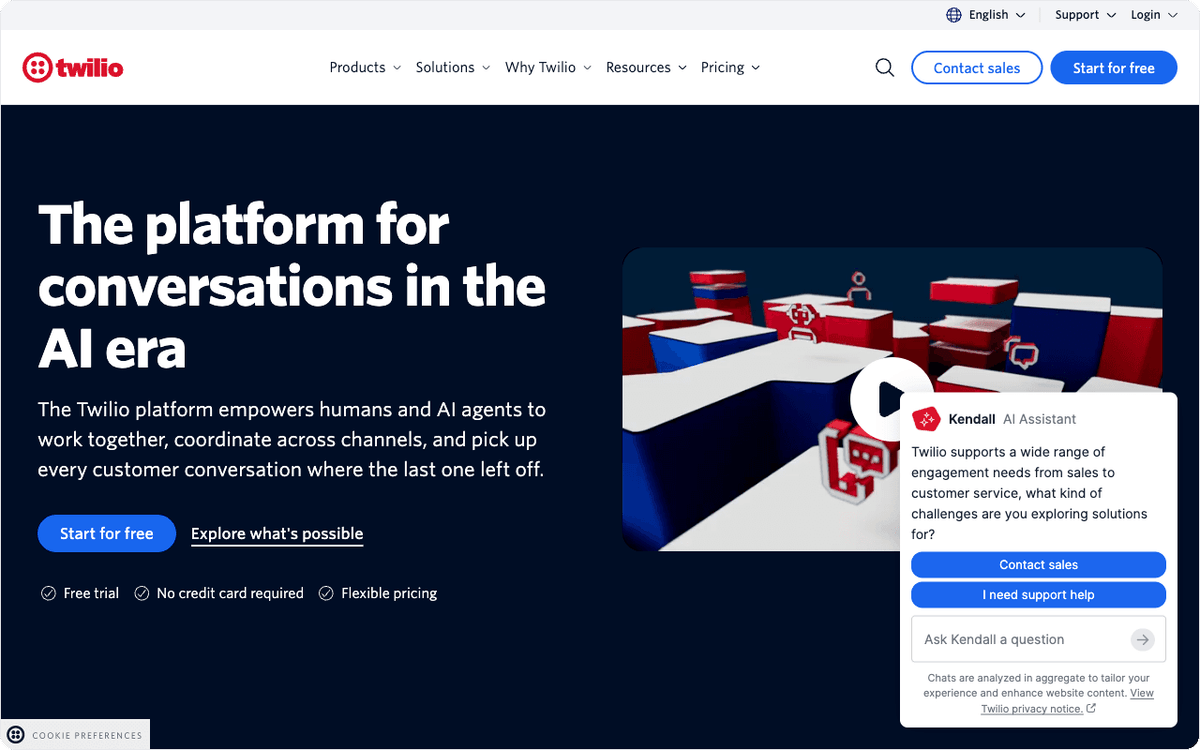
Twilio is not a packaged call tracking product. It is the programmable telephony layer you use to build your own tracking when off-the-shelf tools do not fit. You provision numbers, capture call events through its API, and design the reporting yourself, paying only for what you use. For teams with a developer, that flexibility is the draw.
The catch is obvious: you are building, not buying. There is no attribution dashboard, no DNI out of the box, and no lead scoring unless you create it. But Twilio is also the one tool in this list with a native Albato connector, which changes the integration math entirely.
With the Twilio connector, Albato gives you 4 triggers (including Call created and SMS created) and 6 actions, so a call event can fire an Albato workflow directly, no webhook glue required. That makes Twilio plus Albato a practical no-code-plus-telephony stack for custom call tracking.
Twilio is best for teams with development resources that want to build call tracking on a pay-as-you-go telephony platform.
How to Connect Call Tracking to Your CRM and Ad Stack With Albato
A call event is only useful once it reaches the systems your team acts in. Most call tracking tools have a handful of native integrations, but they rarely cover every CRM, spreadsheet, and ad platform you run. Albato fills those gaps with a no-code builder and 1,000+ connectors, so a tracked call can trigger work across your whole stack.
None of the seven tools above has a native Albato connector, which sounds like a limitation but usually is not. Every one of them can send a call event to an Albato webhook, and Twilio connects directly. From that single entry point, Albato maps the call data onward.
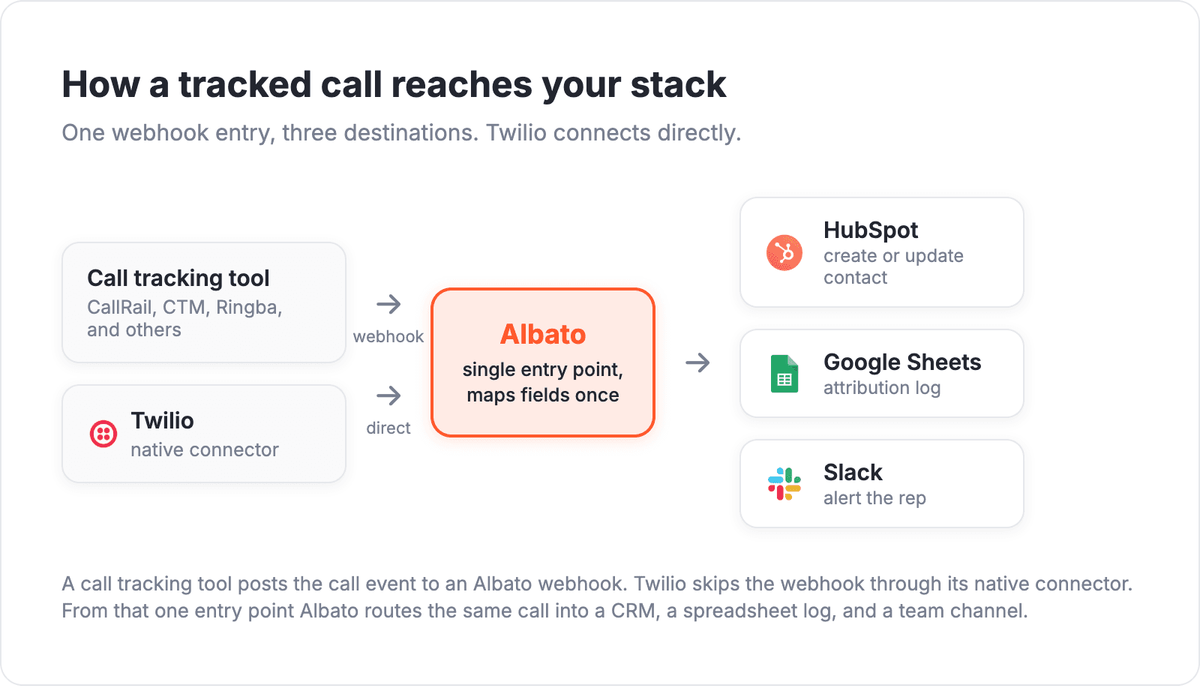
A new tracked call can create or update a contact in HubSpot, where Albato exposes 21 triggers and 67 actions, so your sales team sees the lead the moment the phone rings. The same event can append a row to Google Sheets for a lightweight attribution log, or post to Slack so the right rep follows up before the lead goes cold.
🔧 How it works. A call tracking tool sends the call event (caller, source, duration, outcome) to an Albato webhook. Albato reads the fields, then runs your actions: create the CRM contact, log the row, send the alert. You build the mapping once in the visual editor, and it runs on every call after that.
Because the mapping is no-code, you are not waiting on a developer to wire CallRail into HubSpot or Ringba into a reporting sheet. You connect the webhook, map the fields, and turn the bundle on.
How to Choose the Right Call Tracking Tool
Start with your role, then your budget, then your integrations. If you are a marketing team or agency that wants attribution without a sales cycle, CallRail is the safe default. If you quote clients on qualified leads, WhatConverts reports the way you bill. If you run a contact center or multiple locations, CallTrackingMetrics keeps routing and reporting together. Enterprises with compliance needs land on Invoca. Pay-per-call operators choose Ringba, suite buyers pick Phonexa, and teams with a developer build on Twilio.
Then pressure-test the integration story. Confirm the tool can reach your CRM and ad platforms either natively or through a webhook into an integration platform. A cheaper tool that lands its data where you need it beats a pricier one that strands calls in its own dashboard.
💡 Tip. Run a two-week trial on real campaigns before you commit. Watch two numbers: how many calls the tool attributes correctly, and how much usage you burn. Those two figures predict both the value and the true monthly cost better than any feature list.
Whichever tool you land on, the integration layer is what turns a tracked call into action across your stack. Wire it up once in Albato and every future call flows to your CRM, your sheet, and your team automatically.
Still weighing which tool fits your team? The FAQ below answers the questions marketers ask most about call tracking.
FAQ
What is the best call tracking software for marketing?
For most marketing teams and agencies, CallRail is the best overall choice because it combines dynamic number insertion, visitor-level attribution, and AI transcription starting at $50/mo without an annual contract. Agencies that report on qualified leads often prefer WhatConverts (from $30/mo), and enterprises with compliance needs choose Invoca.
How much does call tracking software cost?
Entry pricing ranges from $30/mo (WhatConverts) to $250/mo plus setup (Phonexa), with CallRail at $50/mo and CallTrackingMetrics at $79/mo. Invoca is custom enterprise pricing, usually five or six figures a year. Watch for per-minute usage fees on tools like WhatConverts, Ringba, and Phonexa, which add to the base price as call volume grows.
Can I connect call tracking software to my CRM without native integration?
Yes. Integration platforms like Albato let you send call events to a webhook and map them into any CRM, spreadsheet, or ad tool with no code. None of the tools in this list has a native Albato connector, but all can route call data through a webhook, and Twilio connects directly through the Albato Twilio connector.
What is dynamic number insertion (DNI)?
Dynamic number insertion swaps the phone number shown on your website based on how the visitor arrived, so a caller from a Google ad sees a different number than one from organic search. That lets the tool tie each call back to the exact source, campaign, and keyword that drove it, which is the foundation of call attribution.
Do I need call tracking if I already use form tracking?
If a meaningful share of your leads call instead of filling out a form, yes. Form tracking misses phone conversions entirely, which skews your channel ROI toward whatever drives form fills and underfunds the campaigns that actually drive calls. Call tracking restores the full picture, especially in high-ticket B2B and local service categories where callers dominate.