In this article
Key Takeaways
- iPaaS (Integration Platform as a Service) is a cloud-based platform that connects your business apps and automates data flows between them without custom code. The iPaaS market reached $17.1 billion in 2026 and is growing at a 34% CAGR.
- The average company now runs 106 SaaS tools, making manual data transfer between systems unsustainable. iPaaS cuts integration development time by 50 to 70% compared to custom-coded connections.
- In 2026, iPaaS platforms go beyond moving data: they coordinate AI agents, handle event-driven workflows, and support real-time syncing across CRM, marketing, e-commerce, and support tools.
The integration gap costs more than most teams realize. According to Gartner research, roughly 25 to 30% of total SaaS spend goes to unused licenses and poorly connected tools. For growing businesses that add two or three new apps every quarter, that gap widens fast.

Let us build your automation or AI Agent
Tell us which process eats your time. Certified Albato engineers take it from there, A to Z.
What Does iPaaS Mean?
iPaaS stands for Integration Platform as a Service. It is a cloud-hosted platform that lets you connect different software applications, databases, and services through pre-built connectors, visual workflow builders, and API management tools. Instead of writing custom code to move data between, say, your CRM and your email marketing platform, you configure the connection through a visual interface, map the fields, set triggers, and let the platform handle the data flow.
The term was coined by Gartner in the early 2010s to describe a new category of cloud-native integration tools built for businesses moving away from on-premise middleware. Since then, iPaaS has expanded well beyond simple point-to-point connectors. Modern platforms handle data transformation, error handling, conditional logic, real-time event processing, and (as of 2026) AI-driven decision-making within workflows.
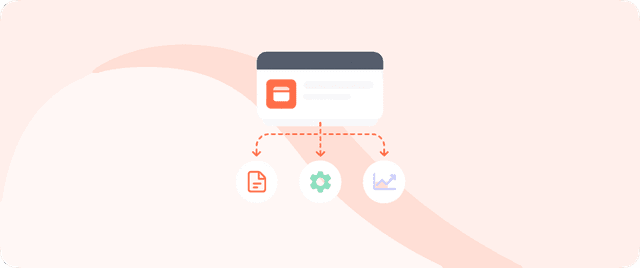
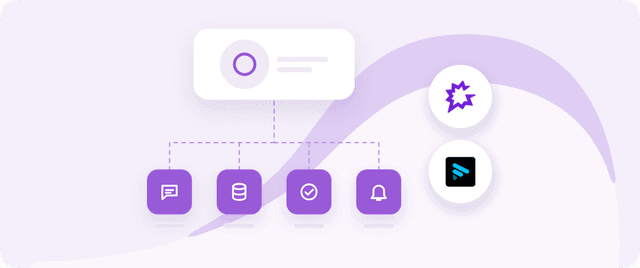
🔧 How it works. A typical iPaaS workflow has three parts: a trigger (something happens in App A), a data transformation step (format or filter the data), and an action (push the result into App B). Most platforms let you chain multiple actions together, add conditional branches, and loop over batches of records.
Think of it as the connective tissue of your software stack: everything that enters App A can automatically flow to App B without anyone manually moving data.

How iPaaS Differs From Other Integration Approaches
Businesses that need to connect their tools have several options, and each carries different trade-offs in cost, flexibility, and maintenance burden. Understanding where iPaaS fits helps you avoid over-engineering (or under-engineering) your integration layer.
iPaaS vs. Custom API Integrations
Custom integrations give you full control: your developers write code that calls APIs directly, handles authentication, manages error retries, and transforms data exactly the way your business needs. The downside is time and cost. Building a single integration between two complex APIs can take 2 to 6 weeks of developer time. Multiply that across 10 or 15 tool pairs and you are looking at a full engineering quarter, plus ongoing maintenance as APIs change their versions and endpoints.
iPaaS platforms compress that timeline to hours or days by providing pre-built connectors, managed authentication, and visual mapping tools. The trade-off: you get less granular control over edge cases, and you depend on the platform's connector library covering your apps.
iPaaS vs. ETL Tools
ETL (Extract, Transform, Load) tools were designed for batch data movement, typically from transactional databases into data warehouses for analytics. They excel at scheduled, high-volume data transfers but are not built for real-time, event-driven workflows. If you need "when a deal closes in HubSpot, instantly create an invoice in QuickBooks," ETL is the wrong tool. iPaaS handles both real-time triggers and batch processing, making it a more versatile choice for operational workflows.
iPaaS vs. Point-to-Point Connectors
Many SaaS tools ship with native integrations (HubSpot's app marketplace, Shopify's integrations directory). These are fast to set up but limited in scope: they connect exactly two apps with a fixed set of actions, and you have no ability to add conditional logic, chain multiple steps, or transform data between them. Once you need a workflow that touches three or more apps, or requires branching ("if deal value > $5,000, notify Slack; otherwise, add to drip campaign"), you outgrow point-to-point connectors.
iPaaS vs. Middleware (ESB)
Enterprise Service Bus (ESB) was the integration standard for on-premise IT in the 2000s. It handled message routing, protocol translation, and orchestration across legacy systems. ESBs are heavyweight: they require dedicated infrastructure, specialized developers, and significant upfront investment. iPaaS is the cloud-native successor, delivering similar orchestration capabilities without the infrastructure overhead, and accessible to business users, not just integration specialists.
| Approach | Best for | Setup time | Ongoing maintenance | Real-time capable |
|---|---|---|---|---|
| iPaaS | Multi-app workflows, no-code teams | Hours to days | Low (managed by platform) | Yes |
| Custom API | Unique logic, full control | Weeks to months | High (your dev team) | Yes |
| ETL | Batch data warehouse loads | Days to weeks | Medium | Limited |
| Point-to-point | Simple two-app syncs | Minutes | Low | Varies |
| ESB/Middleware | On-prem enterprise systems | Months | Very high | Yes |
Why Your Business Stack Needs iPaaS in 2026
The case for iPaaS has strengthened every year since the category was created, but 2026 brings specific pressures that make it harder to ignore.
App Sprawl Has Crossed a Tipping Point
According to BetterCloud's 2026 SaaS report, the average company now uses 106 SaaS applications. Mid-market companies run around 120, and enterprises with 5,000+ employees average 131. Each of those tools generates data that lives in its own silo. Without an integration layer, your sales team manually copies leads from your form builder into the CRM, your finance team exports invoices from one system and imports them into another, and your support team has no visibility into what customers actually purchased.
iPaaS eliminates that manual transfer. It connects your tools at the data layer so information flows automatically: a new form submission creates a CRM contact, triggers a welcome email, and logs the lead source in your analytics dashboard, all without anyone touching a spreadsheet.
📊 Stat. Gartner research indicates that 25 to 30% of enterprise SaaS budgets go to unused licenses and duplicate tools. Better integration directly reduces that waste by making each tool more useful inside your workflow.
AI Agents Need an Integration Backbone
According to Gartner's 2026 forecast, 40% of enterprise applications will integrate with task-specific AI agents by the end of 2026, up from less than 5% in 2025. These agents need to read data from your existing systems, make decisions, and push results back into your tools. Without a platform connecting those tools, your AI agent is a brain without hands.
iPaaS provides the connective layer that makes AI agents operational. Instead of building custom API calls for every tool the agent needs to interact with, you configure the connections once on the integration platform, and the agent uses them as tools. This is the architectural pattern behind platforms like Albato, where AI agents work as steps inside automation workflows, calling pre-built actions across 1,000+ connected apps.
Integration Speed Is a Competitive Advantage
Industry benchmarks from leading iPaaS implementation studies show that integration platforms reduce development time by 50 to 70% compared to custom-coded solutions. For a mid-market company connecting 15 to 20 tools, that translates from a 6-month IT project into a 2-month rollout with existing team members, no specialized integration developers required.
That speed matters for go-to-market. When your competitors launch a new marketing channel, adopt a new CRM, or switch payment processors, you need your stack to adapt in days, not quarters. iPaaS makes your technology layer flexible enough to change direction without rewriting code.

Key Features to Look for in an iPaaS Platform
Not all integration platforms deliver the same value. When evaluating iPaaS options for your business, focus on capabilities that match how modern teams actually work.
Pre-Built Connector Library
The most practical measure of an iPaaS platform is its connector coverage. If your critical apps (CRM, email marketing, e-commerce, accounting, support desk) are already supported, you skip weeks of setup. Look for platforms with 200+ connectors and regular additions as new tools gain market share.
Visual Workflow Builder
Business users (marketers, sales ops, customer success managers) need to build and modify integrations without submitting tickets to engineering. A visual builder with drag-and-drop steps, conditional logic, and field mapping makes this possible. The best builders expose enough power for complex workflows while keeping the interface approachable for non-technical users.
Real-Time and Event-Driven Processing
Batch processing (syncing data every 15 minutes or hourly) works for analytics but falls short for operational workflows. If a customer submits a support ticket, your team needs to see it in the CRM immediately, not after the next scheduled sync. Prioritize platforms that support webhook-based triggers and real-time event processing alongside scheduled runs.
Error Handling and Monitoring
Integrations break. APIs change, rate limits get hit, data formats shift. The platform should surface errors clearly (not bury them in logs), offer automatic retries for transient failures, and send alerts when a workflow stops working. Good monitoring saves hours of debugging and prevents data gaps from going unnoticed.
⚠️ Important. The biggest hidden cost of any integration platform is the time spent troubleshooting silent failures. If a workflow fails and nobody notices for three days, you are dealing with three days of missing data. Choose a platform that makes errors loud and visible.
AI and Decision Logic
In 2026, the line between integration and automation is blurring. Modern iPaaS platforms let you add AI-powered steps that classify incoming data, route records based on intent, generate responses, or decide which action to take next. This goes beyond simple if/then branching: it is adaptive logic that handles scenarios you cannot predict with fixed rules.
Scalability and Pricing Transparency
Your integration needs will grow as your business grows. Check that the platform's pricing scales predictably (per task, per workflow, or per connector, with clear tiers) and that there are no hidden caps on data volume or execution frequency. Some platforms charge per "operation" where a single workflow might consume 5 to 10 operations, making the real cost 5 to 10x what the headline price suggests.

How Albato Works as an iPaaS for Your Business
Albato is a no-code integration platform with 1,000+ API connectors that lets you build multi-step automations between your business tools without writing code. Here is what makes it practical for teams that need integrations working today, not after a 3-month implementation.
Build Workflows in Minutes
Albato's visual builder lets you pick a trigger app (say, a new form submission in Typeform), map the data fields to your destination (HubSpot CRM contact), and activate the workflow. Adding steps is straightforward: chain actions across multiple apps, set conditions ("if lead source = paid ad, add to high-priority list"), and run data transformations between steps.
For teams that have tried native integrations and hit their limits (can't chain three apps, can't add conditions, can't transform data mid-flow), Albato fills the gap without requiring developer involvement.
AI Agent Step: Automation That Decides on Its Own
Albato's built-in AI Agent is an automation step that reads incoming data and decides which action to run, replacing the need to wire fixed conditions and branches by hand. You describe the task in plain language ("classify this support ticket by urgency and route to the right team"), connect the tools the agent can use (Slack, Zendesk, HubSpot), and the agent handles the routing logic.
The AI Agent has four building blocks:
- Model (the brain): choose Albato AI (built in, no external account needed), OpenAI, DeepSeek, or Google Gemini.
- Instructions (the prompt): describe what the agent should do, in plain language, up to 1,000 characters each for user message, agent instructions, and guardrails.
- Tools (the actions): connect any of Albato's ~5,000 available actions as tools the agent can call.
- Memory (optional): keep context across multiple interactions for chatbot-style scenarios.

Each field in a tool's action can be set manually or handed to the agent with "Let the AI agent decide," giving the model per-field autonomy with optional field-level instructions for precision.

The instructions field accepts plain language: you tell the agent what to do, what to avoid, and how to handle edge cases. Guardrails set hard boundaries that the agent cannot override, regardless of input.

This per-field control means you can keep sensitive fields locked to specific values while letting the agent handle variable fields like message body or routing destination.
💡 Tip. For lead qualification workflows, set the AI Agent's guardrails to enforce your scoring criteria ("only mark as MQL if company size > 50 employees AND industry matches our ICP"). The agent applies these rules to every incoming lead without you building a branching tree of 15 conditions.
Try connecting your first two apps on Albato's free plan and see how the visual builder handles the field mapping in practice.
Transaction-Based Pricing
Albato charges per successful transaction (a completed action), not per workflow or per connector. A standard AI Agent run costs 3 transactions, plus 1 transaction per 2,000 tokens if you use Albato's built-in AI model. External LLMs (OpenAI, DeepSeek, Gemini) carry no token surcharge on Albato's side. You only pay for work that actually completes, which keeps costs predictable as your automation scales.
iPaaS Use Cases Across Business Functions
Integration platforms deliver the most value when they connect the tools your team already uses into workflows that would otherwise require manual effort. Here are five scenarios where iPaaS replaces hours of repetitive work.
Marketing: Lead Routing and Campaign Sync
A new lead fills out a form on your website. Without iPaaS, someone manually exports the form data, uploads it to the CRM, adds the lead to the right email sequence, and updates the ad platform's conversion tracking. With iPaaS, all four steps happen automatically the moment the form is submitted. The lead appears in HubSpot, enters the nurture sequence in Mailchimp, and the conversion fires back to Google Ads for optimization.
Sales: CRM Data Hygiene and Deal Alerts
Sales reps spend only 28% of their week actually selling, with the rest consumed by admin, data entry, and internal meetings, according to Salesforce's State of Sales report. iPaaS automates the worst offenders: syncing contact data between CRM and prospecting tools, sending Slack alerts when a deal moves to a new stage, updating forecasting dashboards in real time, and logging meeting notes from calendar tools into the deal record.
E-commerce: Order-to-Fulfillment Pipeline
When a customer places an order on Shopify, the iPaaS workflow creates a fulfillment record in your warehouse system, sends a confirmation via WhatsApp or SMS, updates inventory counts across all sales channels, and pushes the transaction into QuickBooks. The entire pipeline runs without your ops team touching a single record.
Support: Ticket Enrichment and Escalation
A support ticket arrives in Zendesk. The iPaaS workflow pulls the customer's purchase history from your e-commerce platform, their account tier from the CRM, and their recent support interactions. All of that context is attached to the ticket before an agent even opens it. If the customer is a high-value account with an open renewal, the workflow automatically escalates the ticket and notifies the account manager in Slack.
📊 Stat. A Forrester Total Economic Impact study found that teams using iPaaS save over 100 hours per year on manual data transfer tasks, freeing those hours for work that actually requires human judgment.
Finance: Invoice and Revenue Reconciliation
At month-end, finance teams manually reconcile invoices from billing platforms against payments in the bank, revenue entries in the accounting system, and subscription changes in the billing tool. iPaaS automates this reconciliation by syncing data across Stripe, QuickBooks, and your CRM in real time, flagging discrepancies the moment they appear instead of at the end of the reporting cycle.

How to Get Started With iPaaS
Moving from manual processes to automated workflows does not require a company-wide transformation. Start with one high-impact workflow and expand from there.
Step 1: Audit Your Data Bottlenecks
List every point where your team manually moves data between tools. Common examples: exporting leads from forms into CRM, copying order data into accounting software, forwarding support tickets to Slack. Rank them by frequency and time spent. The workflow you repeat most often and costs the most hours is your first automation candidate.
Step 2: Choose Your Platform
Evaluate iPaaS options based on your connector needs (do they support your specific apps?), pricing model (per task vs. flat rate), and ease of use for your team's technical level. If your stack includes standard SaaS tools (HubSpot, Shopify, Slack, Google Sheets, QuickBooks, Mailchimp), most iPaaS platforms will cover you. Differentiation comes from the workflow builder's flexibility, error handling quality, and whether the platform supports AI-driven steps.
Step 3: Build Your First Workflow
Pick one workflow with a clear trigger, a defined output, and no more than three apps involved. For example: "When a new contact is created in HubSpot, add them to a Google Sheet and send a Slack notification to the sales channel." Configure it, test with real data, and activate. Most teams have their first production workflow running within a few hours.
Step 4: Monitor and Expand
Watch the workflow's execution logs for the first week. Check for errors, data formatting issues, or missed triggers. Once it is stable, add complexity: more conditions, more destination apps, data transformations. Then start your second workflow, targeting the next bottleneck on your audit list.
The Future of iPaaS: What Is Changing in 2026 and Beyond
The iPaaS category is evolving faster than at any point in its history, driven by three converging trends.
AI-Native Workflows Are Becoming Standard
The 2026 Gartner Magic Quadrant for iPaaS highlights AI enablement as a new critical capability. Integration platforms are adding native AI steps that go beyond simple data routing: they classify, summarize, generate, and decide. This means your integration layer is no longer just plumbing. It is a decision layer where AI agents process data in context and take action based on what they find.
Model Context Protocol (MCP) Is Creating a Universal Tool Layer
Anthropic's Model Context Protocol (MCP), which gained significant adoption in 2025, standardizes how AI agents discover and invoke external tools. For iPaaS platforms, MCP means a single protocol for connecting AI models to any action in your stack. Instead of building custom integrations between each AI model and each SaaS tool, the iPaaS platform exposes its connectors through MCP, and any compatible AI agent can use them.
Composable Architecture Is Replacing Monolithic Stacks
More businesses are moving away from all-in-one suites toward "best-of-breed" tool selections, assembling their stack from specialized apps connected through an integration layer. This composable approach gives you flexibility to swap out any tool without rebuilding your entire data flow, but only if you have a reliable iPaaS layer holding the connections together. Without it, every tool change triggers a cascade of broken integrations.
FAQ
What is iPaaS in simple terms?
iPaaS (Integration Platform as a Service) is a cloud-based tool that connects your business software applications to each other. It automates the flow of data between apps like your CRM, email marketing tool, e-commerce platform, and accounting software, so you do not have to manually copy and paste data or build custom code to keep everything in sync.
How much does an iPaaS platform cost?
Pricing varies widely. Entry-level plans for small businesses start at $0 to $20 per month with limited workflows and connectors. Mid-market plans typically range from $50 to $300 per month. Enterprise iPaaS can run $1,000+ per month. Most platforms use usage-based pricing (per task, per operation, or per connector), so your actual cost depends on how many automations you run and how much data they process.
Can non-technical users set up iPaaS workflows?
Yes. Modern iPaaS platforms are designed specifically for business users. Visual workflow builders let you configure triggers, map data fields, and set conditions through a graphical interface. You do not need to know how to code. That said, more complex scenarios (custom data transformations, API call chaining, error handling logic) may benefit from someone with basic technical understanding.
What is the difference between iPaaS and RPA?
iPaaS connects applications at the API level, passing structured data between systems. RPA (Robotic Process Automation) mimics human actions on screen, clicking buttons and filling forms in application UIs. iPaaS is faster, more reliable, and scales better for data integration. RPA is useful when an application has no API at all and the only way to interact with it is through its user interface.
How long does it take to implement iPaaS?
Your first simple workflow (connecting two apps with a basic trigger and action) can be running within hours. A full integration layer connecting 10 to 15 tools with conditional logic, error handling, and AI-driven steps typically takes 2 to 8 weeks, depending on complexity. Compare that to 3 to 6 months for equivalent custom-coded integrations.
Is iPaaS secure?
Reputable iPaaS platforms encrypt data in transit and at rest, support OAuth-based authentication (so you never share passwords), provide role-based access control, and maintain compliance certifications (SOC 2, GDPR, ISO 27001). Your data passes through the platform during transfer but is not stored permanently unless you configure logging or data retention. Always verify a platform's specific security certifications before committing.
Start with one workflow, see it run, then expand. Most teams reach their first 5 automated workflows within a month of signing up.
Want to go deeper? The articles below cover AI agents, MCP, and specific automation strategies.