

Rows Gluing Tool
IN THIS ARTICLE
The Rows Gluing tool allows you to combine two arrays of objects (Rows) coming from the trigger or from different steps of the automation.
Certain applications used as triggers may send data divided into different sections (arrays). However, the destination application may only accept data in a single line or, by choice, you may want to concentrate all this information into a single field.
Using the Rows Gluing tool, it is possible to adjust and format this data in a simple way, avoiding possible errors during the execution of your workflow.
What Is a Row?
In summary, a Row is an array of objects, meaning an unlimited set of data within an entity.
For example, imagine that you have a CRM system that creates deals. These deals contain product items. Suppose a deal is sent to Albato and it can contain an unlimited number of products: from no items at all to one hundred different products.
Each item has the same fields: name, quantity, value, and so on. All these fields are sent within a single array. This item is called a Row, and the collection of these items is called Rows. The same concept applies to orders that contain products.
Since we never know in advance how much data will be sent inside an array, it is not possible to transfer these items into regular fields. This happens because a standard field expects to receive only a single value.
Therefore, if an application sends this data in the Rows format, we can only send it to another application that also accepts Rows, meaning the same array of objects format.
Some Examples of Use
The tool can be used in several scenarios where it is necessary to work with data in the Rows format. Here are some examples:
- Send orders from WooCommerce to Trello.
- Transfer expenses from advertising accounts to email or Telegram.
- Send deal items from one CRM system to another.
- Transfer orders from a website to Telegram, including product or order item details.
- Send a request to YClients to check the available date and time of a specific employee.
In general, the examples are not limited to WooCommerce, Trello, or advertising expenses. There are many possible use cases, as the tool is compatible with any website or CRM system that works with items and data structures in the Rows format.
Let's see another practical example of how to use the tool.
Adding the Tool
In your automation, before the step where you need to send the formatted value, add the Rows Gluing tool.
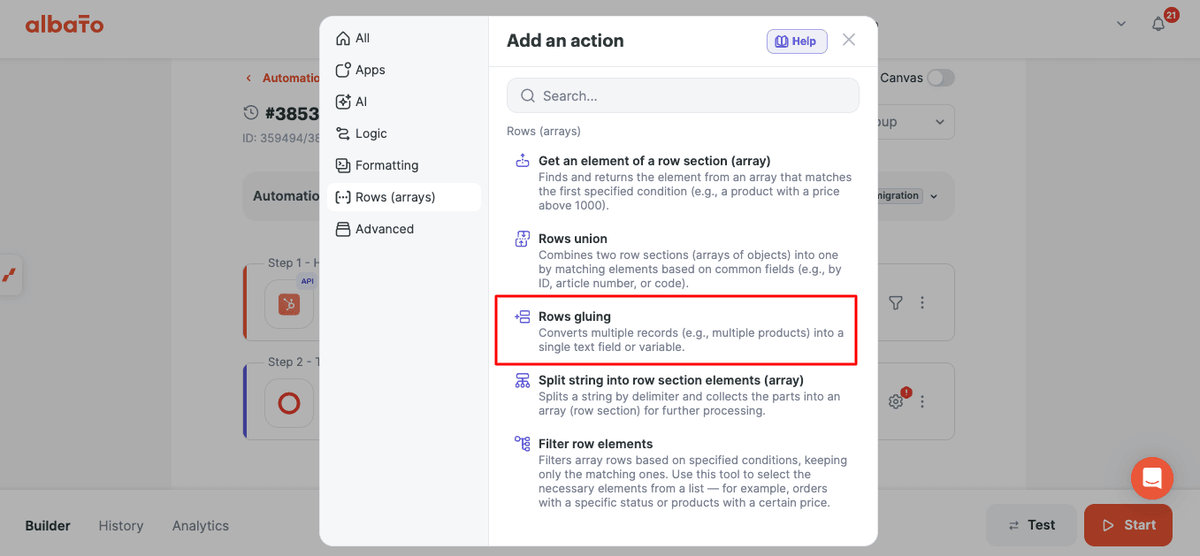
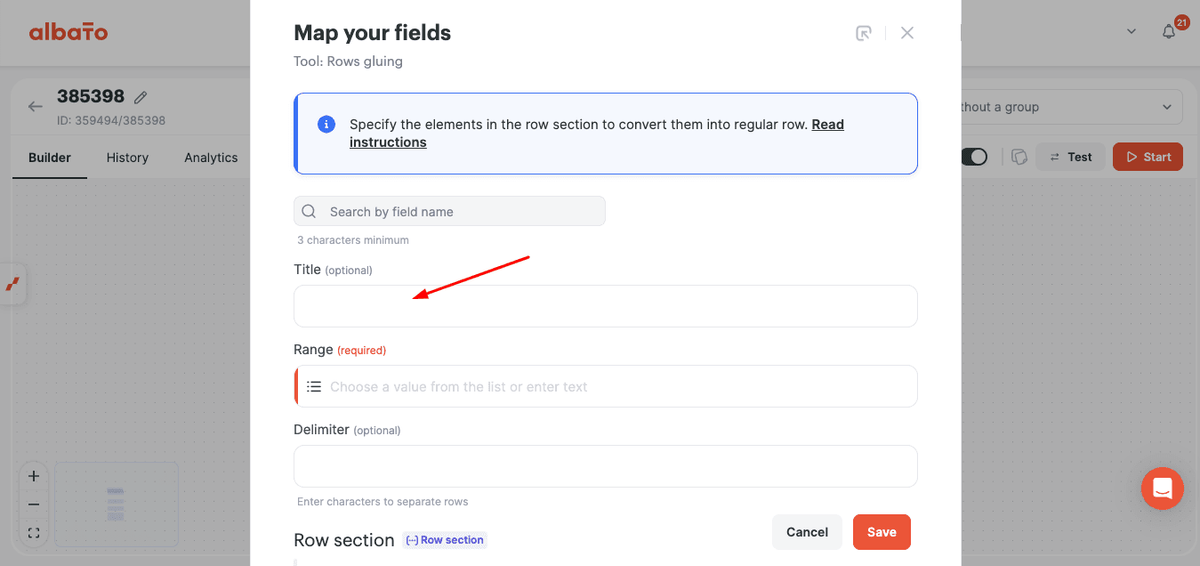
Next, you will see a series of fields available to configure the tool.
The Title field determines the name of the parameter that will be available for use in the next automation steps. You can add a custom name according to your preference.
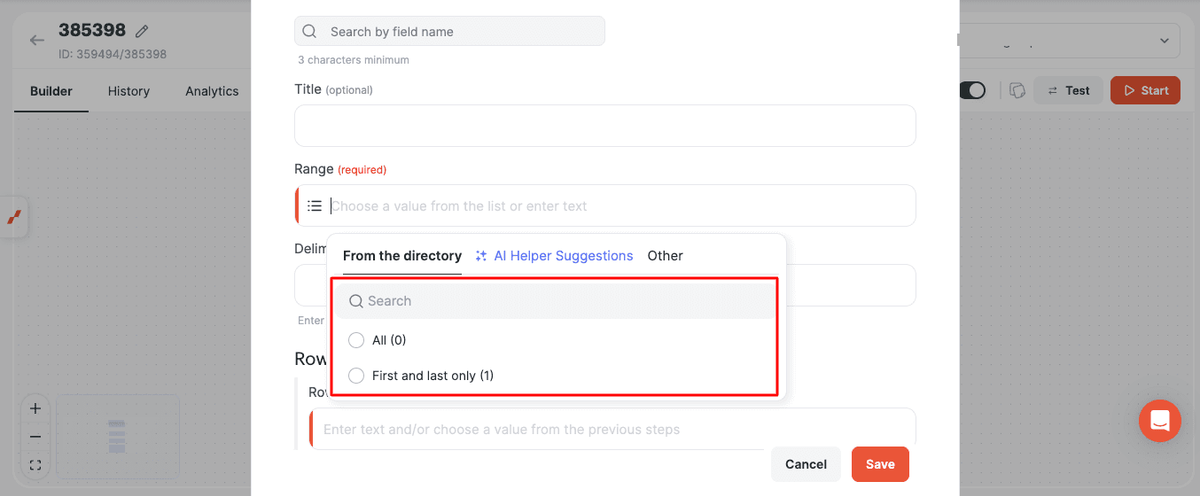
The Range field allows you to select whether you want to glue only the first and last values of the defined rows or all available values.
Feel free to customize this configuration according to your workflow requirements.
If you want to add a delimiter to the final result, simply enter the desired value manually. For example:
- Comma (,)
- Dash (-)
- Slash (/)
You can also use any other character or value, depending on the purpose of the formatting.
Finally, we need to define which Arrays we want to glue into a single line.
Simply click on the corresponding field and select the desired parameters.
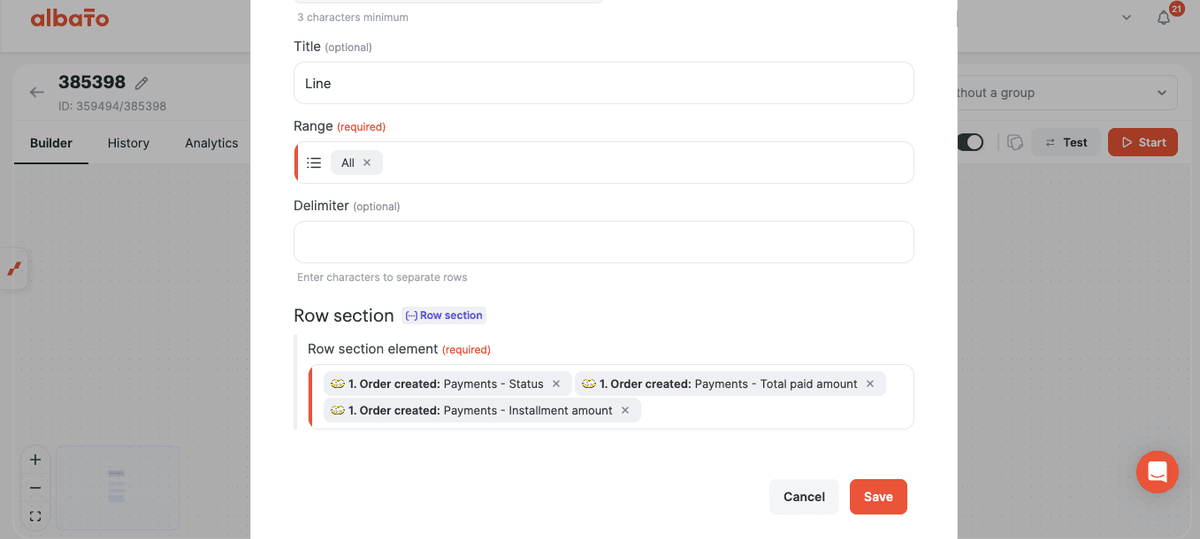
Now you can save this step. In the next automation action, you will see a new parameter coming from the tool with the name that you used in the Title field.
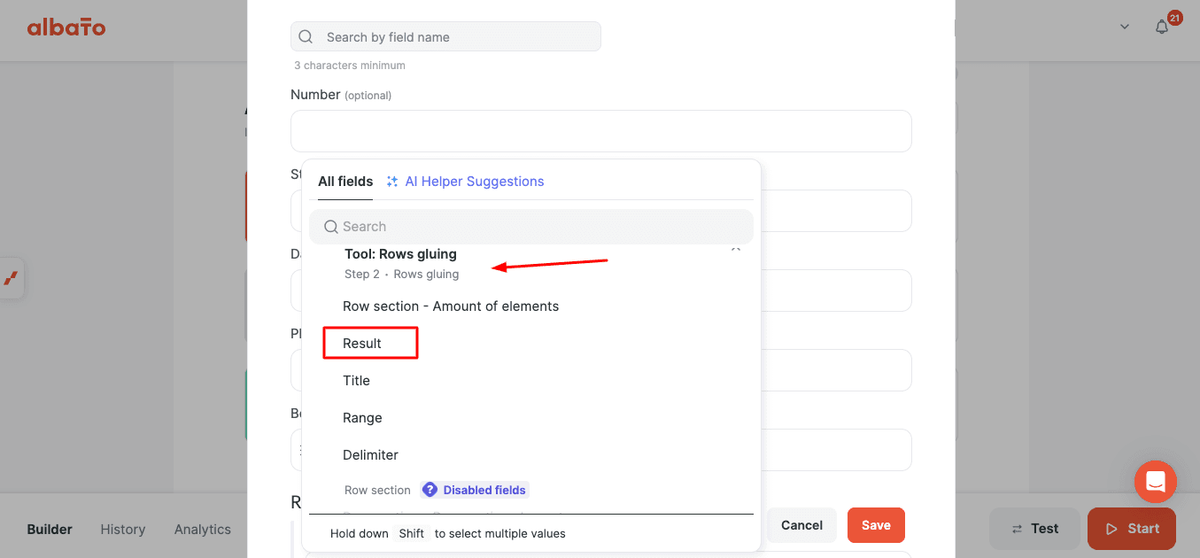
This parameter will be the result of gluing the arrays according to the configuration made.
See below a real and very common example of using this tool.
How to Glue Data From Multiple Products in an Order
Let's imagine that you have an e-commerce store and that, with each order received, different product IDs appear within the created order.
However, the team responsible for separating and delivering these products needs to receive this information in an external application, all in a single line of simple text, instead of separate arrays as they originally arrive from the trigger.
For this example, we will use Mercado Livre as our online store. The idea will be to send a Telegram message containing the data of the sold products.
Attention: You can apply this same logic to any scenario where an app sends data in an array format and you need to combine it into one field.
In your previously created automation, between these steps, add the Rows Gluing tool.
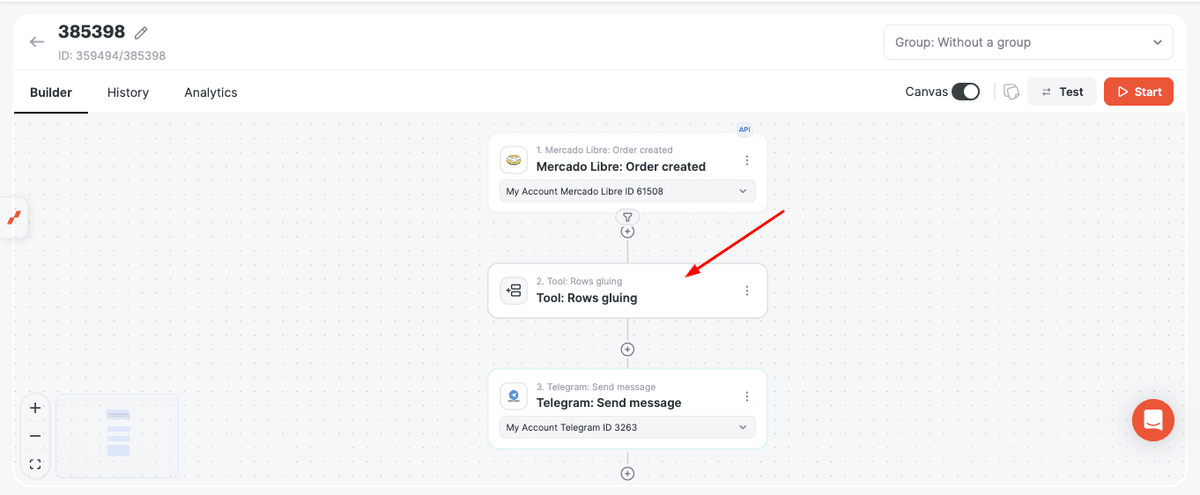
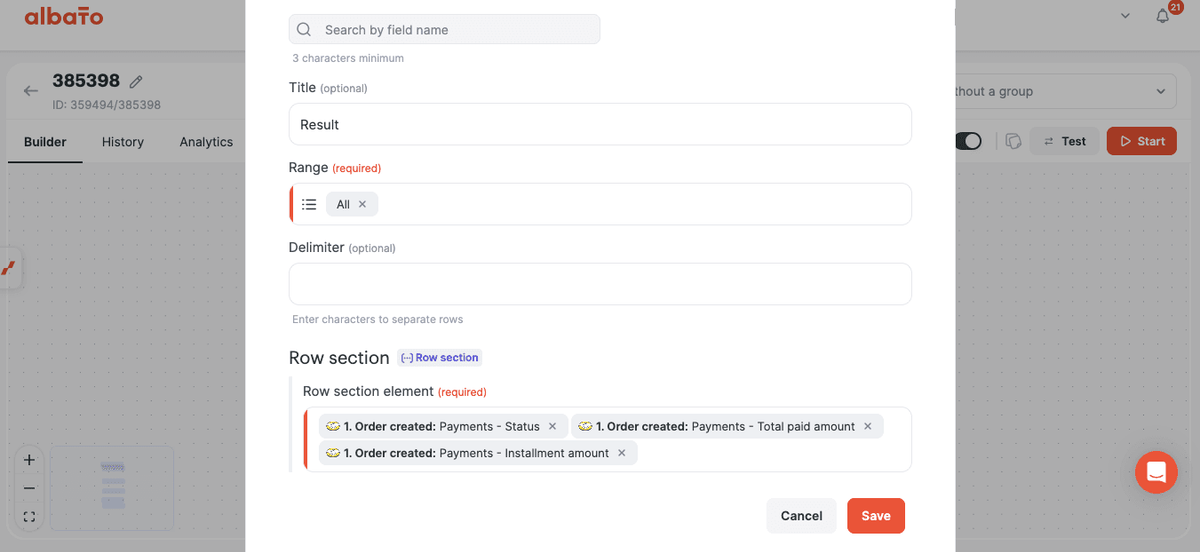
Configure the Title field as explained previously, using a name that is easy to identify in the next step.
In the Range field, in this case, we will select all product data, meaning all information that arrives inside the array, from the first position to the last.
As a delimiter, we will use a comma (,).
Now, let's select the data we want to glue.
In this example, we will take the values from an array called Product and combine them with the values from another array called Payment.
You can use any values you want to glue in this step, depending on your automation requirements.
At this stage, the configuration will look as follows:
After configuring the entire step, in the next action, in the field where you want to send this information, simply search for the title name configured previously.
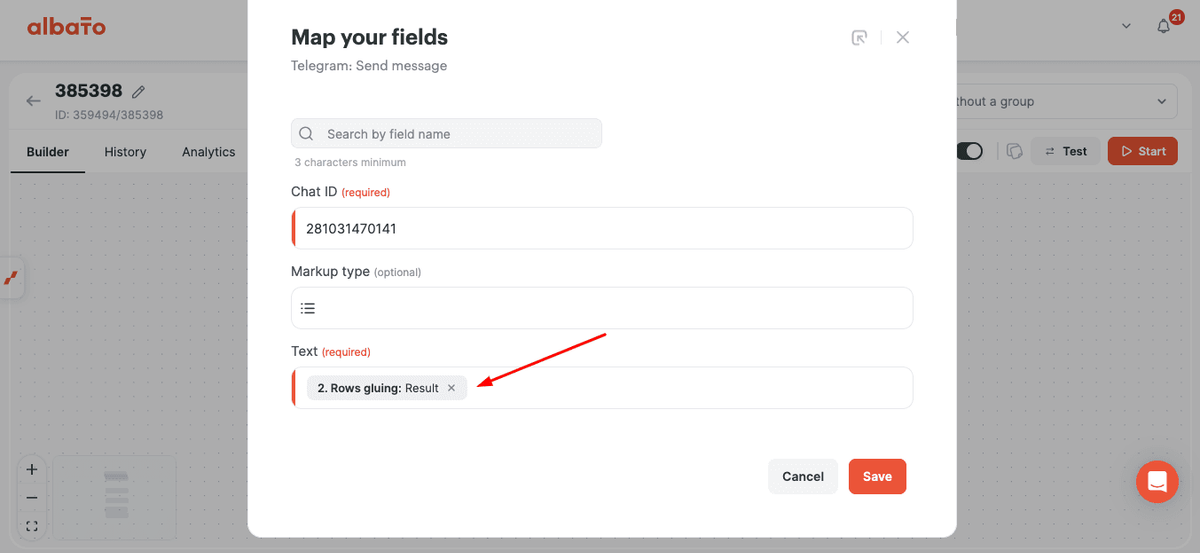
By selecting this parameter, we ensure that the data will be sent exactly in the defined format, meaning all information will be combined into a single line.
Now, simply activate your automation and your workflow will be created.
This setup helps centralize product data that arrives in separate row sections and send it as a clean text value to the next app.
If you have any questions, reach out to the support team via the chat.
Did this answer your question?