In this article
Key Takeaways
- Embedded integration with Albato gives a SaaS product 1,000-plus native connectors without an in-house integration team. The typical go-live runs 30 to 45 days.
- A standard in-house integration costs $20K to $40K and 4 to 8 weeks per connector. Embedded replaces that line item with a per-active-user or per-connector subscription.
- Customers with three or more integrations retain measurably better than customers with zero. HubSpot's State of Service Report shows 75% of service leaders saw retention improve after deploying an integrated platform.
- Embedded gets you into deals where "do you support X integration" is a closing question. It removes integration roadmap from the engineering backlog so product builds the differentiated work.
The average company runs 342 SaaS apps in 2024 (Productiv, State of SaaS Usage 2024). Your customers expect your product to plug into all of them. Embedded integration is the practical way to keep that promise without hiring an integration team.
What embedded integration actually does
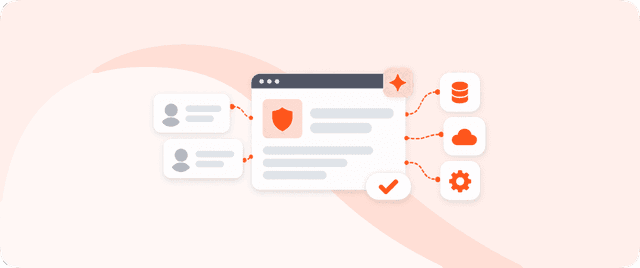
Embedded integration is white-label iPaaS shipped inside your product. Your customers see your branding, your UI, and your connector catalog. They build flows from your platform to their CRM, marketing, billing, or e-commerce tools. Albato runs the connector, the auth, the retries, and the logs underneath.
The iPaaS market grew 23.4% to $8.5 billion in 2024 (Gartner, iPaaS Market Share Analysis 2024), and Embedded is the fastest-growing slice. The reason is simple: every SaaS now needs integrations to win deals, but few have the engineering capacity to build them in-house.
How embedded speeds up scale
Three mechanics drive the time savings.
1. Replace the integration team. A typical in-house integration costs $20K to $40K and 4 to 8 weeks per connector. Albato Embedded ships 1,000-plus connectors on day one. The savings start at 5 integrations and compound.
2. Cut the maintenance load. APIs change. Pre-built connector maintenance moves off your team's plate to Albato's. Engineering capacity returns to differentiated work.
3. Close more deals. "Do you integrate with X" is in every late-stage sales call. With Embedded, the answer is yes for the entire mainstream SaaS stack, not just the three you built yourself.
For the wider build-vs-buy economics, see embedded third-party integrations enhance SaaS product value.
What the impact looks like in numbers
The retention math is the strongest single argument. HubSpot's State of Service Report shows that 75% of service leaders saw retention improve after deploying an integrated platform. Across our embedded customer base, accounts with three or more active integrations renew at materially higher rates than accounts with zero, often by 15 to 35 points.
McKinsey estimates that 57% of US work hours are technically automatable (McKinsey, Agents, Robots, and Us 2025). The percentage of that automation that runs across two or more apps is high, which means integrations are the price of entry for any platform pitch.
For the retention mechanic in detail, see how embedded third-party integrations boost engagement and retention.
Comparing the options
The decision is rarely "build vs use Albato". It is "build, use a generic iPaaS, or embed an iPaaS partner".
| Approach | Time per integration | Cost per integration | Maintenance | When it fits |
|---|---|---|---|---|
| Build in-house | 4 to 8 weeks | $20K to $40K | Ongoing engineering | Highly differentiated, deep integrations |
| Generic iPaaS (customer-side) | Customer does it | Subscription on customer side | Customer owns it | Power users only |
| Embedded iPaaS (Albato) | Days | Per-active-user / per-connector | Vendor manages it | Anything mainstream, ship for everyone |
The table above gives the quick view. The sections below cover each point in more depth.
The trade-off is clear: build the integrations that differentiate your product, embed the integrations that are table-stakes. For a wider category overview, see the embedded SaaS integrations guide.
💡 Tip
List your top 20 most-requested integrations. Score each on "does this differentiate our product or is it a checkbox". Embed the checkboxes. Build the differentiators. Keep both lists honest.
Want a buildout estimate for your top 20 requested integrations? Book a 45-minute working session with the Albato Embedded team.
How Albato Embedded fits a SaaS roadmap
Three patterns recur in our customer base.
- Series A to B SaaS adding integrations as a feature. Embed during the next quarterly release. Go-live runs 30 to 45 days. Saves 1 to 2 FTE compared to an in-house equivalent.
- Mature SaaS migrating away from a one-off integration backlog. Replace the integrations team's roadmap with a vendor partner. Frees 3 to 6 FTE for product work.
- Platform plays moving to Hub or Marketplace positioning. Use Embedded as the integration backbone for the marketplace, white-labeled.
Albato Embedded starts at $3,000 per month on Starter, the entry plan for teams of 10 or fewer, with 5 million transactions a month and unlimited connectors. Full white-labeling, a headless API, and 2 Albato-built custom connectors a month come with Pro, from $5,000 per month. Enterprise tiers start at $25,000 per month and include managed services, custom connector requests, and on-call SLAs.
Ready to scope a working session against your roadmap? Talk to the Albato Embedded team.
FAQ
What is embedded integration?
Embedded integration is white-label iPaaS shipped inside your product. Your customers connect their SaaS tools to your platform through a branded UI you control. The vendor (Albato) runs the connectors, auth, retries, and logs underneath.
How does it accelerate time to market?
A custom integration takes 4 to 8 weeks and $20K to $40K of engineering. Embedded gives you 1,000-plus connectors at go-live. For most SaaS roadmaps, that compresses an 18-month integration plan into a single release.
How does it affect engineering capacity?
Pre-built connectors offload day-to-day API maintenance, which means your engineers can stop reacting to vendor changes and focus on differentiated product work. The capacity returned is usually 1 to 6 FTE depending on stage.
Does it really impact retention?
Yes. HubSpot's State of Service Report shows 75% of service leaders saw retention improve after deploying an integrated platform. Accounts with three or more active integrations renew measurably better than accounts with zero.
What about pricing?
Albato Embedded starts at $3,000 per month on the Starter plan. Pro starts at $5,000 per month, and Enterprise tiers start at $25,000 per month with managed services. On Starter and Pro, billing is a monthly platform fee plus a usage fee counted either per active user or per connector, never both.
How long does Albato Embedded take to go live?
30 to 45 days for a typical SaaS. The timeline covers SSO, branding, connector selection, and a first set of customer-facing flows. Enterprise tiers may include managed onboarding to shorten the path.
Want to talk through your top integration requests with the Albato Embedded team? Book a working session.
Want more? Explore related guides from the Albato blog below.